
Denture Teeth
535 products
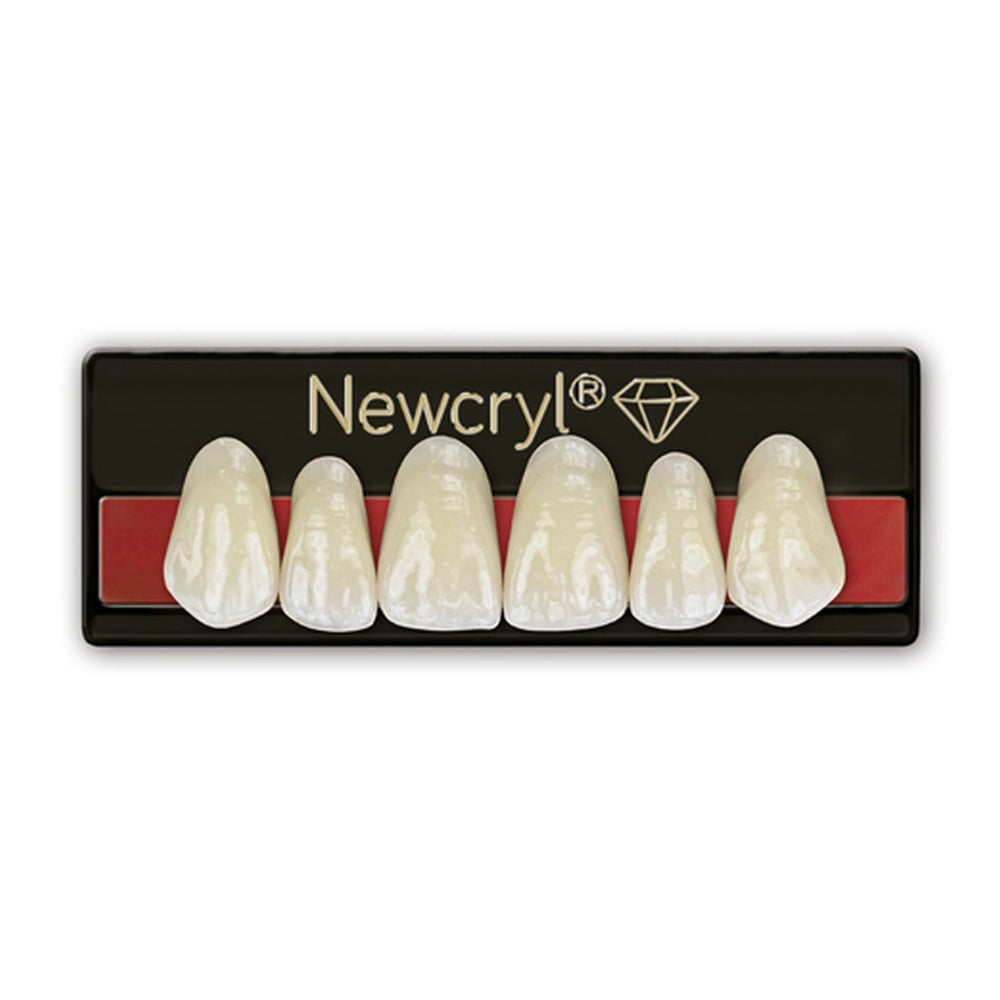


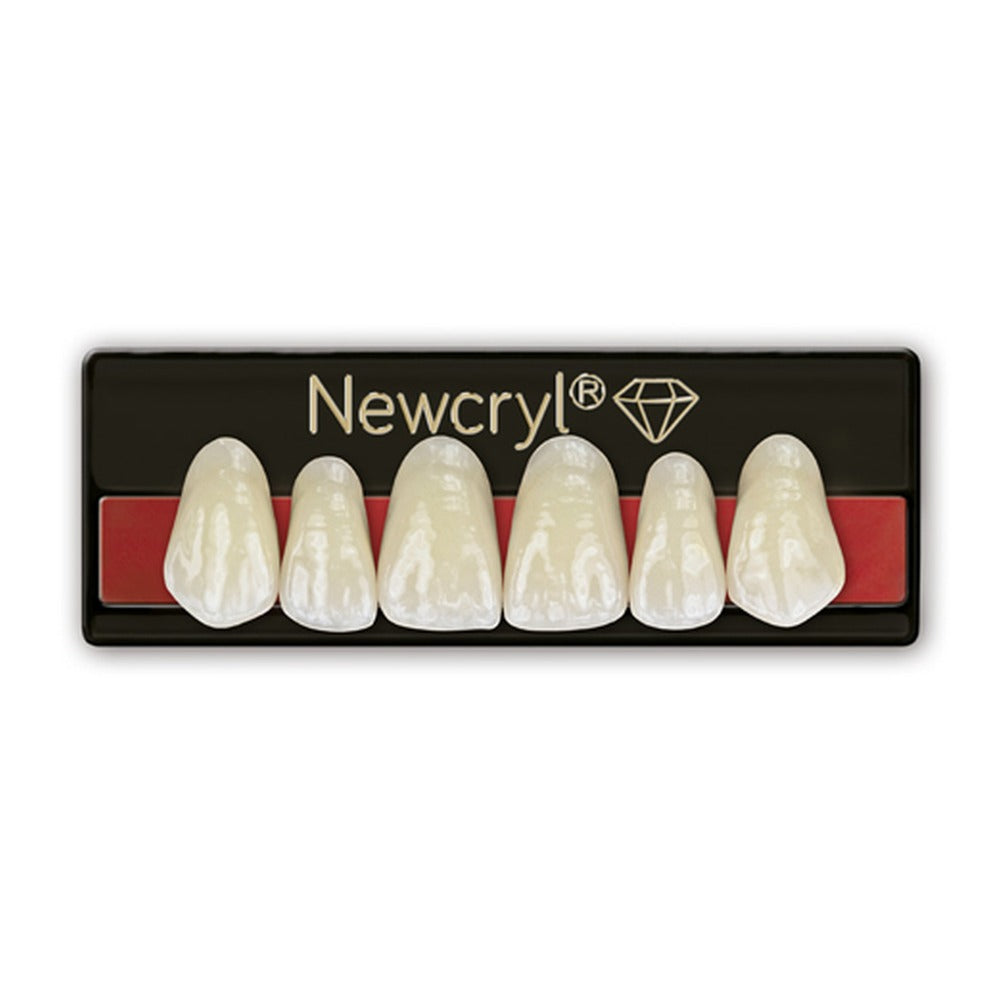

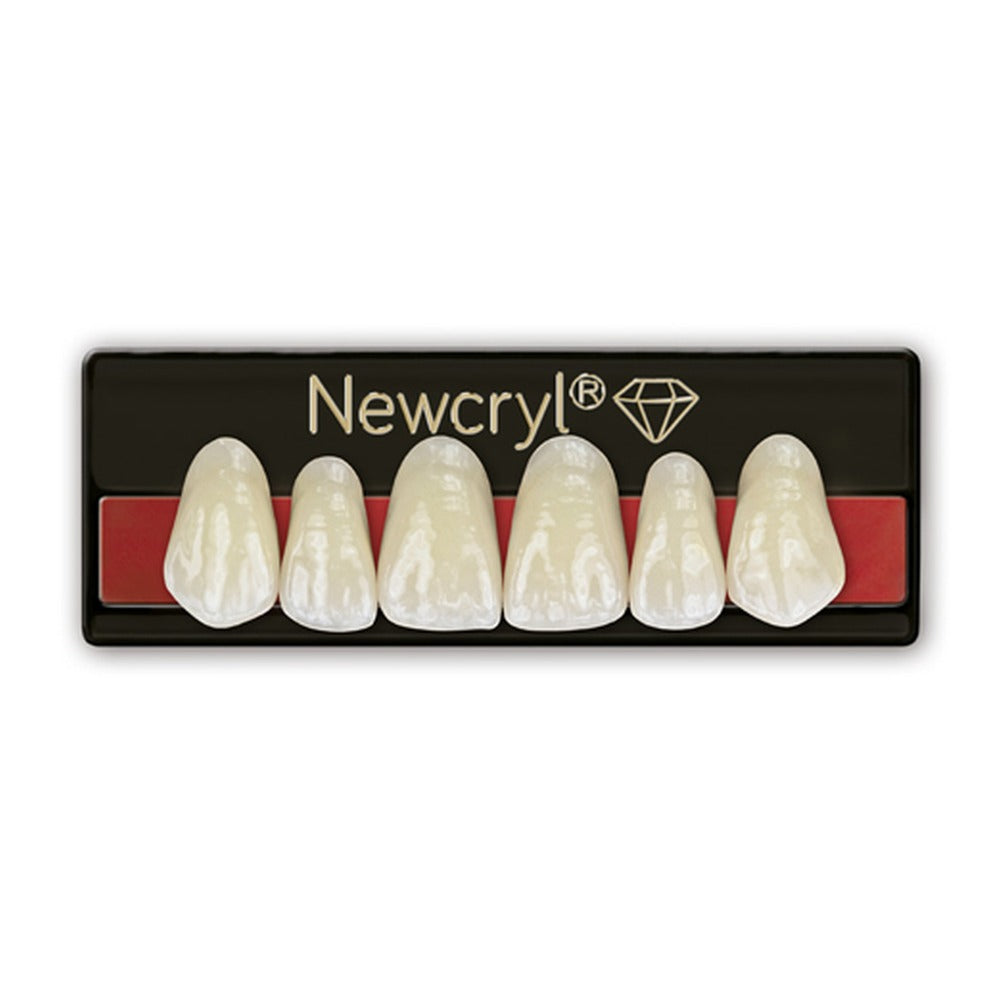
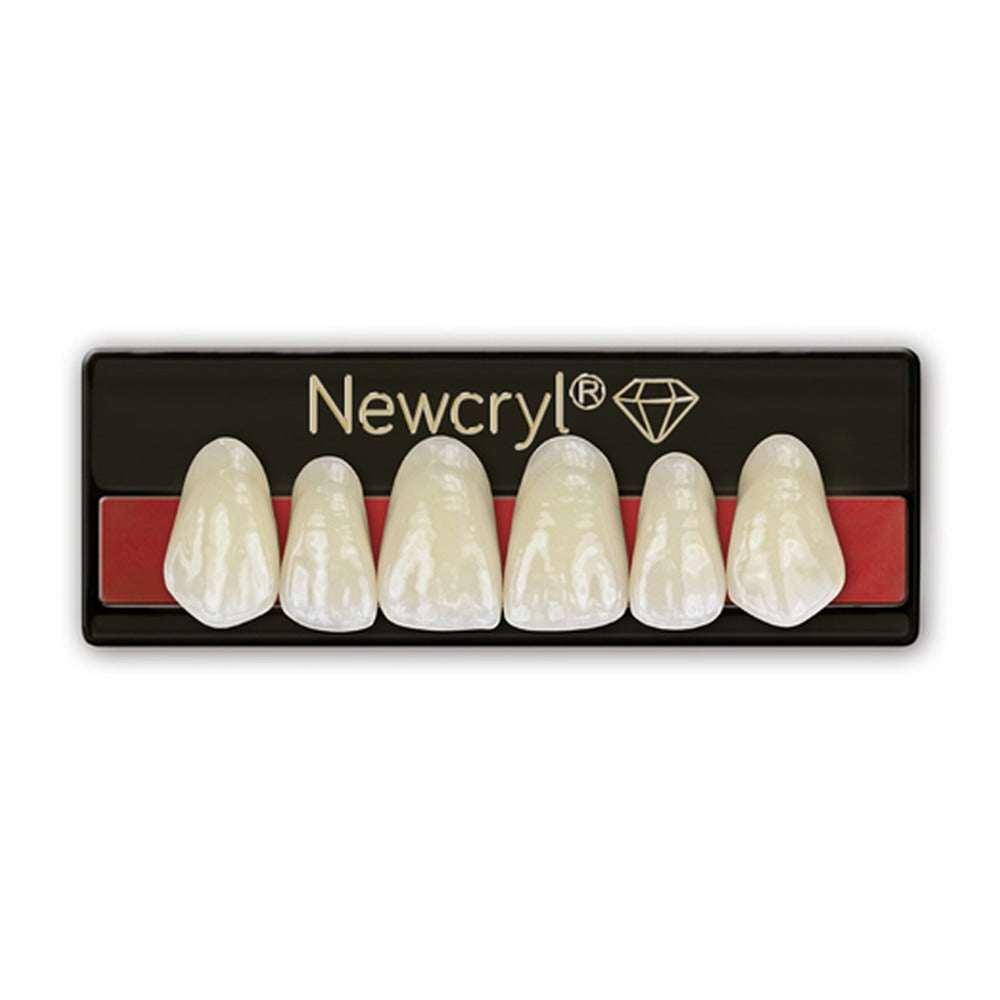


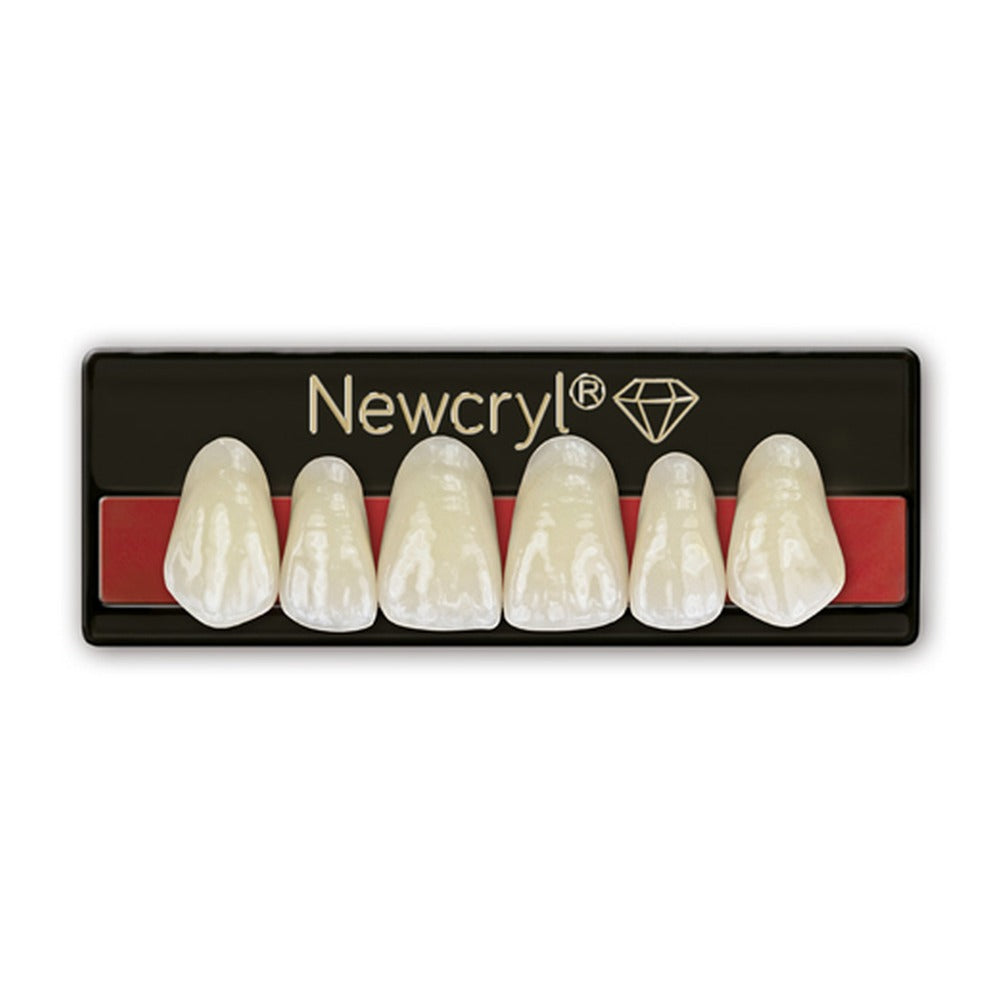
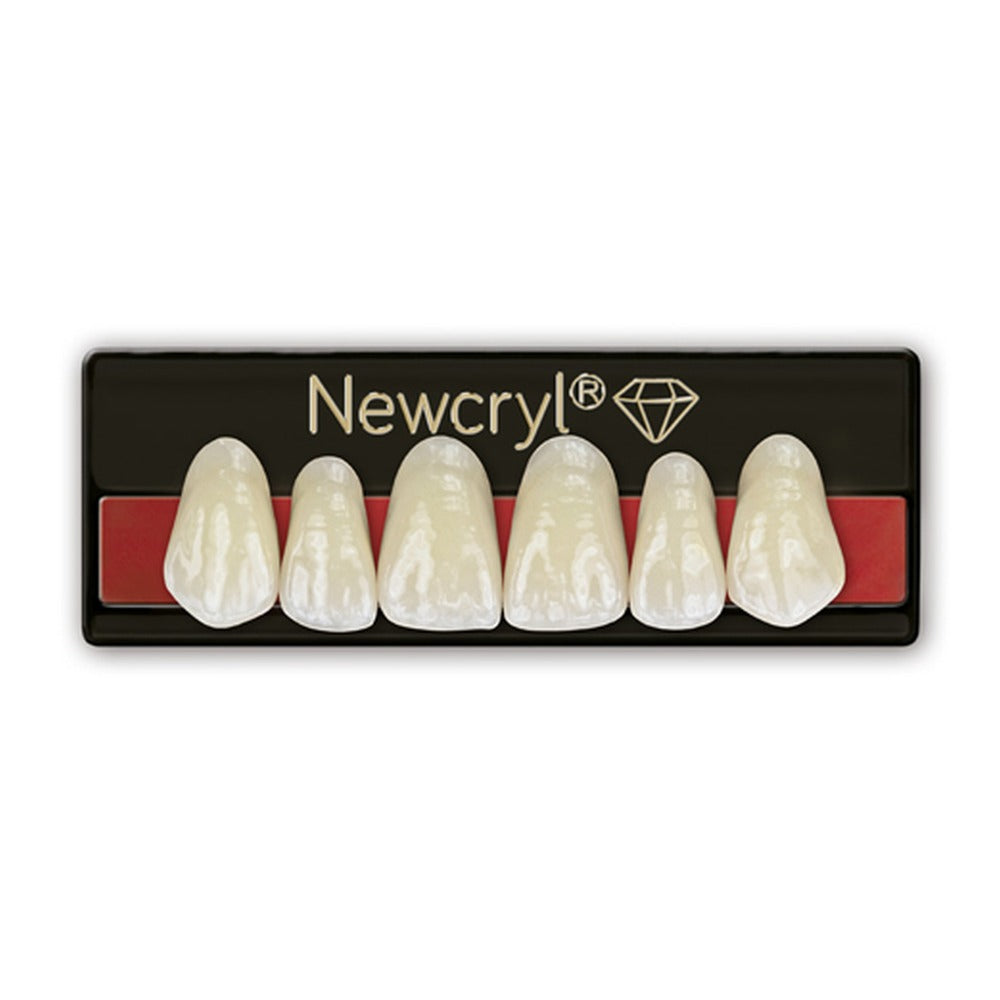


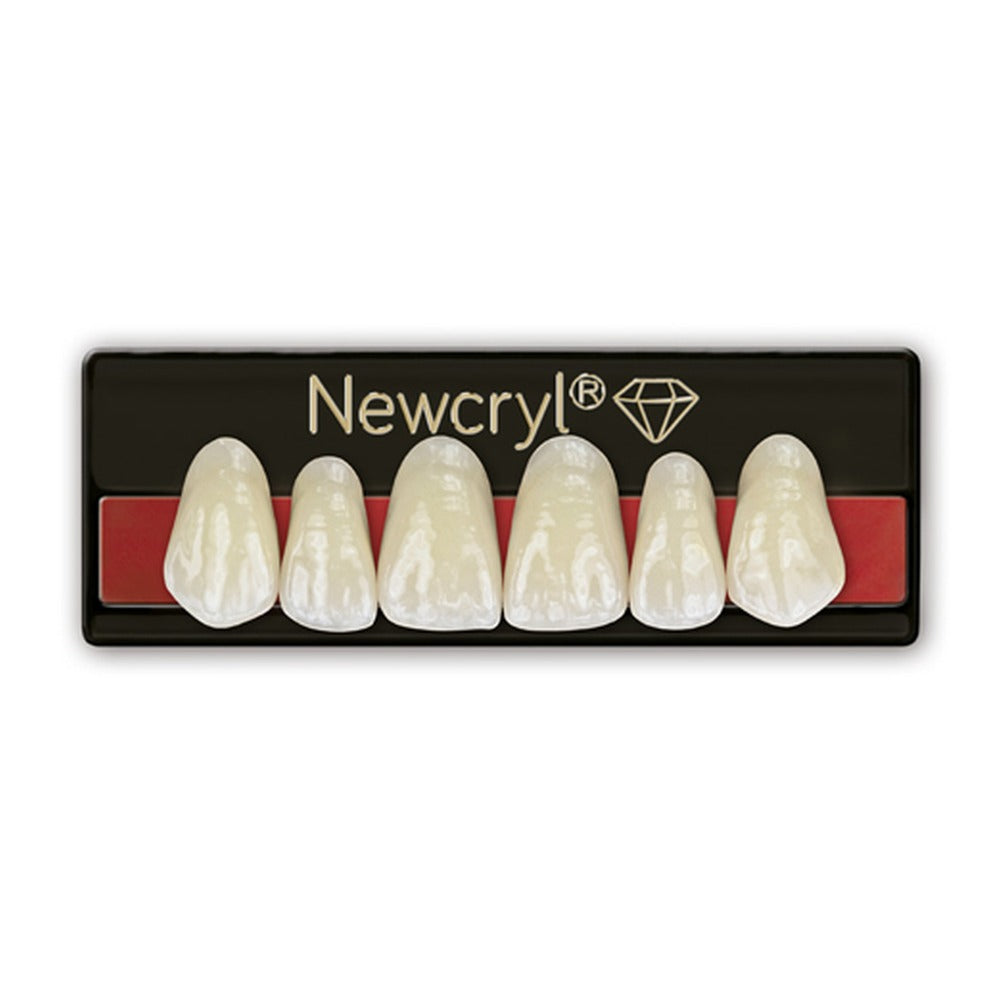


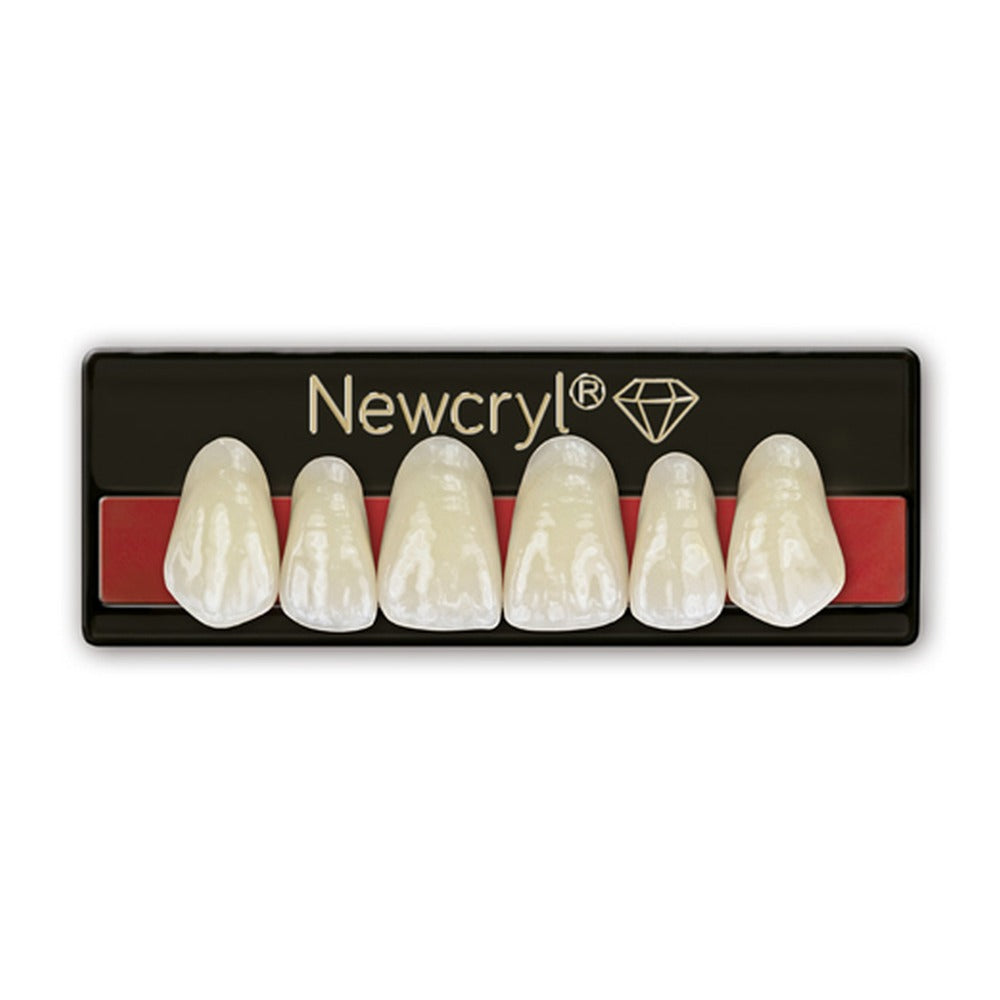


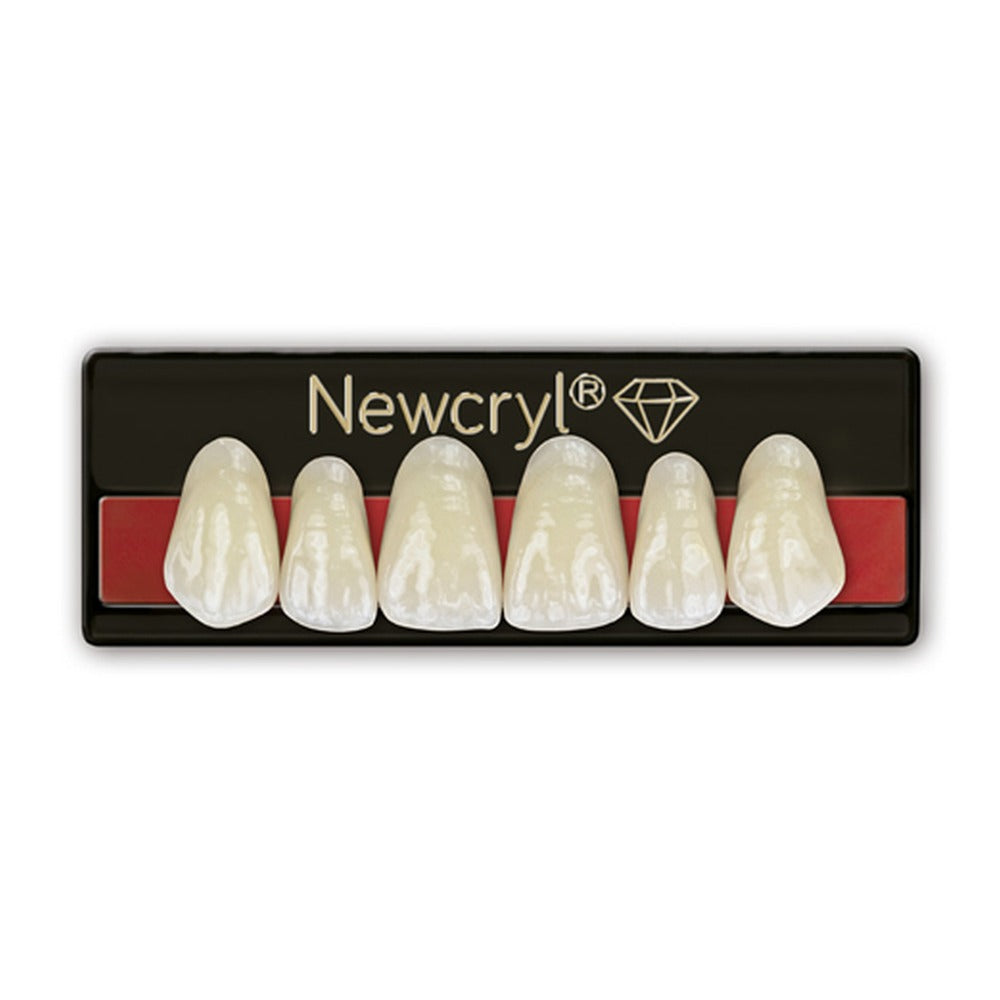
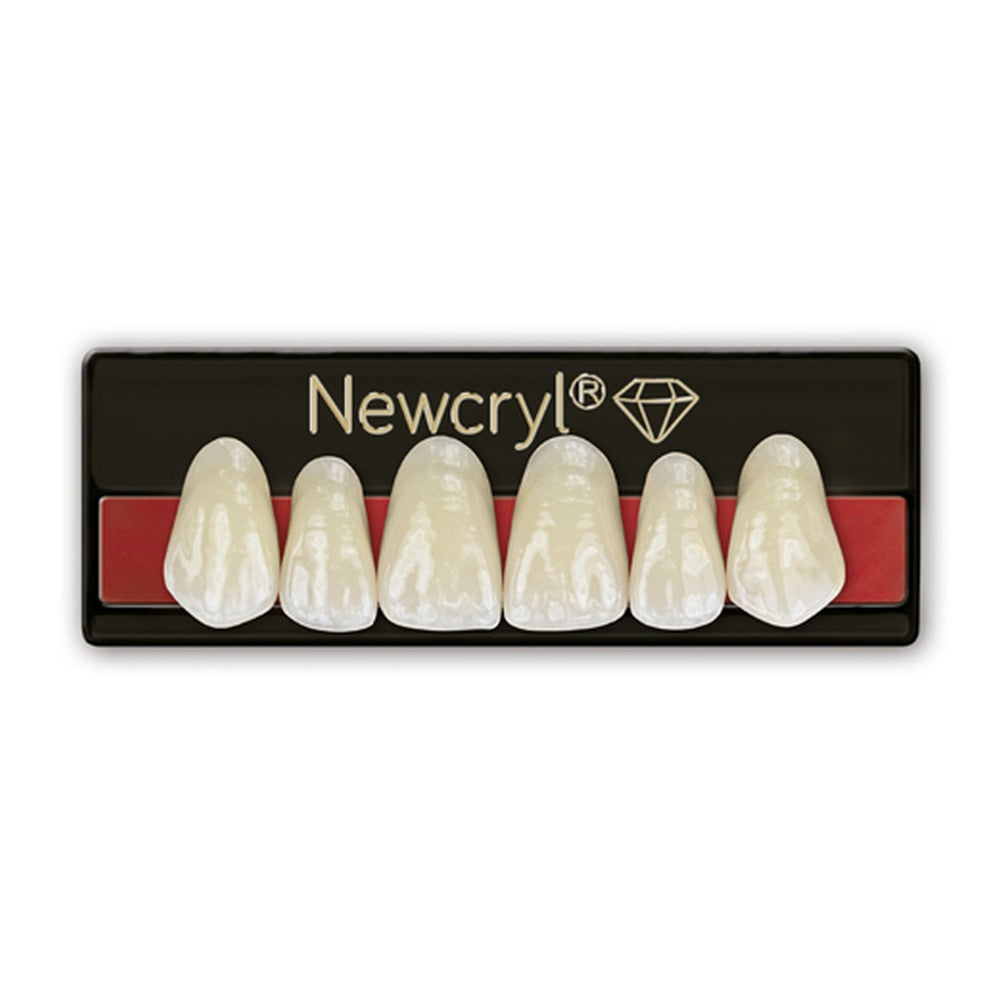
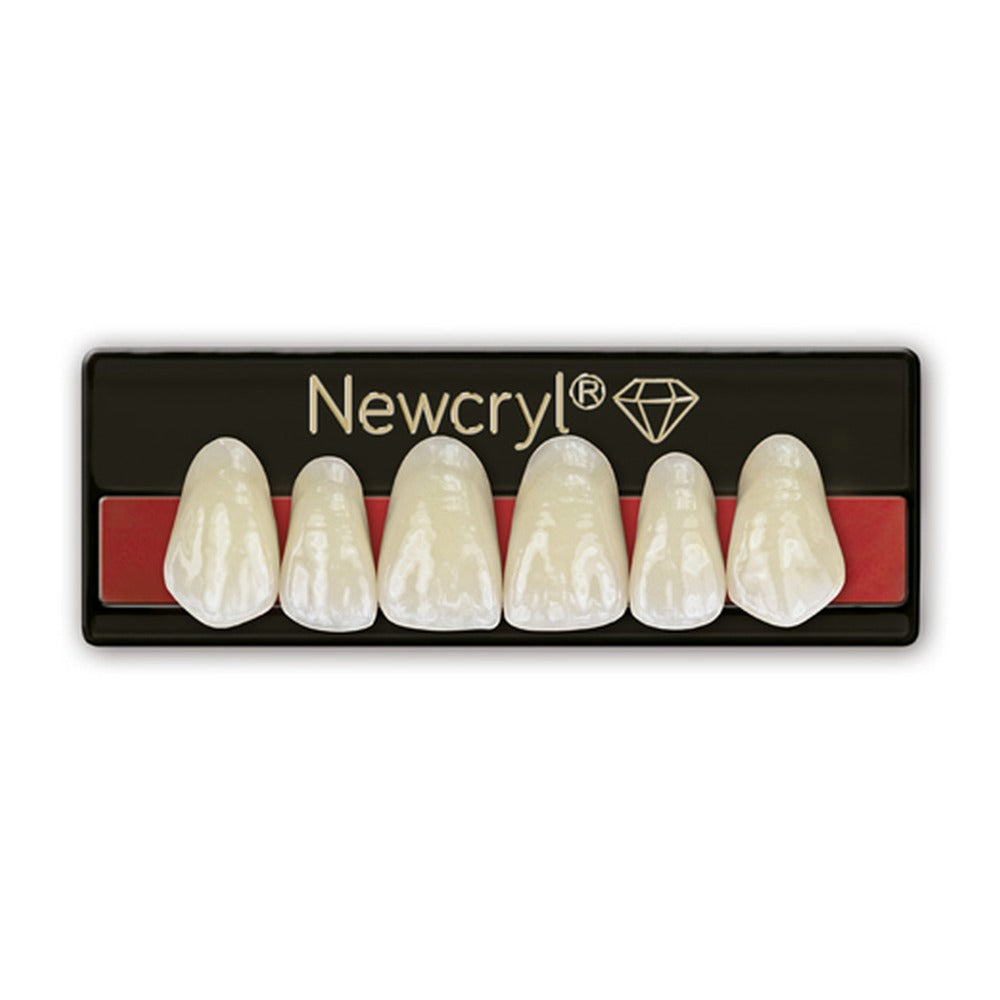
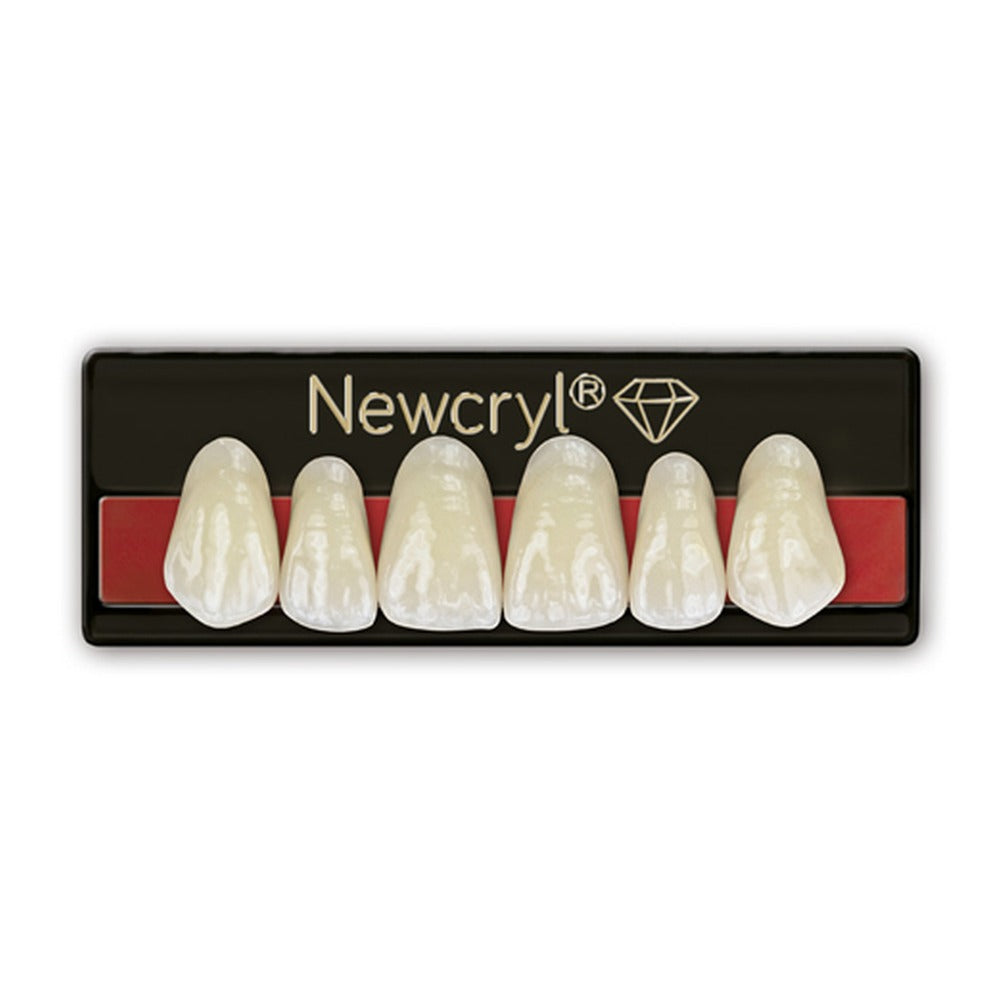

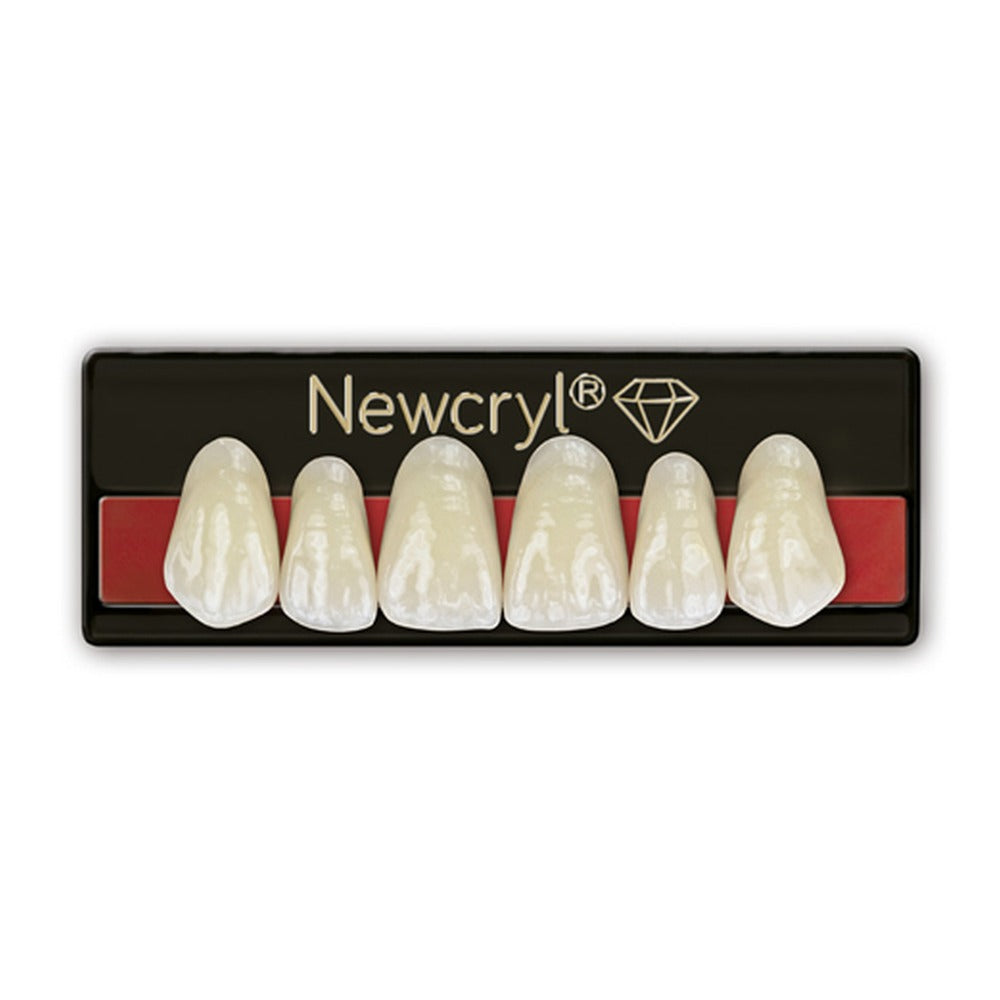
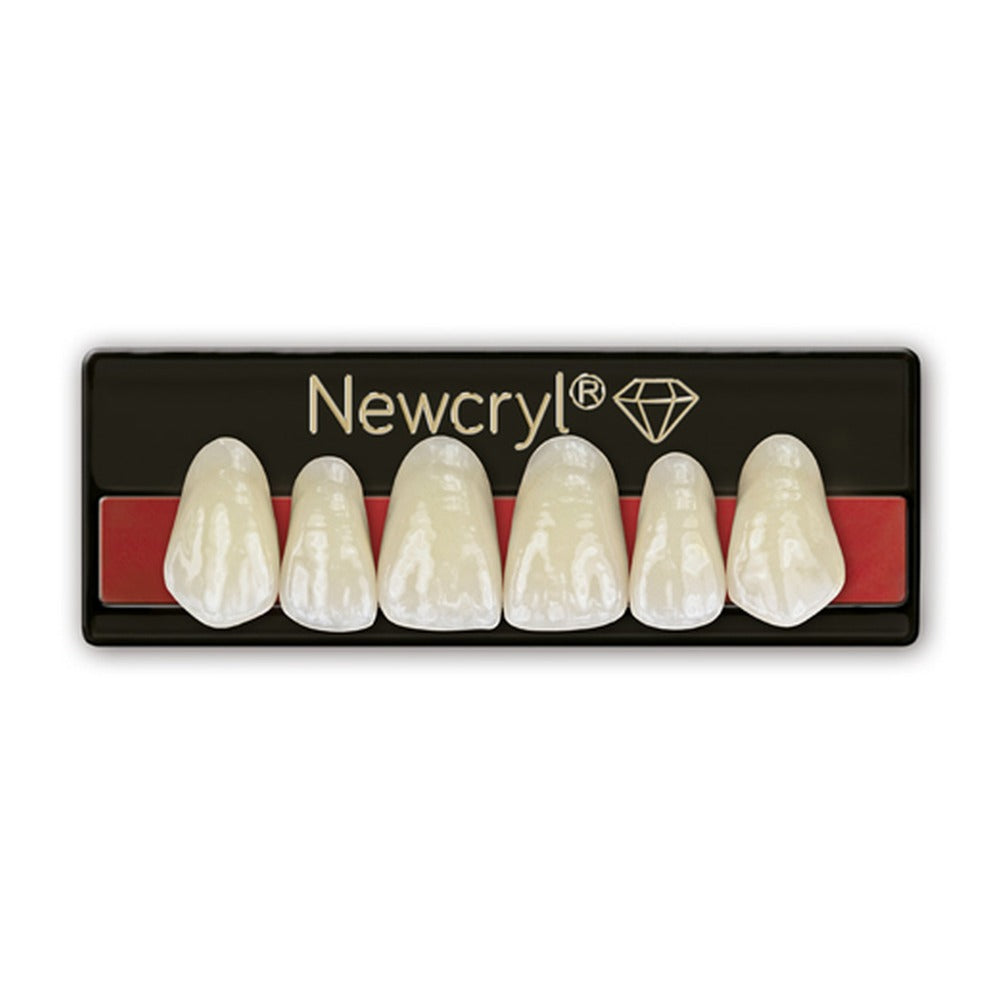

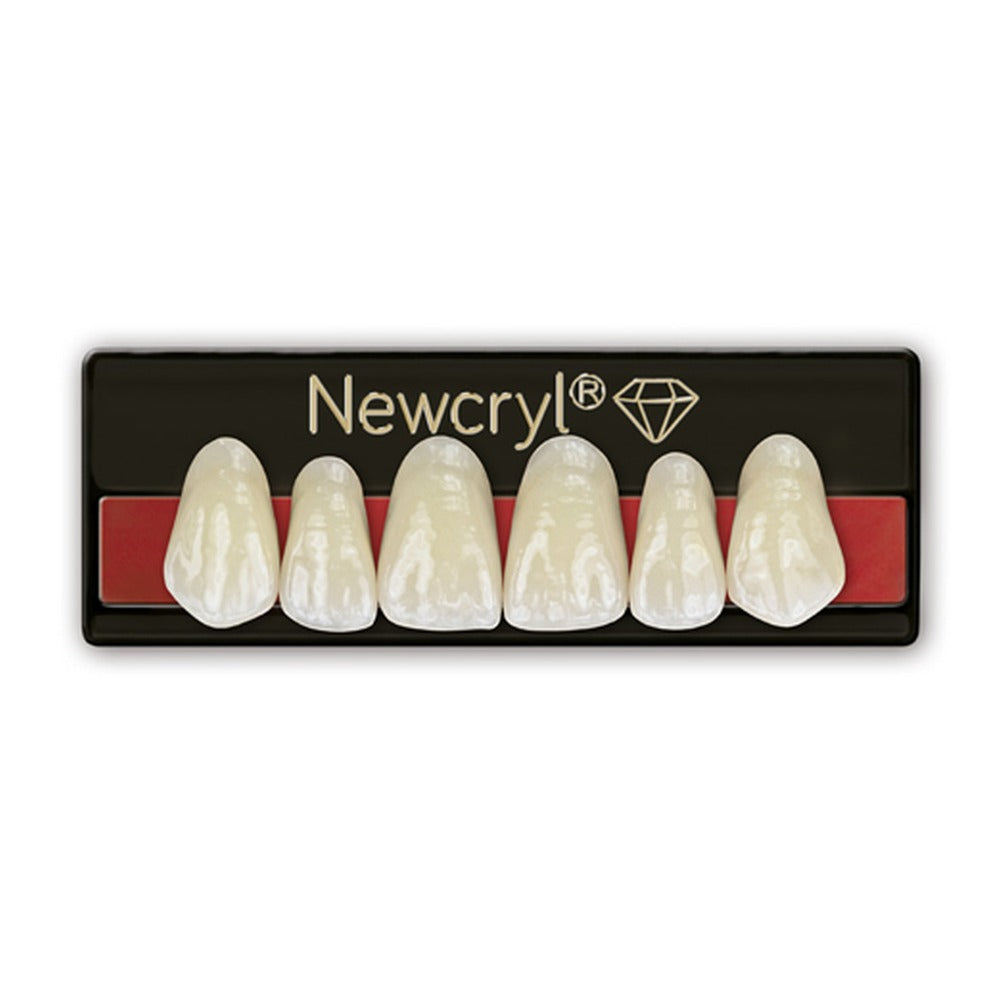

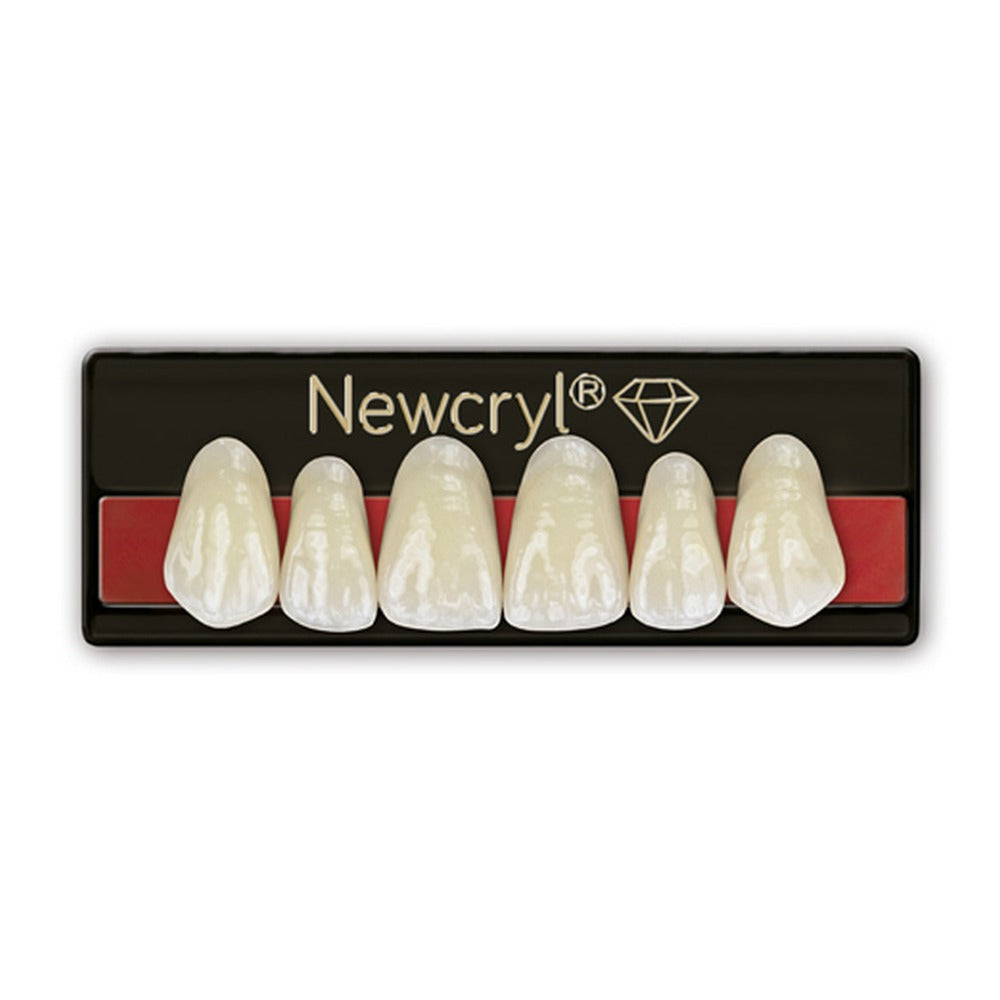


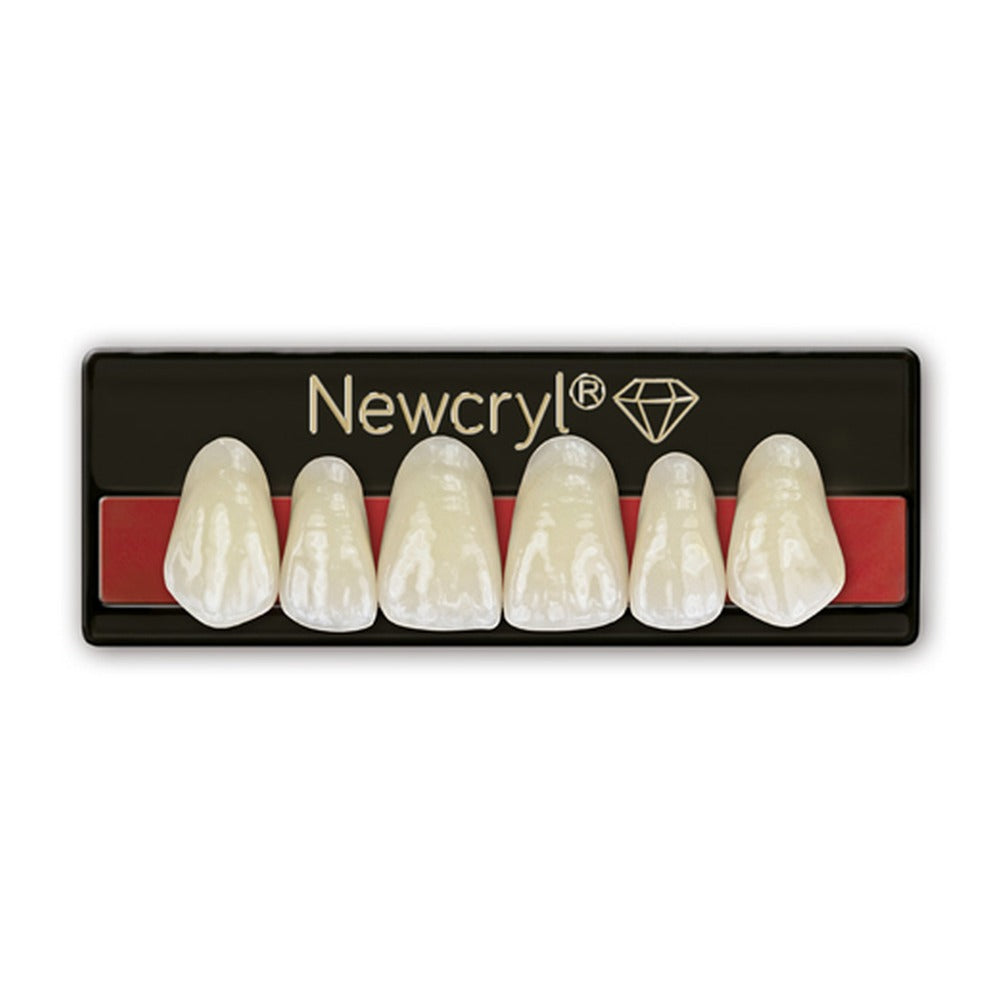

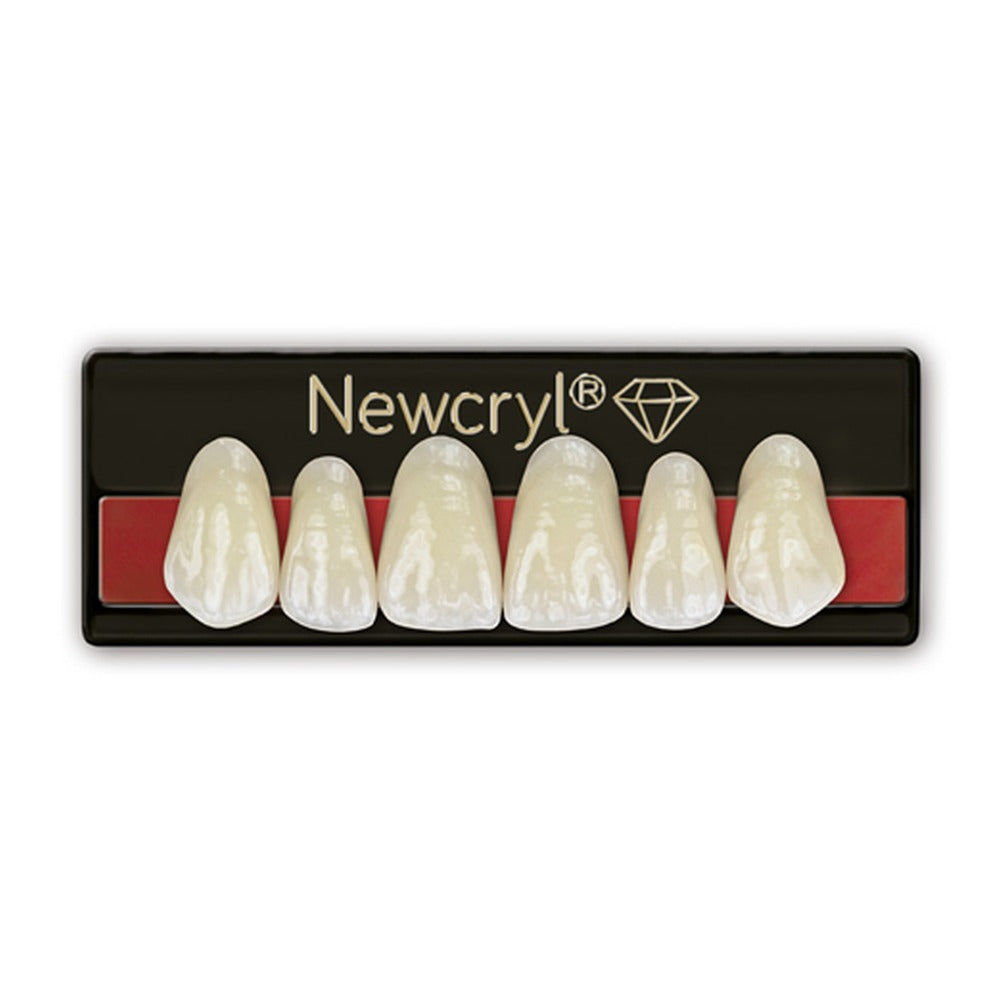
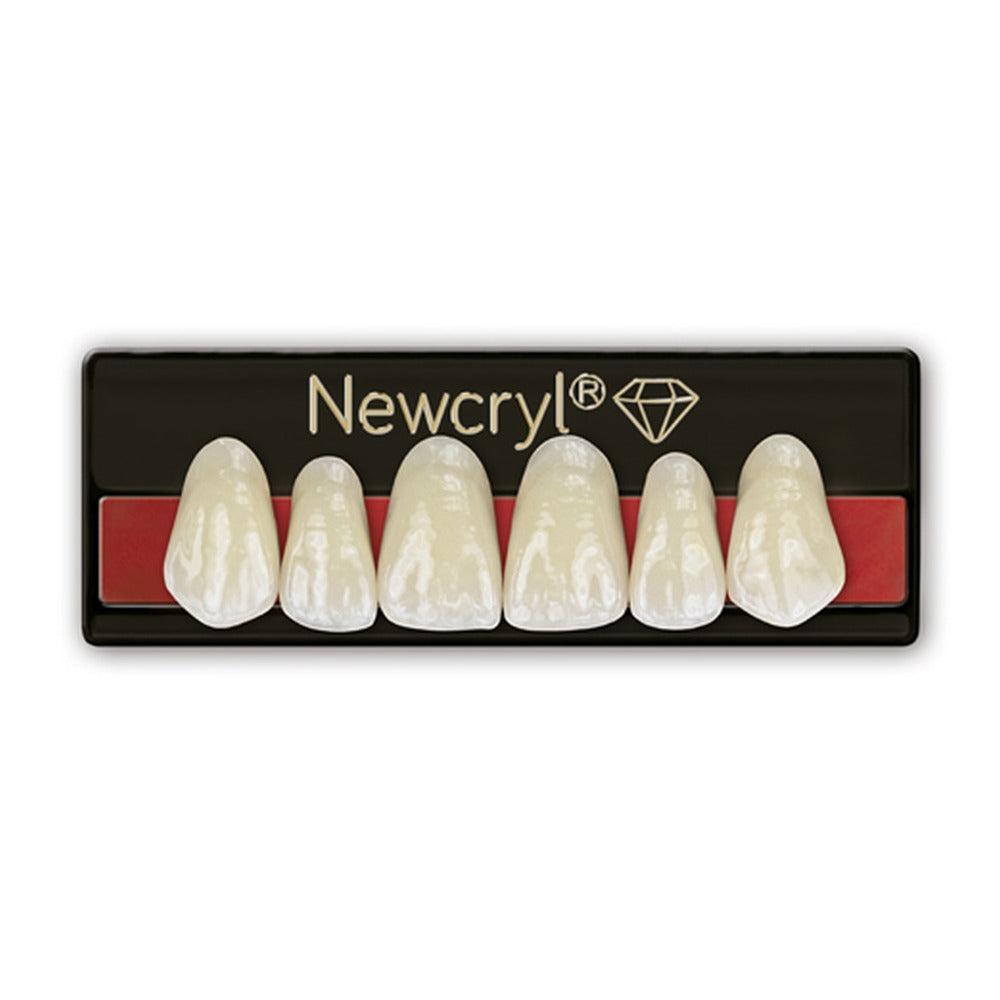

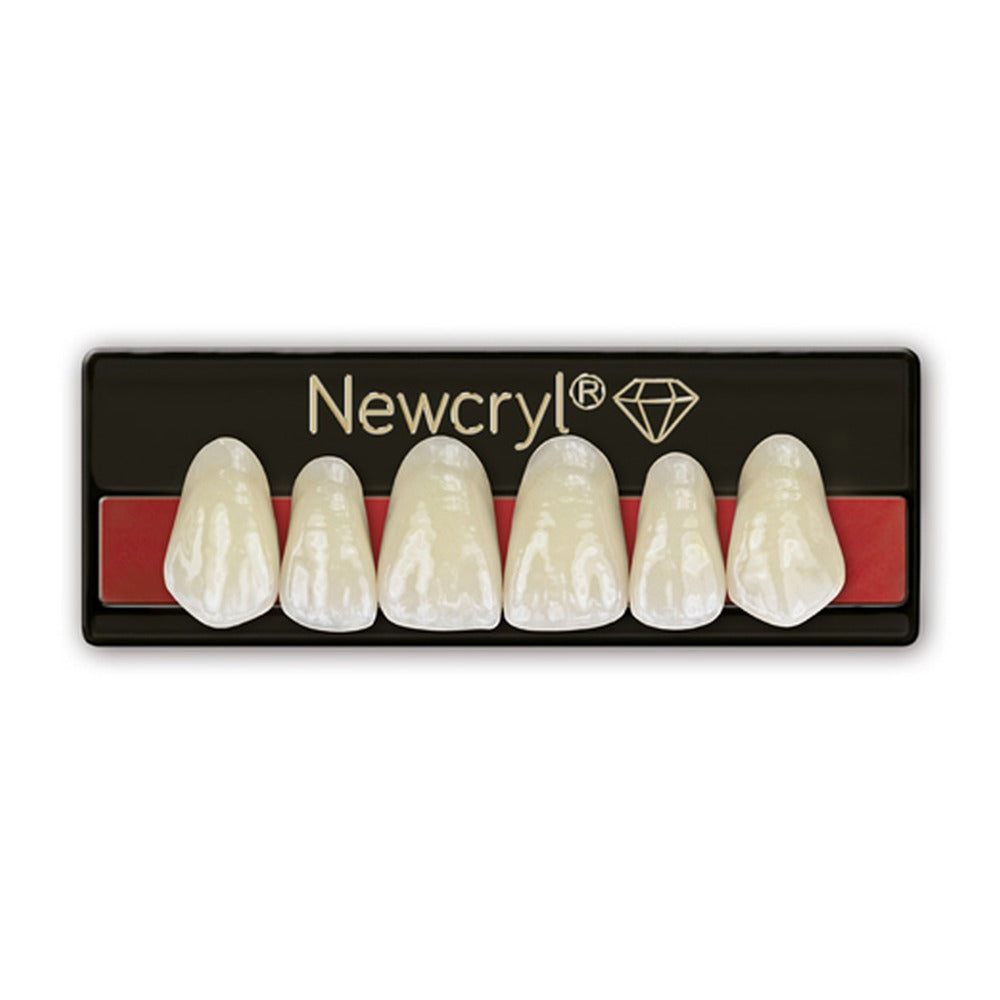


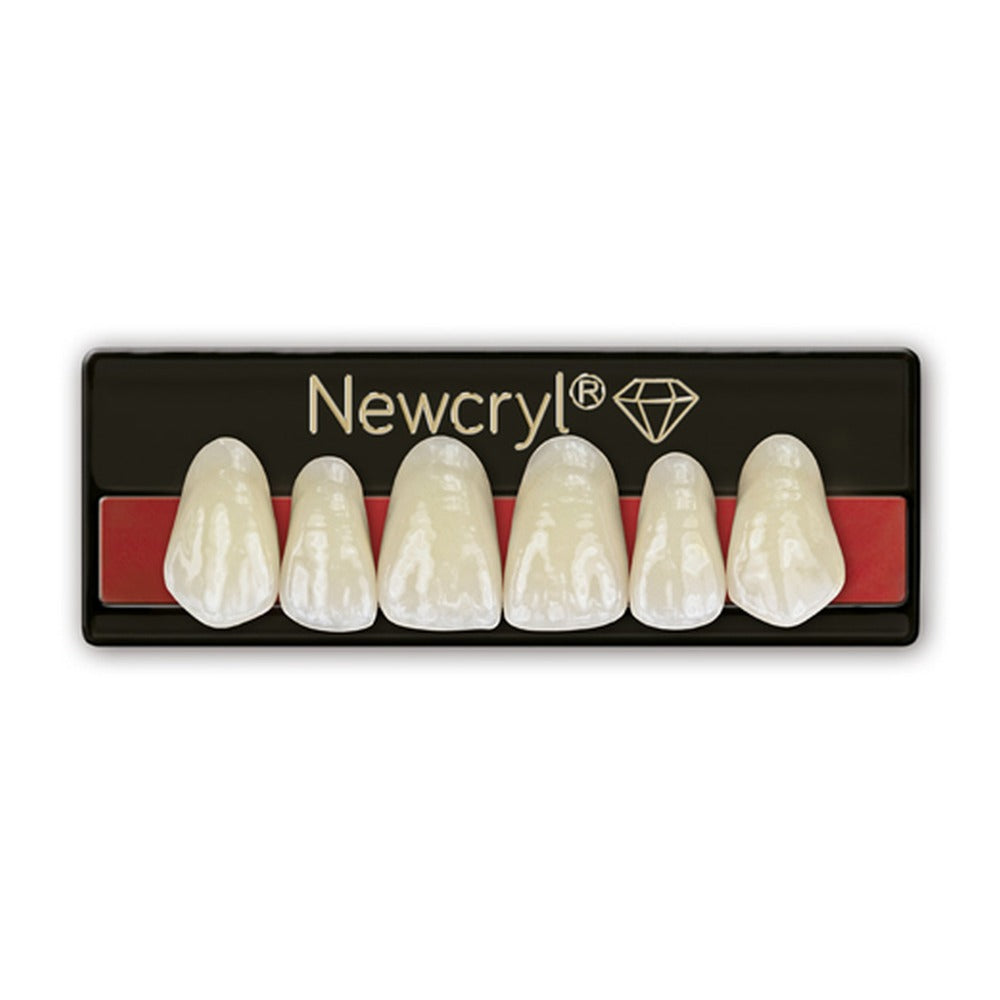


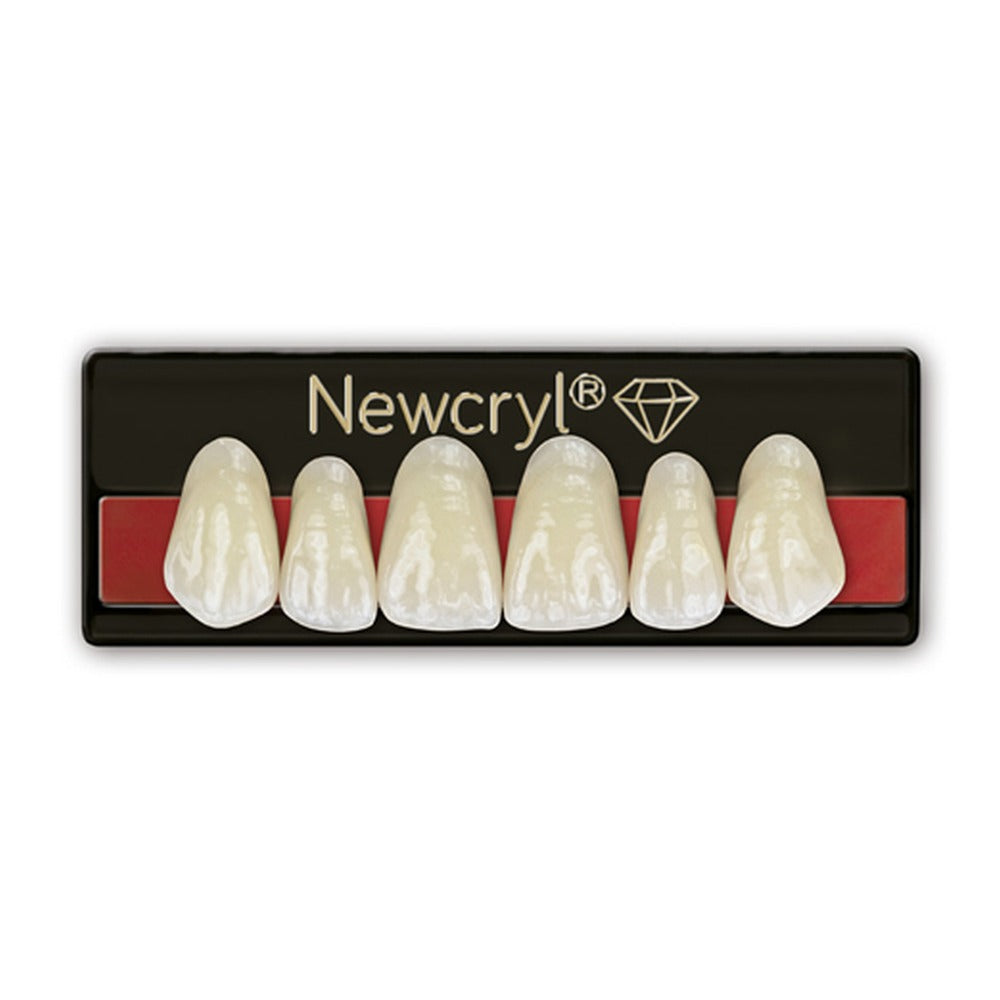
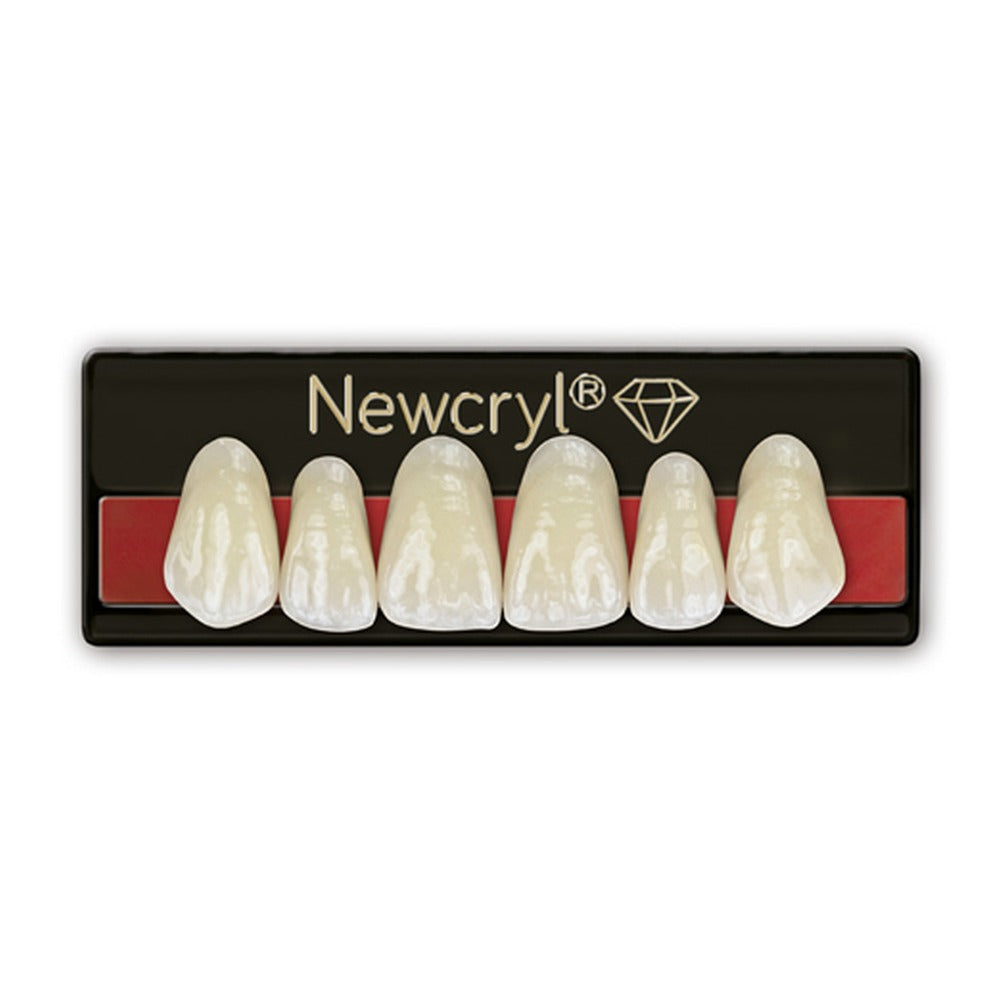


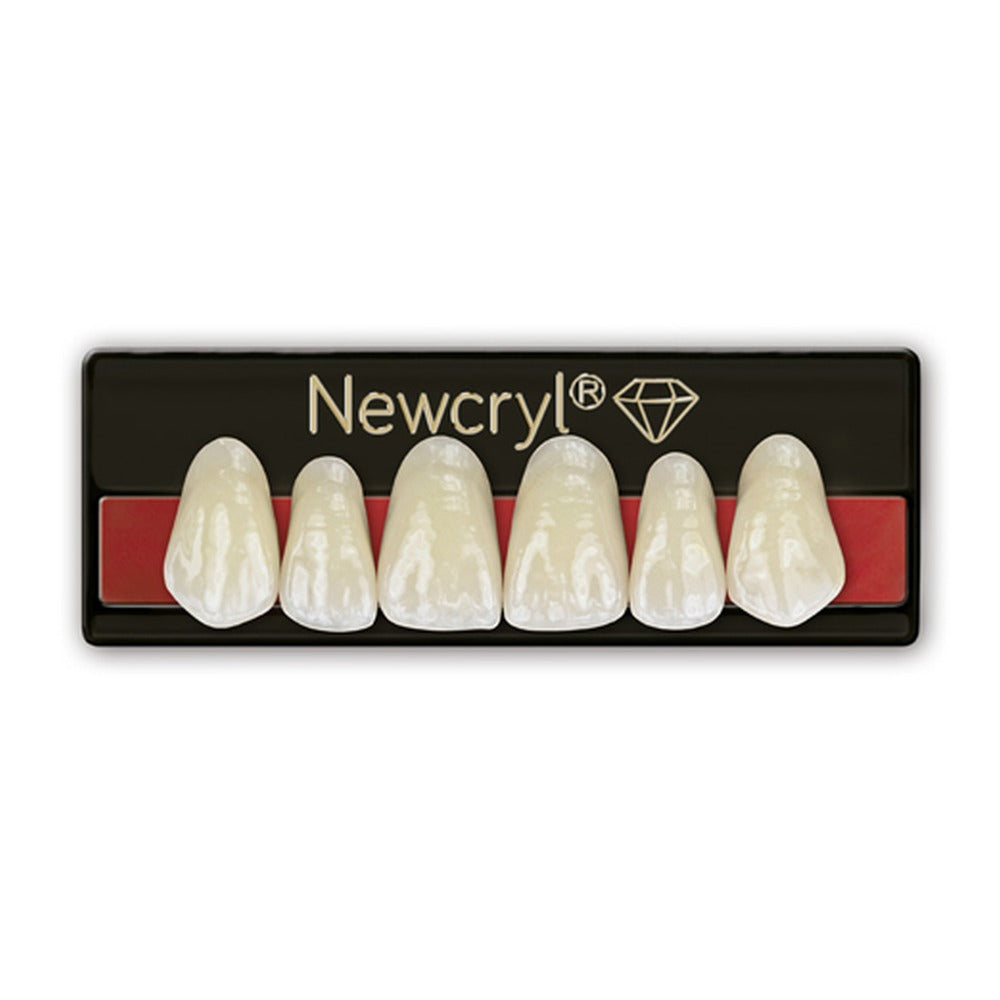
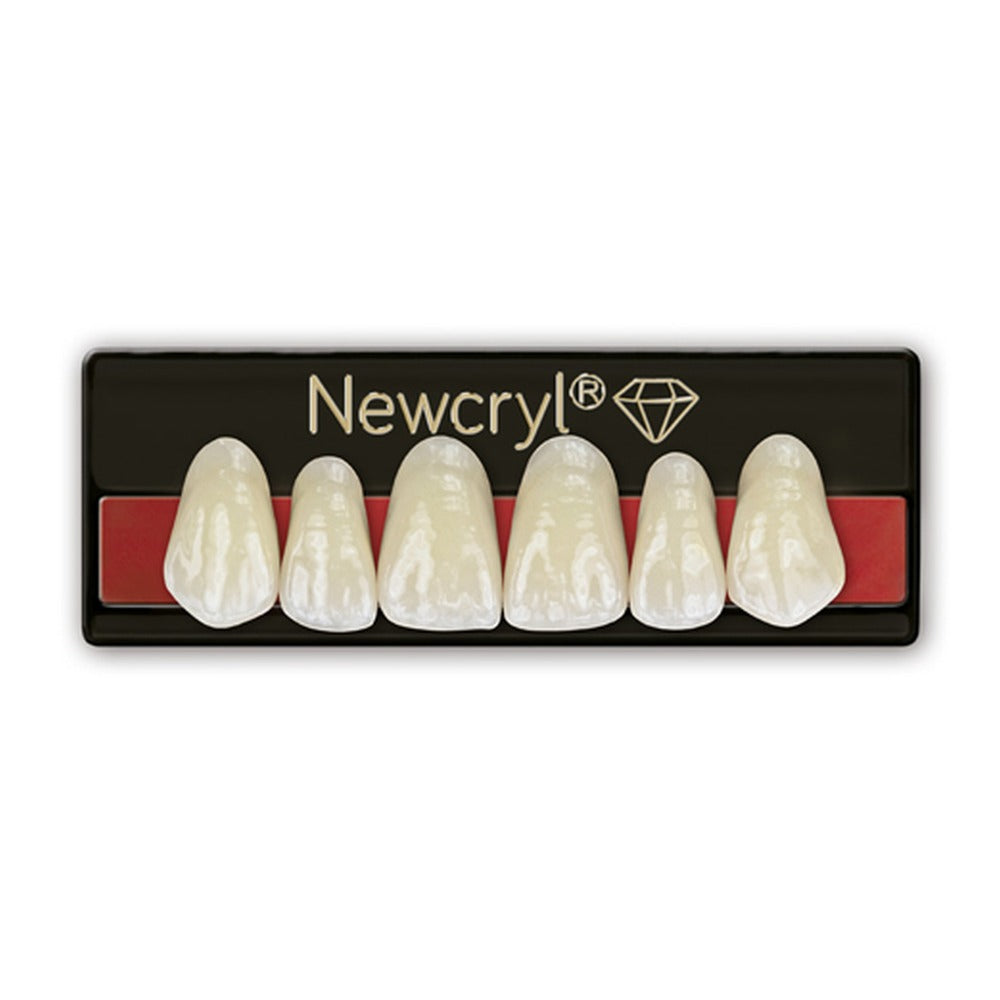

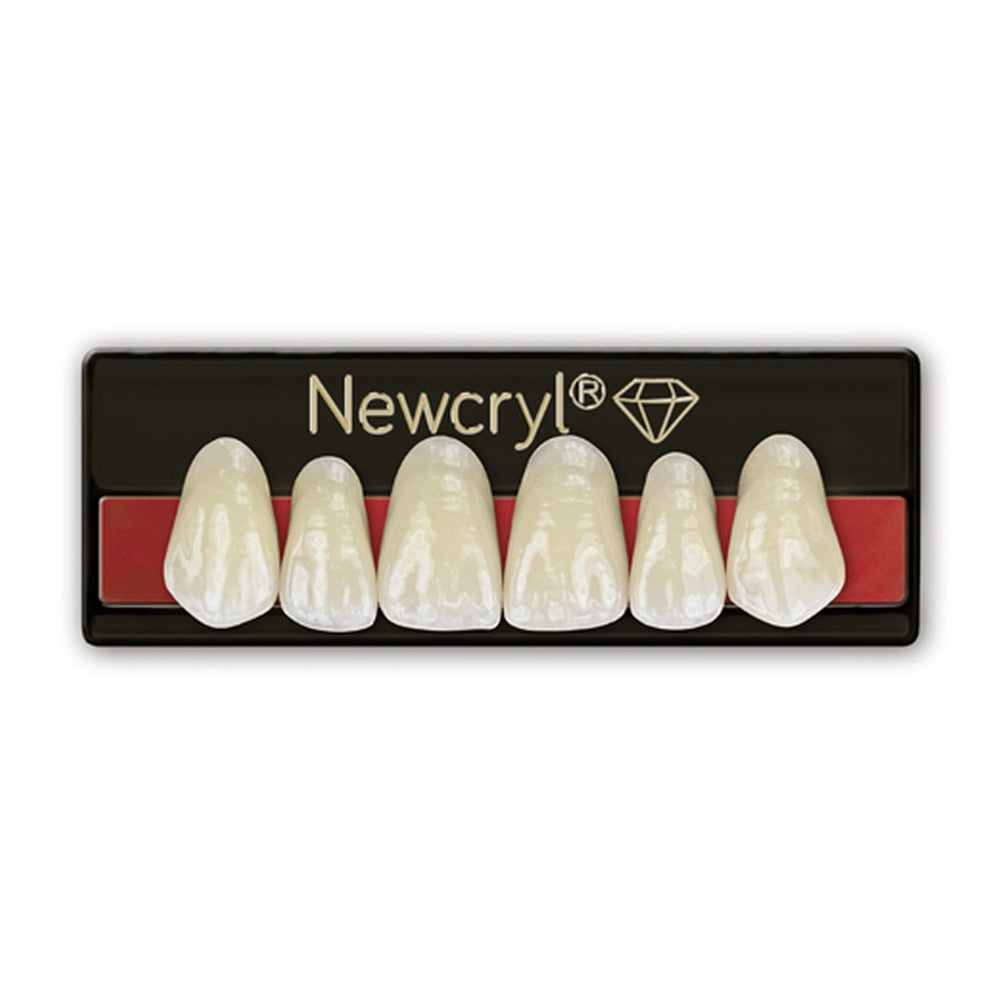
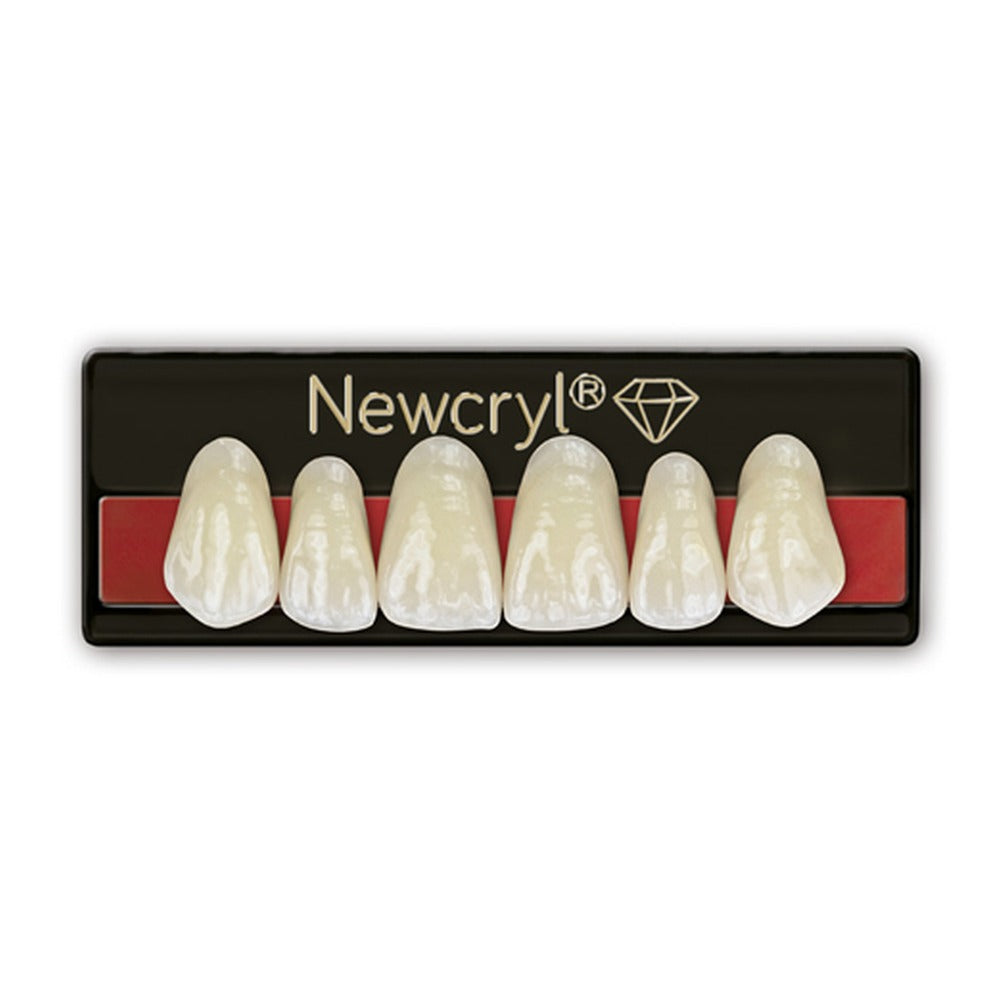
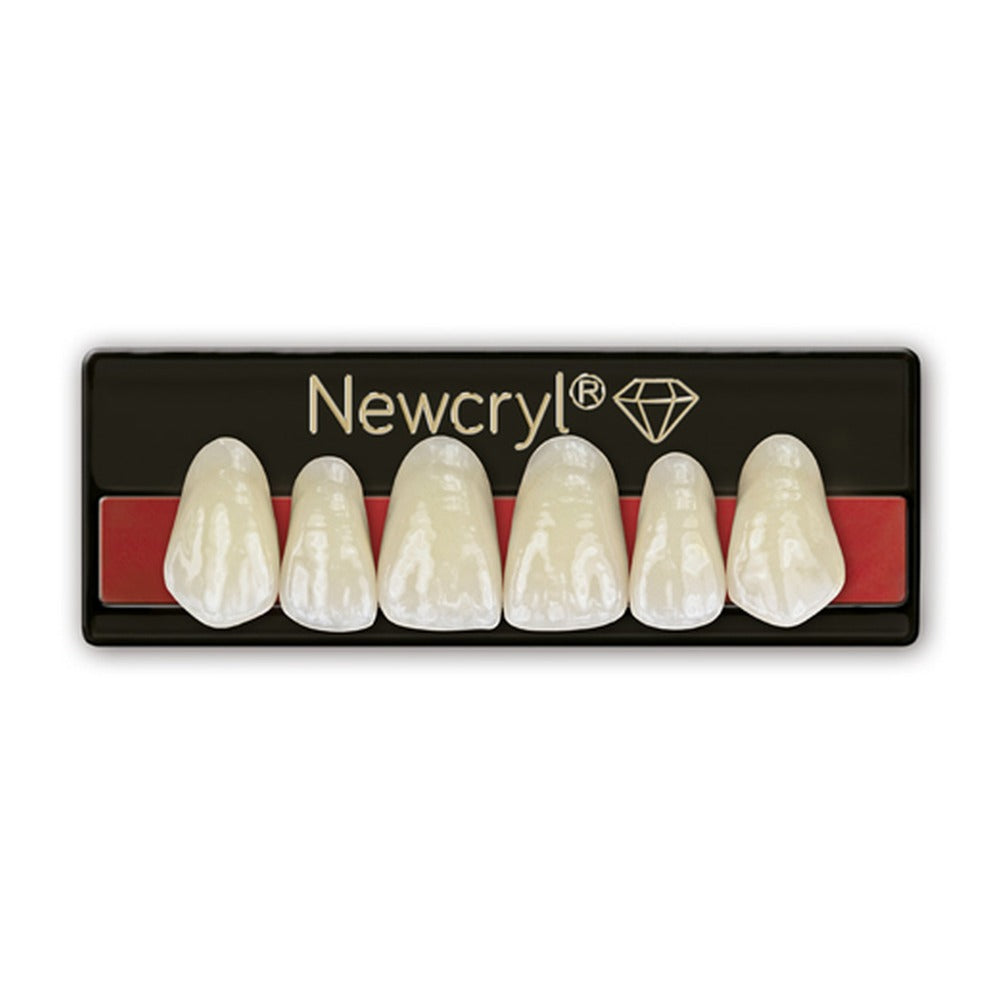

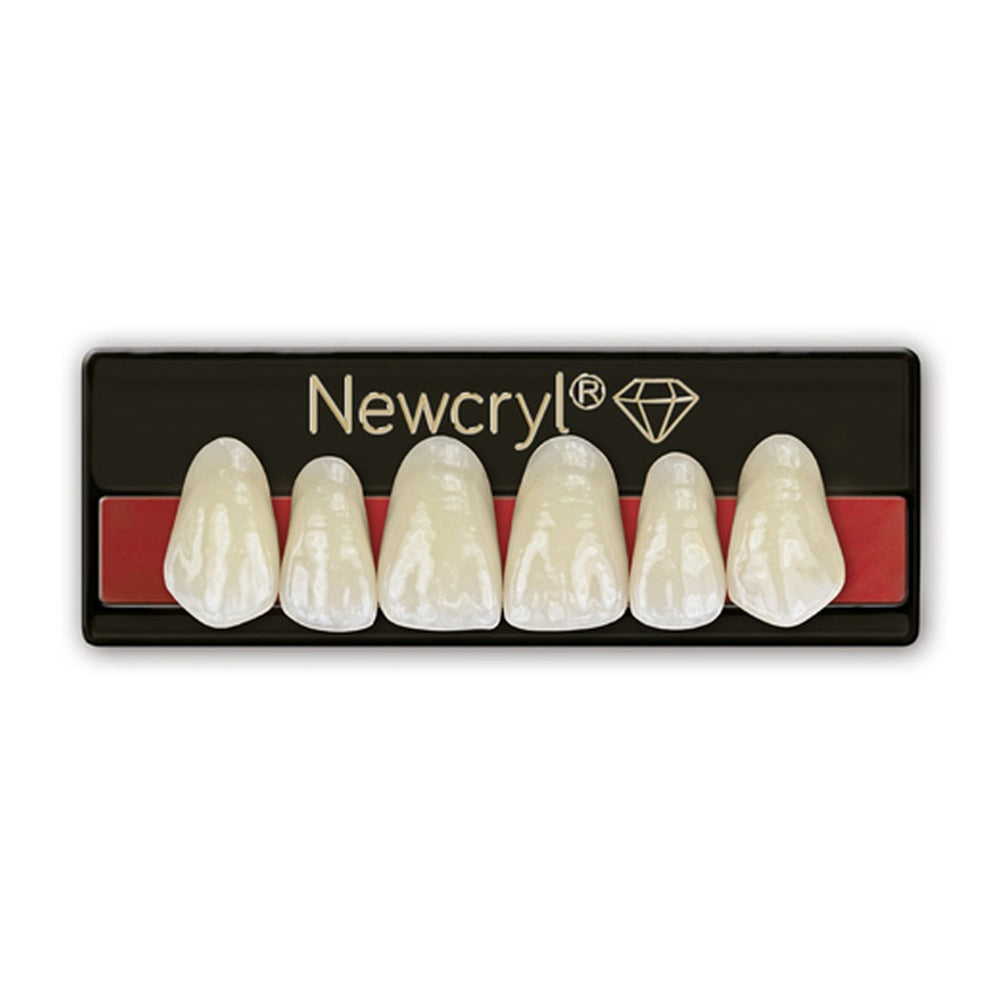


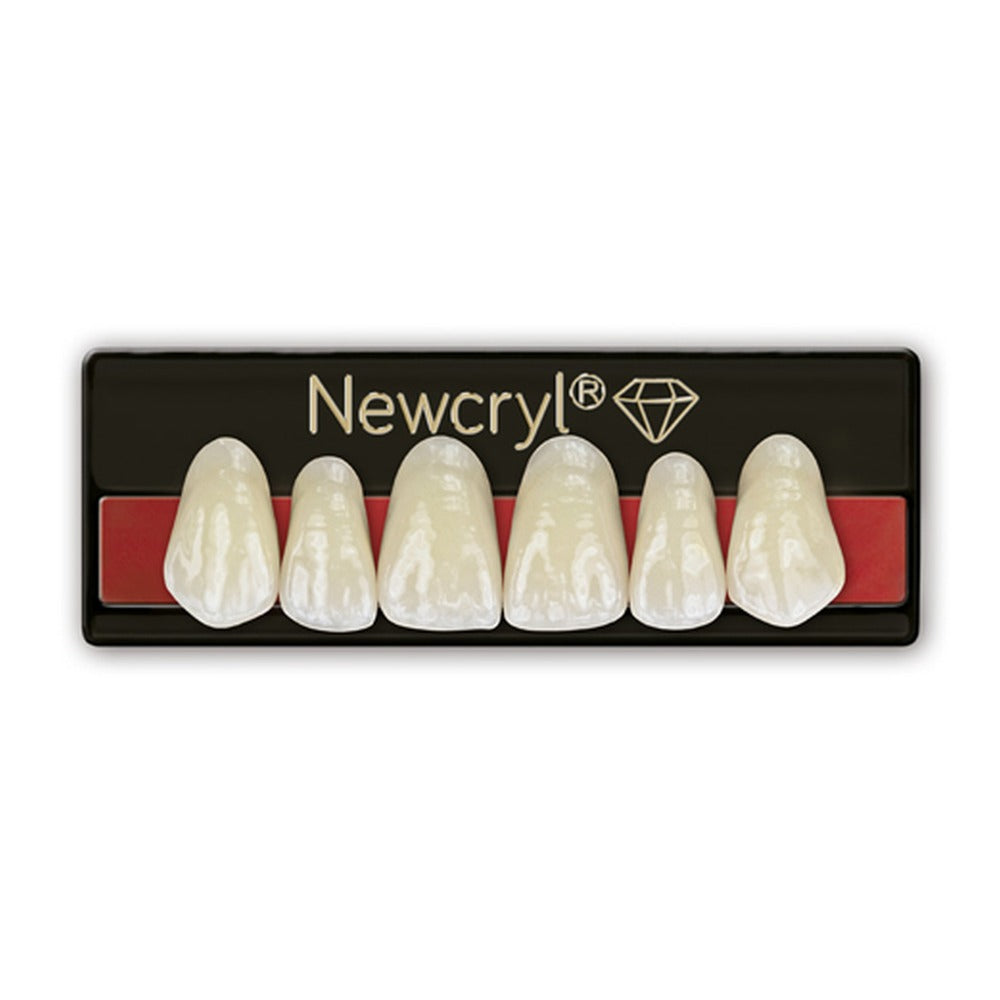
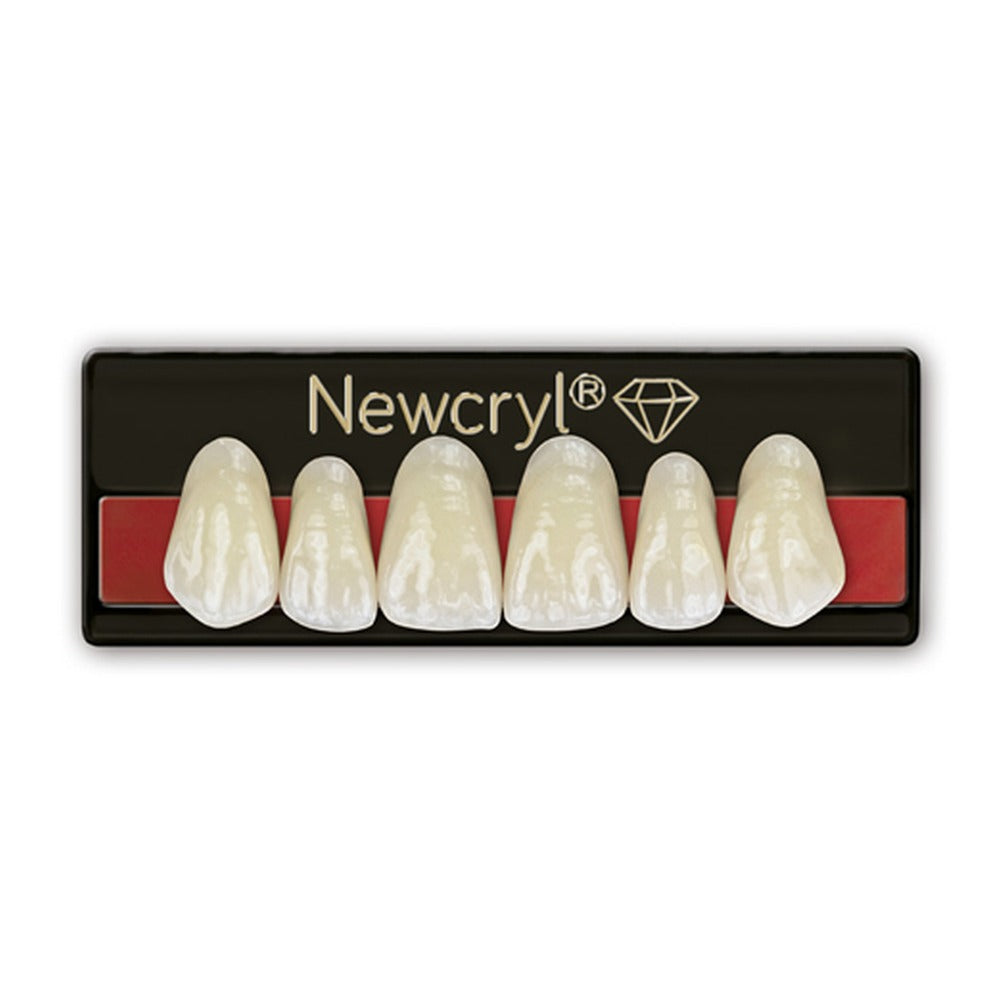


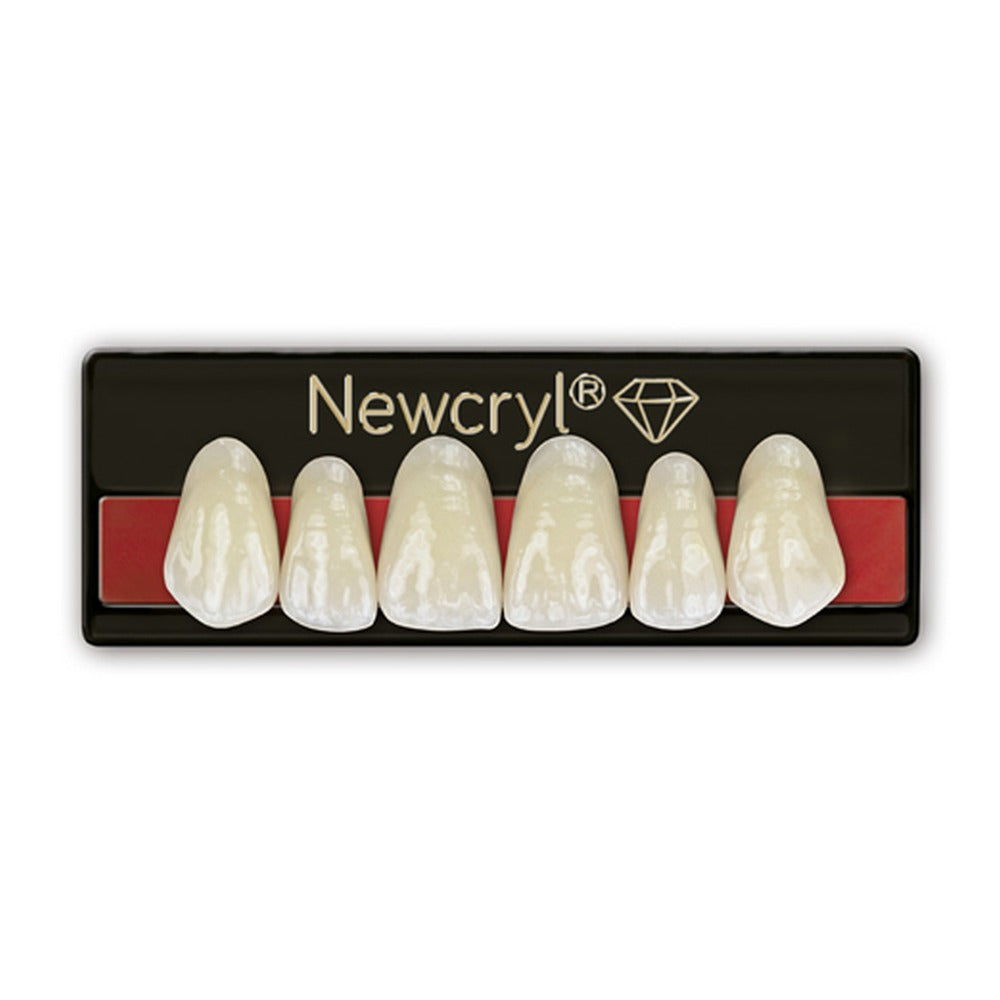
Acrylic denture teeth are ordered by three things: mould, shade and card. This shelf holds more than 500 listings, almost all of them New Stetic NewCryl, with additional listings from RMH3 Dental Supply, split across upper and lower anterior moulds, posterior moulds and full tooth sets.
Anterior moulds carry codes such as 2N, 2D, 3D and 3N and describe the width, length and outline form of the six-tooth card; posterior moulds like 30L and 32M describe the size and cusp form of an eight-tooth card. Shades follow the familiar Vita-style letters, running from the bleached A0 through A2, B, C1 to C3 and D3, so anterior and posterior cards can be shade-matched to each other and to any remaining natural dentition.
These are the standard replacement teeth for dentures used in full and partial removable work: cross-linked acrylic, chemically bondable to a PMMA denture base, easy to grind and polish chairside, and far kinder to an opposing natural arch than porcelain. Cards are sold six teeth to an anterior card and eight to a posterior card, which is how a lab stocks by mould rather than by patient.
How to choose
- Pick the mould from the mould chart and the patient's arch width and lip support, not from a product code you remember.
- Order the shade by the same system across the case: one shade for upper and lower anteriors, and a matched or adjacent shade for the posteriors.
- Keep upper and lower anterior cards in mind as separate purchases; they are different moulds and are not interchangeable.
- For posteriors, choose the cusp form and size that fit the available interridge space and the opposing occlusion.
- Buy a full tooth set when you need a complete upper and lower in one shade; buy single cards when you are replacing or restocking a mould.
- Match the tooth to the base: acrylic teeth bond chemically to PMMA denture base resin, so keep the base and tooth chemistry in the same family.
Frequently asked questions
What are acrylic denture teeth made from?
Cross-linked polymethyl methacrylate. Cross-linking raises wear and crazing resistance while keeping the material easy to adjust with a bur and to polish. Because the tooth and a PMMA denture base share the same chemistry, the tooth bonds chemically into the base rather than relying on mechanical retention alone.
What do denture teeth moulds mean?
A mould code identifies the shape and size of a card of teeth: for anteriors the width, length and outline form of the six-tooth set, for posteriors the size and cusp form of the eight-tooth set. Codes such as 2N, 2D, 3D and 3N are anterior moulds; 30L and 32M are posterior moulds.
Can I use these as replacement teeth for dentures?
Yes. Individual cards are the usual source of replacement teeth for dentures when a tooth has debonded or fractured. Match the existing mould and shade as closely as possible, remove the old tooth and any remaining acrylic, and process the new one in with a repair acrylic.
Which shades are stocked?
Shades run through the Vita-style range on the NewCryl line, from the very light A0 through the A, B, C and D families, including A2, B, C1 to C3 and D3. Shade availability varies by mould, so check the card you need rather than assuming every mould exists in every shade.
How are denture teeth packed and shipped?
Anterior teeth are supplied on six-tooth cards, posteriors on eight-tooth cards, and full sets cover an upper and lower arch. Orders ship from Northern Virginia, and anything in stock ordered by 3 PM ET goes out the same day.