

Long handling time

U&C InternationalLong handling time
U&C UNC Coloring Liquid- Blue 30mL
SKU 002-1061MFR# UNC LIQUID
$30.00
· Long handling time
The U&C UNC Coloring Liquid- Blue 30mL is a dental product supplied by U&C for dental laboratory and clinical use. Catalog code UNC LIQUID.
U&C UNC Coloring Liquid- Blue 30mL is a coloring liquid from U&C International. Manufacturer part number UNC LIQUID.
Find it on our Digital Lab & CAD/CAM shelf, under Characterization & Finishing.
Orders placed before 3 PM ET ship the same day when the item is on our shelf (otherwise within 3 business days), and ground shipping is free over $49.
Product
- Manufacturer
- U&C International
- Manufacturer #
- UNC LIQUID
- Item code
- 002-1061
- UPC / Barcode
- UNC LIQUID
Catalog path
- Marketplace
- Laboratory
- Category
- Digital Lab & CAD/CAM
- Subcategory
- Characterization & Finishing
Ordering
- Status
- Long handling time
More from Characterization & Finishing
In stock in the same subcategory. Not the same product — check the specs before you swap.


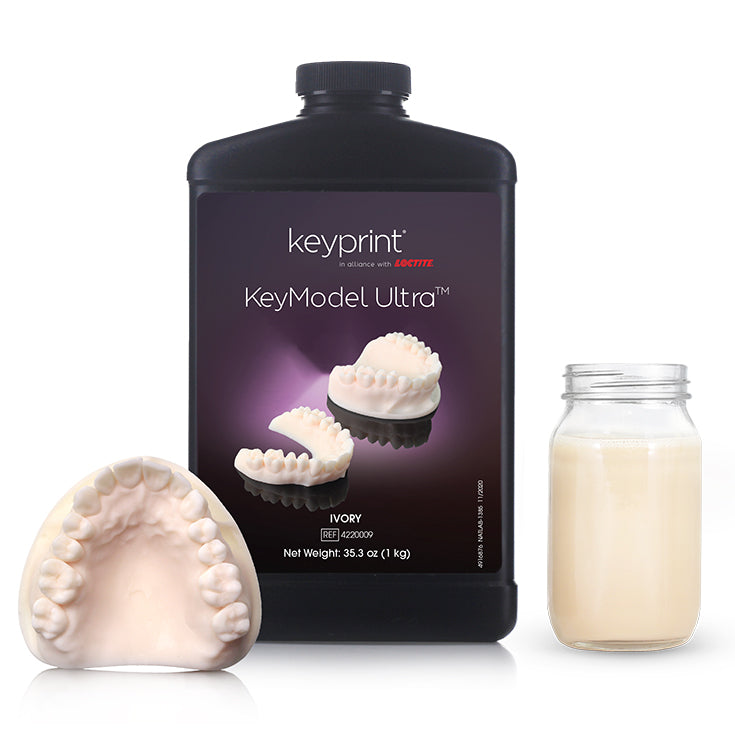
Keystone Industries
Keystone KeyPrint KeyModel Ultra 3D Printing Resin
In stock
14 sold this monthfrom $71.30

Keystone Industries
Keystone KeyPrint KeySplint 3D Printing Resin
In stock
24 sold this monthfrom $234.06


Questions
What is U&C UNC Coloring Liquid- Blue 30mL used for?
The U&C UNC Coloring Liquid- Blue 30mL is a dental product supplied by U&C for dental laboratory and clinical use.
When does it ship?
In-stock orders placed before 3 PM ET ship the same day. An item we don't keep on the shelf shows its own ship-by date on its page, and you can cancel it for a full refund until it ships.Ground shipping is free over $49.
About coloring liquids
A colouring liquid shades white zirconia before sintering: the milled restoration is immersed in it or brushed with it. Colouring liquids are made from metal salt solutions such as ferric chloride and cerium chloride.
Characterization means intentionally altering a restoration with colorants to achieve a desired effect. Milling leaves zirconia with a rough surface, so it is polished or glazed afterwards.
How the types differ
- Coloring liquids — Applied before sintering, so the colour is fired into the zirconia.
- Zirconia stains — Applied to the surface after sintering, where a colouring liquid goes on before.
- Glazes — The final glassy layer, meant to give gloss and colour stability and to reduce plaque retention and wear on the opposing tooth.
What to look at when choosing
Colouring liquid: the final shade depends on the concentration of the solution; immersion time has been reported to have no such influence. In one study the number of applications and the thickness of the zirconia both changed the colour significantly.
Glaze form: in one laboratory study the powder and liquid method gave a smoother surface than the others, particularly after corrosion.
Sources: The Glossary of Prosthodontic Terms, 9th edition (J Prosthet Dent 2017) · Effect of different glazing methods on the surface roughness and hardness of zirconia ceramics: an in vitro study (BMC Oral Health 2025) · Revolution of Current Dental Zirconia: A Comprehensive Review (Molecules 2022) · Effect of Varying Thickness and Number of Coloring Liquid Applications on the Color of Anatomic Contour Monolithic Zirconia Ceramics (J Dent Shiraz 2018)
