

RenfertShips in 3 business days
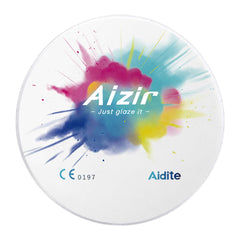
Renfert EASY Blank Milling Wax Disc, Ø 98.5 mm · 14 mm
SKU 043-1186MFR# 7700014
Thickness
14 mm
14 mm$30.00
20 mm$30.00
Renfert EASY Blank Milling Wax Disc, Ø 98.5 mm is a wax disc from Renfert.
This page carries 2 thickness options: 14 mm, 20 mm.
Find it on our Digital Lab & CAD/CAM shelf, under CAD/CAM Blocks & Discs.
Orders placed before 3 PM ET ship the same day when the item is on our shelf (otherwise within 3 business days), and ground shipping is free over $10.
Product
- Manufacturer
- Renfert
- Manufacturer #
- 7700014
- Item code
- 043-1186
Catalog path
- Marketplace
- Laboratory
- Category
- Digital Lab & CAD/CAM
- Subcategory
- CAD/CAM Blocks & Discs
Ordering
- Status
- Ships in 3 business days
More from CAD/CAM Blocks & Discs
Stocked in the same subcategory.



Keystone Industries
Keystone KeyPrint KeySplint 3D Printing Resin
In stock
13 sold this monthfrom $214.17
Keystone Industries
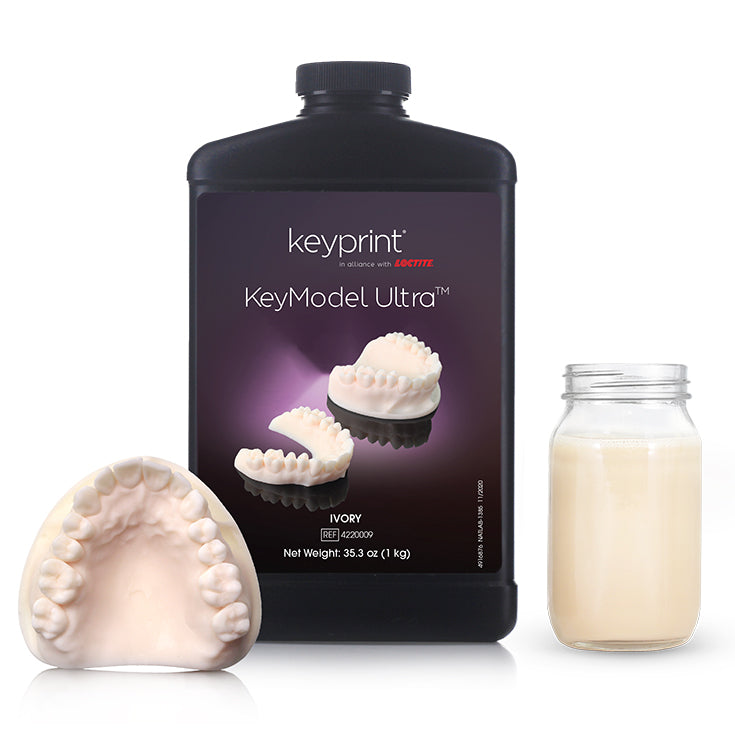
Keystone KeyPrint KeyModel Ultra 3D Printing Resin
In stock
11 sold this monthfrom $73.80


Questions
Which thickness options are on this page?
This page carries 2 thickness options: 14 mm, 20 mm. Pick one to see its price, part number and stock.
When does it ship?
In-stock orders placed before 3 PM ET ship the same day; anything not on our shelf ships within 3 business days.Ground shipping is free over $10.
About wax discs
A wax disc is milled into a wax pattern, the positive likeness of the object to be made. The pattern is then cast in metal by the lost-wax technique, the traditional way of making a metal substructure. The FDA lists wax for constructing patterns from which metal crowns and bridges are cast as a Class I device (21 CFR 872.6890).
A CAD/CAM block or disc is a prefabricated piece of material from which a restoration is milled by a computer-controlled machine. The Glossary of Prosthodontic Terms defines CAD-CAM as the computer-controlled subtractive fabrication of a three-dimensional object, used to produce crowns, veneers, inlays, onlays and other prostheses. By material, a systematic review groups CAD-CAM materials into silicate ceramics, oxide ceramics, composite resins, PMMA, PEEK, polymer-infiltrated ceramic network materials and metal.
How the types of block and disc differ
- Zirconia discs and blocks — The strongest of the materials here, with aesthetics somewhat below the silicate ceramics. Milled oversize and then sintered, because it shrinks in the furnace.
- Hybrid ceramic blocks — Part ceramic and part polymer, where zirconia is all ceramic. Resin block composites can be used for permanent restorations.
- PMMA discs — A polymer for provisional work, where zirconia and hybrid ceramic are for permanent restorations.
- Wax discs — Not a final material: the milled wax is a pattern that is removed from the mould, usually by heat.
What to look at when choosing a zirconia disc
Yttria content: the cubic phase and the translucency rise with the yttria concentration. More cubic phase improves translucency and lowers strength.
Grade names: with 3 to 8 mol% yttria the material is called partially stabilised zirconia (PSZ), and at about 3 mol% it is close to fully tetragonal (TZP).
Colour: a zirconia restoration is coloured either by using a pre-coloured block or by immersing or brushing the white restoration with colouring solution.
Sintering: the optimum sintering temperature range given in the review is 1350 to 1550 °C.
Sources: Clinical Applications and Mechanical Properties of CAD-CAM Materials in Restorative and Prosthetic Dentistry: A Systematic Review (J Funct Biomater 2023) · The Glossary of Prosthodontic Terms, 9th edition (J Prosthet Dent 2017) · Revolution of Current Dental Zirconia: A Comprehensive Review (Molecules 2022) · Biofilm Formation on Hybrid, Resin-Based CAD/CAM Materials for Indirect Restorations: A Comprehensive Review (Materials 2024) · FDA 21 CFR 872.3770, Temporary crown and bridge resin · Comparison the Marginal and Internal Fit of Metal Copings Cast from Wax Patterns Fabricated by CAD/CAM and Conventional Wax up Techniques (J Dent Shiraz 2013) · FDA 21 CFR 872.6890, Intraoral dental wax · Translucent Zirconia in Fixed Prosthodontics: An Integrative Overview (Biomedicines 2023)
