

Maxigen Biotech
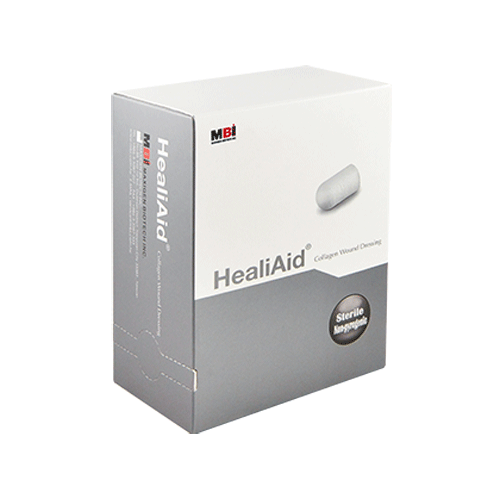
Maxigen Biotech HealiAid Collagen Wound Dressing (Plug), 10 mm x 20 mm — 10/Box
066-0003
$86.08
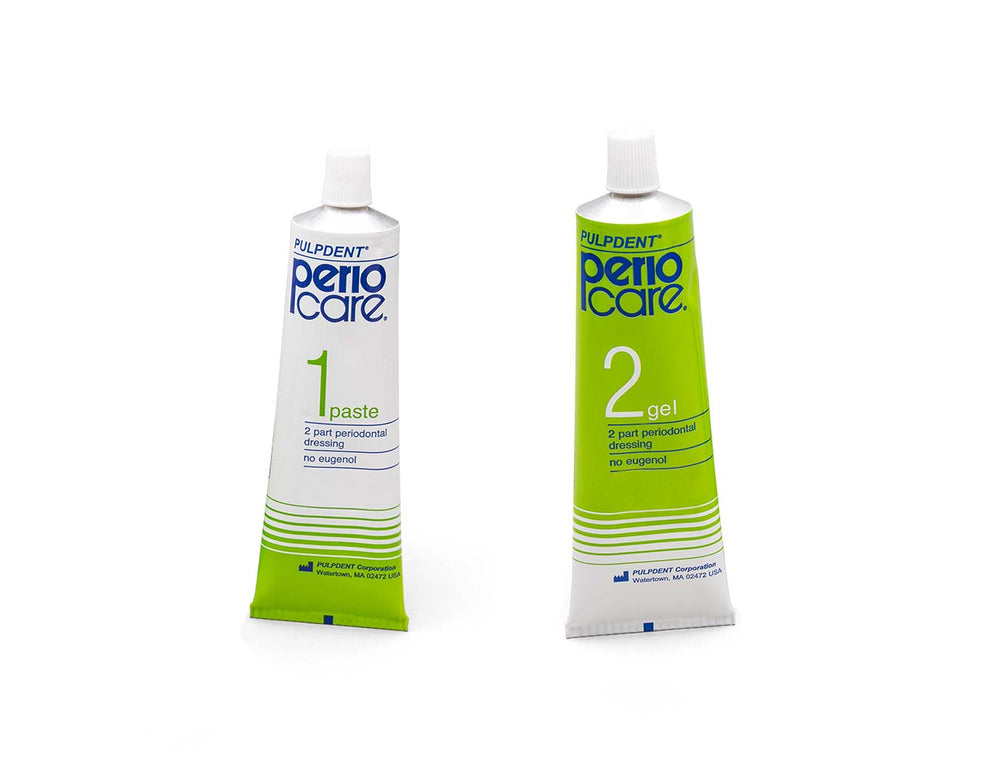
A highly elastic two-paste periodontal dressing for post-surgical tissue management. It sets resiliently hard and does not chip or fall apart in the mouth. Kit, 180 mL total.
• Durable protection of tissue; Pulpdent notes tissues are clean when the dressing is removed • Ready to pick up with wet fingers 45–60 seconds after mixing • Working time 4–5 minutes; sets in 15 minutes
In the package: 90 mL tube Part 1 paste, 90 mL tube Part 2 gel and a mixing pad.
For use by a dental professional. Made in USA by Pulpdent Corporation.
Stocked in the same subcategory.





A highly elastic two-paste periodontal dressing for post-surgical tissue management.
In-stock orders placed before 3 PM ET ship the same day. An item we don't keep on the shelf shows its own ship-by date on its page, and you can cancel it for a full refund until it ships.Ground shipping is free over $49.
A surgical dressing of the absorbable hemostatic kind is a device intended to produce hemostasis by accelerating the clotting process of blood. The FDA defines it as absorbable, and the class is Class III. A narrative review of oral surgery describes oxidized cellulose and gelatin sponges as achieving hemostasis primarily through passive mechanisms, oxidized cellulose providing a matrix for platelet activation and gelatin sponges absorbing blood and inducing clotting by volume expansion. It adds that such agents are generally effective for capillary or venous bleeding, and lists collagen sponges, fibrin sealants, oxidized cellulose and topical thrombin among the local hemostatic agents studied. A periodontal dressing is a different thing: a review names protecting the wound from mechanical trauma and keeping the surgical site stable during healing among the most important advantages of placing one after periodontal surgery.
A surgical suture is a sterile, flexible thread or strand, and the FDA describes each material in its own regulation as indicated for use in soft tissue approximation. Sutures are classified as absorbable or non-absorbable, with further distinctions by natural or synthetic origin, monofilament or multifilament, coated or uncoated, and dyed or undyed. Absorbability largely determines how long a material remains within the tissues and whether removal afterwards is required.
A review notes that the conditions in the oral cavity, with the enzymatic action of saliva, can adversely affect suture viability and lead to wound breakdown. Most of the suture regulations state that the material meets a United States Pharmacopeia monograph for surgical sutures, and that the suture may be provided with or without a standard needle attached. A review adds that sutures are not only essential for wound closure but also stabilise tissues, maintain haemostasis and help healing.
Filament: a review reports that multistranded sutures are highly susceptible to microbial colonization and, used in the mouth particularly after extractions, may increase the risk of surgical wound infections. The same review notes monofilaments are less susceptible to colonization but more challenging to manipulate, with sharp ends that may irritate oral tissue and inadequate knot security.
Material and tissue response: in a periodontal study comparing braided silk with expanded polytetrafluoroethylene, silk produced a more pronounced inflammatory reaction in the surrounding gingival tissues. In an in vitro study, braided silk harboured approximately five to eight times more bacteria than nylon, which showed the lowest bacterial adherence among the sutures evaluated.
Size: finer sutures, particularly 6-0 or 7-0, have a reduced diameter that allows atraumatic soft tissue handling, precise approximation of wound edges and improved flap adaptation. Material: an expanded polytetrafluoroethylene suture is a monofilament, non-absorbable thread intended for use in soft tissue approximation and ligation.
What drives the choice: a review states it depends on the wound site, the healing pattern and the clinician’s expertise. Coatings such as silicone or wax have been developed to reduce suture friction, and a review of coated sutures in oral surgery found their effectiveness there remains limited, potentially because of the high microbial load in the region.
A review lists what a periodontal dressing material needs: slow setting so it can be manipulated and left smooth without irritation, enough flexibility to withstand distortion and displacement, adhesion and coherence without bulk, and dimensional stability to prevent salivary leakage and plaque accumulation. The same review notes that improved adaptation, meaning less dimensional change, decreases the accumulation of plaque under the dressing.
Delivery: a eugenol-free dressing based on the reaction between a metallic oxide and fatty acids is supplied in two tubes, the contents of which are mixed immediately before use.
Limits: the review records that contact stomatitis as a result of applying a periodontal dressing has been frequently reported in the literature, and that indications for their use are limited. Selecting one: the review names the surgeon’s intention, the time the dressing has to remain on the surgery site and its dimensional changes among the factors involved.
Sources: FDA 21 CFR 878.4830, Absorbable surgical gut suture (CFR 2025, govinfo) · Makrygiannis et al. 2025, Coated sutures for use in oral surgery: a comprehensive review (Clin Oral Investig) · AlQranei et al. 2026, Beyond sutures: a focused review of contemporary concepts in periodontal wound closure (Biomater Investig Dent) · FDA 21 CFR 878.5020, Nonabsorbable polyamide surgical suture (CFR 2025, govinfo) · FDA 21 CFR 878.4493, Absorbable poly(glycolide/l-lactide) surgical suture (CFR 2025, govinfo) · FDA 21 CFR 878.5030, Natural nonabsorbable silk surgical suture (CFR 2025, govinfo) · FDA 21 CFR 878.4490, Absorbable hemostatic agent and dressing (CFR 2025, govinfo) · Dinkova et al. 2025, Biomaterial-Based and Surgical Approaches to Local Hemostasis in Contemporary Oral Surgery: A Narrative Review (J Funct Biomater) · Baghani & Kadkhodazadeh 2013, Periodontal Dressing: A Review Article (J Dent Res Dent Clin Dent Prospects) · FDA 21 CFR 878.5035, Nonabsorbable expanded polytetrafluoroethylene surgical suture (CFR 2025, govinfo)
Hi. Ask about a product, shipping or returns. For an order, I'll pass you to our team.
Answers are written by AI from our catalog and policies, and can be wrong. It does not give clinical advice.
