


Zest Dental SolutionsShips in 3 business days
Zest CHAIRSIDE Attachment Processing Material · Normal Set · 8 g (4 mL) Syringe
SKU 111-0341MFR# 09566-P
Set
Normal Set
Normal Set$96.41
Fast Set$95.93
Size
8 g (4 mL) Syringe
8 g (4 mL) Syringe$96.41
18 mL Cartridge$309.99
CHAIRSIDE Attachment Processing Material, Fast Set Kit - 4 mL Syringe and Tips. Includes: 15 brown mixing tips and 15 angled tips. No primer required. Bonds to itself for easy void-fills and touch-ups. Dual-cure capability provides convenience and flexibility. Shorter mixing tips and ideal viscosity for accurate application with minimal waste and cost. Low curing temperature. Low odor and minimal taste. Working time: 30 seconds. Setting time: 2 min. Cure time: 3 min.
Product
- Manufacturer
- Zest Dental Solutions
- Manufacturer #
- 09566-P
- Item code
- 111-0341
Catalog path
- Marketplace
- Clinical
- Category
- Implants & Oral Surgery
- Subcategory
- Implant & Bone Graft
Ordering
- Status
- Ships in 3 business days
More from Implant & Bone Graft
Stocked in the same subcategory.


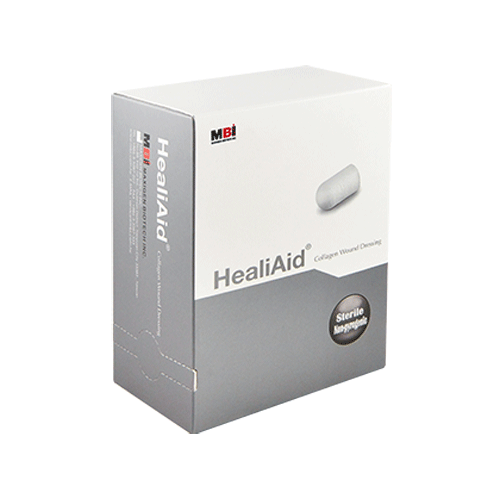
Maxigen Biotech
HEALIAID COLLAGEN WOUND DRESSING (PLUG) 10 MM X 20 MM X 10PCS/BOX
In stock
174 sold this month$81.79

RMH3 Dental
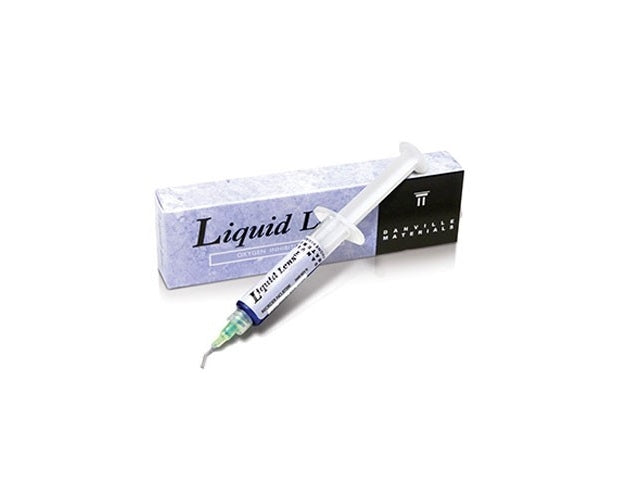
Soluble Hemostatic Gauze Dressing, 1.9 x 1.9cm (.75" x .75") — 20/Box
In stock
64 sold this month$15.48


Questions
What is Chairside used for?
CHAIRSIDE Attachment Processing Material, Fast Set Kit - 4 mL Syringe and Tips.
Which set and size options are on this page?
This page carries 2 set options: Normal Set, Fast Set. This page carries 2 size options: 8 g (4 mL) Syringe, 18 mL Cartridge. Pick one to see its price, part number and stock.
When does it ship?
In-stock orders placed before 3 PM ET ship the same day; anything not on our shelf ships within 3 business days.Ground shipping is free over $10.
About implant accessories
The FDA describes endosseous dental implant accessories as manually powered devices intended to aid in placing or removing implants and abutments, to prepare the site for them, to aid in fitting them, to aid in making dental prosthetics, and to be used with implants where tissue contact lasts less than one hour. The list includes drill bits, screwdrivers, countertorque devices, placement and removal tools, laboratory pieces used for making dental prosthetics, and trial abutments, and the class is Class I. An implant-supported overdenture is retained by an attachment matrix housing that sits inside the denture and connects to the implants through either solitary-type or bar-type attachments. That housing is fitted either chairside, called the direct technique, or in a laboratory, the indirect one, and a study notes most practitioners prefer the chairside technique to minimize processing errors.
An endosseous dental implant is a prescription device made of a material such as titanium or titanium alloy, intended to be surgically placed in the bone of the upper or lower jaw arches to support prosthetic devices such as artificial teeth and restore chewing function. The FDA puts root-form implants in Class II with special controls, and describes them as four geometrically distinct types: basket, screw, solid cylinder and hollow cylinder. This shelf holds no implants: it carries accessories for implant-retained prostheses, a bur, and bone graft and collagen dressing materials.
Bone grafting material is defined by the FDA as a material such as hydroxyapatite, tricalcium phosphate, polylactic and polyglycolic acids, or collagen, intended to fill, augment or reconstruct periodontal or bony defects of the oral and maxillofacial region. It is Class II with special controls, unless it contains a drug that is a therapeutic biologic, in which case it is Class III and requires premarket approval. A review sorts bone grafts by source into autografts from the patient, allografts from a different person of the same species, xenografts from another species, and synthetic substitutes made to mimic natural bone.
How implant accessories and surgical burs differ
- Implant Accessories — Tools and materials that work on the prosthesis or the implant site, not the implant itself and not a cutting instrument. A study lists the pick-up materials used to fix an attachment housing into a denture: heat-cured or self-curing acrylic, light-cured resin composite, relining resins and self-curing resin-based materials.
- Surgical Burs — A rotating cutter driven by a handpiece rather than a hand tool or a material. In the FDA’s description the same device covers cutting hard tissue in the mouth and cutting the metals, plastics and porcelains used in making dental devices.
What to look at when choosing
What a graft can do: a review separates osteogenesis, where living osteoblasts from the graft contribute to new bone, osteoinduction, where osteoprogenitor cells are stimulated usually through a bone morphogenetic protein released from the graft, and osteoconduction, where the graft is a scaffold that bone can be created in and around.
Form: the same review classifies grafting materials by histologic architecture, embryologic origin, form and blood supply as well as by source. Processing of an allograft: in a demineralized freeze-dried bone allograft the inorganic part of the bone is eliminated as well as the water, leaving only the organic part that contains bone morphogenetic proteins.
Holding an attachment housing: a study reports the retention of resin materials to the housing comes mainly from mechanical engagement of the undercuts on the attachment walls, with no chemical bond formed, so housings are susceptible to debonding from the denture base over time.
Contact time: the FDA class for implant accessories covers use where tissue contact lasts less than one hour.
Sources: FDA 21 CFR 872.3640, Endosseous dental implant · FDA 21 CFR 872.3930, Bone grafting material · Titsinides et al. 2018, Bone grafting materials in dentoalveolar reconstruction: A comprehensive review (Jpn Dent Sci Rev) · FDA 21 CFR 872.3980, Endosseous dental implant accessories · Nakhaei et al. 2025, Bonding the Titanium Attachment Matrix Housing to Acrylic Overdentures Using Different Primers, Adhesives, and Resin Materials (Int J Dent) · FDA 21 CFR 872.3240, Dental bur · FDA 21 CFR 872.4120, Bone cutting instrument and accessories
