

RMH3 Dental
RMH3 Dental Multi-Enzyme Evacuation System Cleaner, Concentrated — 1 Gallon
001-1114
$22.79

Stocked in the same subcategory.
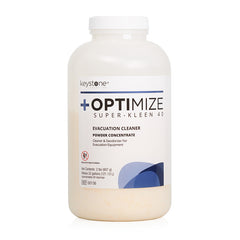


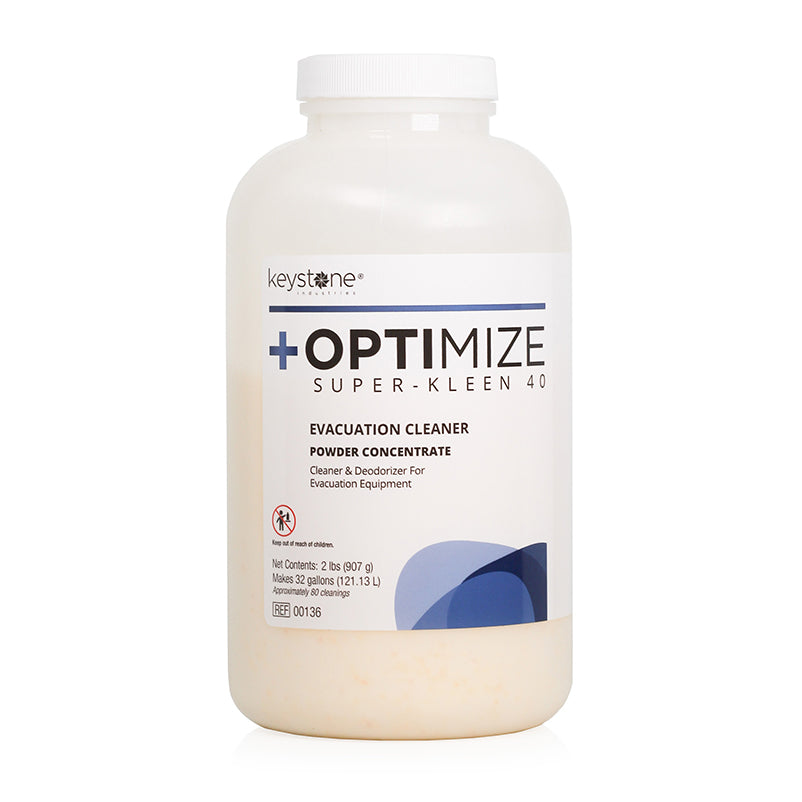

Second stage in Palmero 2-Step Evacuation System Maintenance Kit • Time-released tablet; use 1 tablet weekly • Continuously cleans evacuation system lines • Restores pressure, and extends pump life • Keeps vacuum lines functioning at peak efficiency • Can be used as a cost effective detergent to clean high/low speed lines from tip to trap by dissolving 5 tablets in the Pour and Clean pre-mix bottle (3547P) for premixing concentrate • Compatible with amalgam separator systems • Neutral (7 pH) formulation follows EPA Guidelines for waterline management • Does not contain bleach, chlorine, iodine, peroxide, or any oxidizers To clean high/low speed lines: Dissolve 5 Vacuum Clean tablets in Pour and Clean 16 oz. dispenser (#3547P) and add hot water.
45 per pack; the price shown is per pack.
In-stock orders placed before 3 PM ET ship the same day. An item we don't keep on the shelf shows its own ship-by date on its page, and you can cancel it for a full refund until it ships.Ground shipping is free over $49.
Dental offices use disinfectants or line cleaners to reduce odours, remove solid waste particles and biofilms in the lines, and to maintain low microbial counts in dental unit water. Bacteria and biofilms sit steadily in the pipeline connected to the evacuators, which gives them a surface to form, grow and multiply on and shed from. Cleaning and disinfecting the suction pipeline has long been a problem in dental infection control, and a 2024 study reported that no domestic or international standard for it is recommended. The cleaners on this shelf are powders and liquid concentrates diluted before use.
Where a practice discharges amalgam process wastewater to a public treatment works, the EPA rule says dental unit water lines, chair-side traps and vacuum lines must not be cleaned with oxidizing or acidic cleaners, including bleach, chlorine, iodine and peroxide, that have a pH lower than 6 or greater than 8. The EPA says the purpose of that practice is to prohibit cleaners that solubilize mercury from dental amalgam in the wastewater lines of a dental facility. The named chemicals are not an exhaustive list: the EPA says a cleaner that is oxidizing would be prohibited even if its pH is between 6 and 8. The prohibition was not intended to reach dental unit water line cleaning products when those products are used in water supply lines.
The reason is chemical: when oxidizing or acidic line cleaners such as bleach, chlorine, iodine and peroxide are used, mercury can be released from the amalgam waste that has collected in the system. Oxidizing line cleaners can also solubilize elemental mercury bound to the amalgam. The ADA’s management practices for amalgam waste are to use line cleaners that minimize dissolution of amalgam, and not to use bleach or chlorine-containing cleaners to flush wastewater lines.
Chemistry: a study of cleaners for suction pipelines found a double-chain quaternary ammonium salt disinfectant had excellent bactericidal ability and anti-biofilm effect, and was less corrosive to the fittings of the pipelines. In the same study a chlorine disinfectant reduced or inhibited free-floating microorganisms but did nothing to remove or inhibit the biofilm on the pipeline wall, and its long-term use may corrode the pipeline fittings.
Foam: the same study notes that 3% hydrogen peroxide with a multi-enzyme cleaner may produce abundant foam when it meets blood stain, which may block the suction pipelines and the spittoon downpipes and cause gas backflow.
Whether the amalgam rule applies: it does not apply to a practice that exclusively practises oral pathology, oral and maxillofacial radiology, oral and maxillofacial surgery, orthodontics, periodontics or prosthodontics. It also does not apply to a practice that does not discharge any amalgam process wastewater to a public treatment works, such as one on a septic system.
State and local law: the EPA calls its rule a floor, a minimum requirement, not a ceiling, so state or local requirements may go beyond it.
Sources: EPA 40 CFR Part 441, Dental Office Point Source Category · EPA 822-S-17-002, Frequently Asked Questions on the Dental Office Category Rule (Nov 2017) · EPA 821-R-16-005, Technical and Economic Development Document for the Dental Office Category (Dec 2016) · ADA Oral Health Topics: Amalgam Separators and Waste Best Management Practices · Effective disinfecting of negative pressure pipelines of dental chair units reduces the risk of cross infection, 2024 (PMC10773641)
Hi. Ask about a product, shipping or returns. For an order, I'll pass you to our team.
Answers are written by AI from our catalog and policies, and can be wrong. It does not give clinical advice.
