

PalmeroShips in 3 business days
Palmero Ultra Super Sonic Ultrasonic Cleaner Tablets · 30/jar
SKU 044-0008MFR# 3559
Pack
30/jar
30/jar$27.50
- Technologically advanced ultrasonic and instrument pre-cleaning tablet
- Engineered to achieve maximum instrument cleaning and proper removal of bacteria, debris, and bioburden
- No mixing required, tablet is self-dissolving
- Contains cleaning properties for efficient ultrasonic cleaning or presoak
- Non-toxic and non-corrosive
Product
- Manufacturer
- Palmero
- Manufacturer #
- 3559
- Item code
- 044-0008
Catalog path
- Marketplace
- Clinical
- Category
- Infection Control
- Subcategory
- Instrument Cleaning Solutions
Ordering
- Status
- Ships in 3 business days
More from Instrument Cleaning Solutions
Stocked in the same subcategory.

RMH3 Dental
RayClean Tartar, Stain & Permanent Cement Remover, Ultrasonic Solution — 1 Gallon
001-1113
$17.50


RMH3 Dental
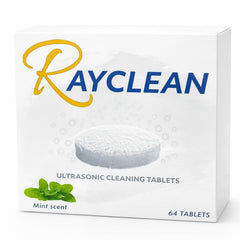
RayClean Ultrasonic Bio-Enzymatic Cleaning Tablets, 64/Box
In stock
522 sold this month$18.00


Veratiq Dental
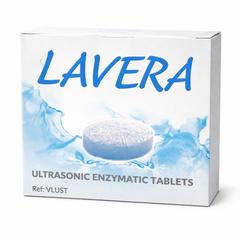
Veratiq Lavera Ultrasonic Enzymatic Cleaning Tablets, 64 Tablets/Box
In stock
18 sold this month$12.47
About ultrasonic solutions
Ultrasonic cleaning solutions go in an ultrasonic cleaner, which removes debris from instruments by cavitation: waves of acoustic energy in the bath. The waves disrupt the bonds that hold particulate matter to surfaces. The FDA lists an ultrasonic cleaner for medical instruments as a Class I device, and the entry covers the solutions intended for use with it for cleaning and sanitizing instruments. Using automated equipment can be more efficient and safer than cleaning contaminated instruments by hand.
Cleaning is the first step of instrument reprocessing: it removes debris and organic contamination from instruments. Blood, saliva and other contamination left on an instrument can cause the disinfection or sterilization process to fail. Debris is removed either by scrubbing with a surfactant, detergent and water, or by an automated process such as an ultrasonic cleaner or washer-disinfector using chemical agents. After cleaning, instruments are rinsed with water to remove chemical or detergent residue.
CDC asks that automated cleaning equipment be used to remove debris, to improve cleaning effectiveness and decrease worker exposure to blood. When manual cleaning cannot be done at once, instruments are placed in a puncture-resistant container and soaked with a detergent, a disinfectant-detergent or an enzymatic cleaner, which prevents patient material drying on them. A liquid chemical sterilant or high-level disinfectant such as glutaraldehyde is not recommended as a holding solution.
How the types of instrument cleaning solution differ
- Ultrasonic Solutions — A solution for an ultrasonic bath, a device that removes debris by a process called cavitation. Automated cleaning of this kind does not require presoaking or scrubbing of instruments.
- Enzymatic Cleaners — A detergent with enzymes in it: enzymatic cleaners are not disinfectants. Neutral pH detergent solutions that contain enzymes are compatible with metals and other materials used in medical instruments.
- Cleaning Accessories & Solutions — What hand cleaning is done with: a long-handled brush that keeps the hand away from sharp instruments, and heavy-duty gloves.
- General Cleaning Liquids — A plain detergent or surfactant solution, the kind scrubbing is done with.
What to look at when choosing an instrument cleaning solution
Method first: what to weigh in selecting cleaning methods and equipment is how well the method works, whether it suits the items being cleaned, and the occupational health and exposure risks.
Material compatibility: a neutral or near-neutral pH detergent is commonly used for instruments, while alkaline-based cleaners dissolve protein and fat residues efficiently but can be corrosive. Two studies found no difference in cleaning efficiency between enzymatic and alkaline-based cleaners, and another found no significant difference between enzymatic and non-enzymatic cleaners in microbial cleaning efficacy.
Residue: enzymes and chemicals are rinsed from the equipment, because residue can lead to adverse reactions.
Checking the result: no real-time test exists that can be used in a clinical setting to verify cleaning, so at a minimum every instrument is individually inspected and has to be visibly clean.
Sources: CDC: Best Practices for Sterilization in Dental Settings · CDC: Guidelines for Infection Control in Dental Health-Care Settings — 2003 (MMWR RR-17) · CDC: Sterilization and Disinfection (Summary of Infection Prevention Practices in Dental Settings) · FDA 21 CFR 880.6150, Ultrasonic cleaner for medical instruments · CDC: Guideline for Disinfection and Sterilization in Healthcare Facilities (2008)
