


PalmeroShips in 3 business days
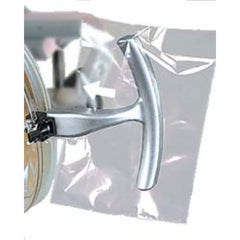
Palmero Tablet Barrier Sleeves, 8" x 11 1/2" · 100/box
SKU 044-0113MFR# 1804
Pack
100/box
100/box$25.00
The Palmero Tablet Barrier sleeve is designed to protect sensitive touch screen tablet devices and provide infection prevention by mitigating cross-contamination of harmful pathogens.
- Designed to protect sensitive touch screen tablet devices by minimizing disinfection requirements
- Easy application disposable sleeves accelerate operatory turnover
- Adhesive strip securely protects touch screen tablet device
- Compatible with iPad or tablet
Product
- Manufacturer
- Palmero
- Manufacturer #
- 1804
- Item code
- 044-0113
Catalog path
- Marketplace
- Clinical
- Category
- Infection Control
- Subcategory
- Surface Barriers
Ordering
- Status
- Ships in 3 business days
More from Surface Barriers
Stocked in the same subcategory.




RMH3 Dental
RayClean Ultrasonic Bio-Enzymatic Cleaning Tablets, 64/Box
In stock
522 sold this month$18.00


Veratiq Dental
Veratiq Lavera Ultrasonic Enzymatic Cleaning Tablets, 64 Tablets/Box
In stock
18 sold this month$12.47
About equipment and device barriers
Barrier protection of surfaces and equipment can prevent contamination of clinical contact surfaces, and is particularly effective for those that are difficult to clean. Radiography equipment such as the tubehead and control panel is protected with surface barriers that are changed after each patient. Where cleaning or disinfecting a noncritical item is difficult or would damage the surface, disposable barrier protection may be the preferred alternative.
Clinical contact surfaces are the surfaces in the operatory that are likely to be contaminated by direct spray or spatter during treatment, or by contact with contaminated gloved hands. CDC asks that clinical contact surfaces be barrier protected or cleaned and disinfected between patients, and that barriers be used in particular on surfaces that are difficult to clean. When a surface cannot be cleaned adequately, it should be protected with barriers.
Barriers include clear plastic wrap, bags, sheets, tubing and plastic-backed paper or other materials impervious to moisture. Because such coverings can become contaminated, they are removed and discarded between patients while staff are still gloved; the surface underneath is then examined and only cleaned and disinfected if contamination is evident.
How the types of surface barrier differ
- Digital Sensor & X-Ray Barriers — The radiograph equipment itself, such as the tubehead and control panel, is protected with surface barriers that are changed after each patient.
- Digital sensor barriers — Goes on the sensor, which comes into contact with mucous membranes and is considered a semicritical device.
- Instrument & Syringe Sleeves — Tubing-shaped barriers for the handles and dental unit attachments.
- Air-water syringe sleeves — Sized for the air-water syringe rather than for a handpiece hose or an evacuator handle.
- Chair Covers — Covers the chair and the switches on it.
- Chair & Headrest Covers — A cover for the chair and its headrest, removed and discarded between patients.
- Light Handle Covers — A barrier on the light handles, changed between patients.
- Barrier Film — Clear plastic wrap, the first of the barrier materials CDC lists.
- Tray sleeves — A bag-type barrier, removed and discarded between patients.
- Tray & Surface Wrap — Wrap and sheet material rather than the tubing-shaped barriers.
- Equipment & Device Barriers — Barrier protection reaches equipment as well as surfaces.
What to look at when choosing a surface barrier
FDA clearance: a semicritical item that cannot be reprocessed by heat sterilization or high-level disinfection is, at a minimum, barrier protected with an FDA-cleared barrier to reduce gross contamination during use.
Fit: barriers are aimed at the surfaces that are difficult to clean, and the CDC examples are switches on dental chairs and computer equipment. On a waterline-attached handle the barrier has to be impervious, and it is changed after each use.
What happens after: the surface under the barrier is examined once the barrier is off, and cleaned and disinfected only if contamination is evident.
The alternative: a clinical contact surface that is not barrier-protected is cleaned and disinfected with an EPA-registered hospital disinfectant after each patient, intermediate-level if visibly contaminated with blood.
Disposal: used environmental barriers that covered equipment during treatment are general medical waste and can go out with ordinary waste.
Sources: CDC: Best Practices for Environmental Infection Prevention and Control · CDC: Sterilization and Disinfection (Summary of Infection Prevention Practices in Dental Settings) · CDC: Guidelines for Infection Control in Dental Health-Care Settings — 2003 (MMWR RR-17) · ADA Oral Health Topics: Infection Control and Sterilization
