

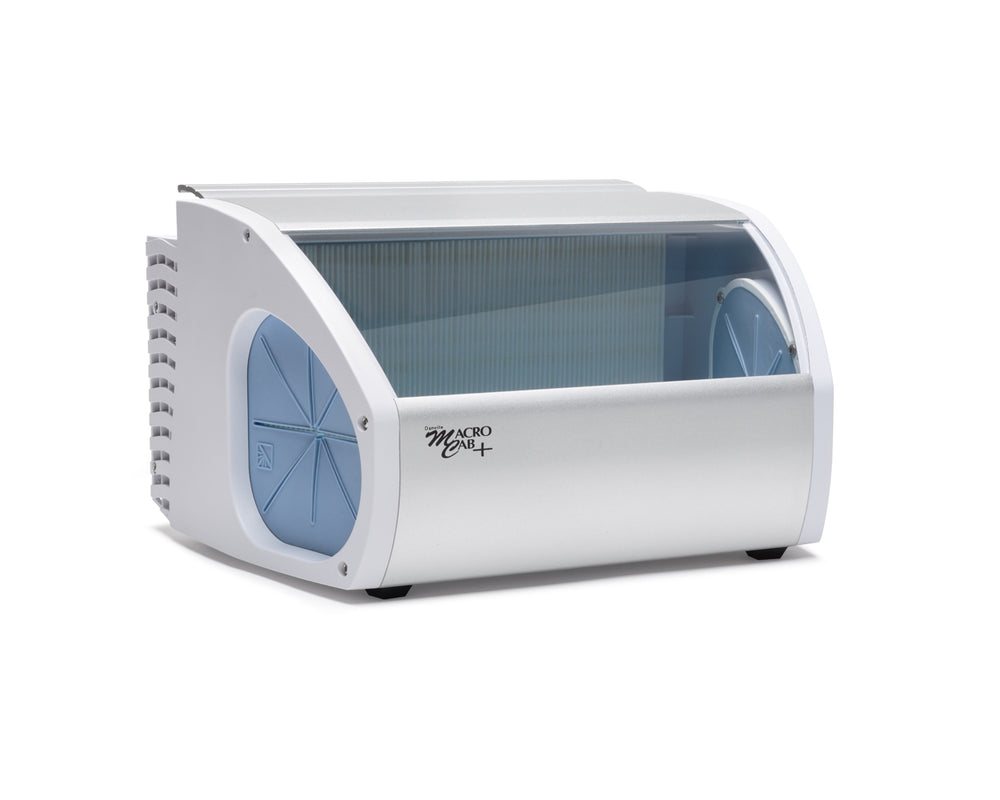
Zest MacroCab Plus (120 v). Catalog code 91556.
Zest MacroCab Plus (120 v) belongs to our dust collection & filtration range, made by Zest Dental Solutions. Manufacturer part number 91556.
Find it on our Lab Equipment shelf, under Dust Collectors & Sandblasters.
Orders placed before 3 PM ET ship the same day when the item is on our shelf (otherwise within 3 business days), and ground shipping is free over $49.
Product
- Manufacturer
- Zest Dental Solutions
- Manufacturer #
- 91556
- Item code
- 111-0054
- UPC / Barcode
- 91556
Catalog path
- Marketplace
- Laboratory
- Category
- Lab Equipment
- Subcategory
- Dust Collectors & Sandblasters
Ordering
- Status
- Special order
More from Dust Collectors & Sandblasters
Stocked in the same subcategory.
Buffalo Dental
Buffalo Optiblast II Microblaster Finishing System Intro Kit (Including 60 Degree Tip
055-0340
$211.91



Buffalo Dental
Buffalo Optiblast II Microblaster Finishing System Intro Kit (Including 60 Degree Tip
In stock
$211.91
About dust collection and filtration
Dust collection and filtration parts on the dust collectors shelf: the bags, filters and accessories of units that separate dust from exhaust air. A dust collector is a device, or a combination of devices, that separates dust from the air an exhaust system draws off. OSHA describes an exhaust ventilation system as two or more of these parts: an enclosure or hood, duct work, dust collecting equipment, an exhauster and a discharge stack.
A dust collector is a device, or a combination of devices, that separates dust from the air an exhaust system draws off. A sandblaster does what dentistry calls airborne-particle abrasion: it alters the surface of a material with abrasive particles propelled by compressed air.
The CDC reports that dental laboratory technicians can breathe in crystalline silica dust when mixing powders, removing castings from moulds, grinding and polishing castings and porcelain, and blasting with silica sand. Silicosis, the lung disease caused by breathing in that dust, is preventable.
How dust collection and sandblasting equipment differ
- Dust Collection & Filtration — Takes the dust out of the air that grinding, polishing and blasting put it into.
- Sandblasting Equipment — Works on the surface itself, with abrasive driven by compressed air.
- General Repair & Replacement Parts — Replacement motors, windows, shields, switches and media jars for the units.
- Hoses Tubing & Fittings — Hoses, hose ends, nozzles and disconnect kits: what joins a unit to the bench.
- Filters — Replacement filters, bags, screens and cartridge kits.
What to look at when choosing
Dust: blasting shatters the abrasive and the surface being blasted, and the dust formed contains particles small enough to be breathed in.
Exposure limit: OSHA limits respirable crystalline silica in the air to 50 micrograms per cubic metre, averaged over an 8-hour day.
Particle size and pressure: smaller particles at lower pressure remove less material with more precision, and larger particles at higher pressure remove material faster.
Noise: a study of dental laboratories names sandblasters among the equipment with high sound levels and puts compressed-air blasting at up to 105 dB.
Sources: OSHA 29 CFR 1910.94, Ventilation (abrasive blasting; grinding, polishing and buffing) · The Glossary of Prosthodontic Terms, 9th edition (J Prosthet Dent 2017) · CDC, Silicosis in Dental Laboratory Technicians, Five States, 1994-2000 (MMWR 53(09)) · OSHA 29 CFR 1910.1053, Respirable crystalline silica · Air-Abrasion in Dentistry: A Short Review of the Materials and Performance Parameters (J Biomed Phys Eng 2024) · Assessment of hearing performance of dental technicians due to the professional noise exposure (BMC Oral Health 2023)
