
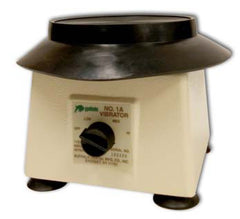

RMH3 Dental Round Vibrator – Laboratory, 110V A round bench vibrator for the dental lab, for pouring plaster and gypsum models and for investing. • 10.8 cm diameter removable plastic top • Cast metal housing with shock-absorbing rubber feet • Speed dial from low to high • 110V In the package: 1 vibrator. For use by a dental professional.
Product
- Manufacturer
- RMH3 Dental
- Manufacturer #
- RV-4011
- Item code
- 105-0009
- UPC / Barcode
- Round vibrator-RMH3
Catalog path
- Marketplace
- Laboratory
- Category
- Lab Equipment
- Subcategory
- Lab Fabrication & Finishing Equipment
Ordering
- Status
- In stock
More from Lab Fabrication & Finishing Equipment
Stocked in the same subcategory.


Buffalo Dental
Buffalo Optiblast II Microblaster Finishing System Intro Kit (Including 60 Degree Tip
In stock
$211.91

Questions
What is RMH3 Dental Round Vibrator used for?
RMH3 Dental Round Vibrator – Laboratory, 110V A round bench vibrator for the dental lab, for pouring plaster and gypsum models and for investing. • 10.8 cm diameter removable plastic top • Cast metal housing with shock-absorbing rubber feet • Speed dial from low to high • 110V In the package: 1 vibrator.
When does it ship?
In-stock orders placed before 3 PM ET ship the same day. An item we don't keep on the shelf shows its own ship-by date on its page, and you can cancel it for a full refund until it ships.Ground shipping is free over $49.
About lab vibrators
A lab vibrator is a mechanical vibrator that makes the gypsum mix flow and spread into the impression after it has been mixed. How fast it flows and spreads depends on the frequency and amplitude the vibrator is set to.
This shelf holds the bench machines of a dental laboratory: lathes, model trimmers, vibrators, mixers, and casting and polishing units. A cast is a life-size likeness formed from a material poured into an impression. Polishing is the act of making a denture or casting smooth and glossy, usually by friction.
A study of dental laboratories lists finishing crowns, bridges and partial dentures among its noisiest work, and names vibrators, polishing equipment and sandblasters as sources of high sound levels.
How the machines differ
- Lathes — Spins the wheels, cones and buffs used for polishing; the CDC lists lathes among the items to be cleaned and disinfected between patients.
- Lab Vibrators — Shakes the mix into the impression after it has been mixed.
- Mixing Equipment — Blends powder and water, under vacuum, before the mix is poured.
- Electro-Polishing Equipment — Brightens metal by removing a thin layer electrolytically, where a lathe polishes by friction.
- Casting Units — Fills a mould with molten material, where the other machines here shape or finish a solid one.
- Casting Machine Parts — The parts of a casting machine, where casting units are the machines.
- Filters — Air filters for vacuum mixers and filter parts for a casting machine.
- General Repair & Replacement Parts — Chucks, spindles, vacuum mixer parts, O-rings, fuses and regulators.
- Model Trimmers — Wet and dry model trimmers and arch trimmers, with their discs and parts.
- Mixing Bowls & Lab Vessels — The bowls, paddles and lids of a vacuum mixer, where mixing equipment is the mixer.
The shelf also holds model trimmers; no source on our allowed list describes them, so this guide does not.
What to look at when choosing
Air in the mix: the strength, hardness and abrasion resistance of a gypsum cast are affected by the number and size of the voids in it.
Surface after polishing: studies cited in the denture literature put the acceptable roughness of a hard surface in the mouth at no more than 0.2 micrometres.
The CDC reports that dental laboratory technicians can breathe in crystalline silica dust when mixing powders, removing castings from moulds, grinding and polishing castings and porcelain, and blasting with silica sand.
Cleaning between cases: the CDC notes that pressure pots and water baths are particularly susceptible to contamination and should be cleaned and disinfected between patients.
Sources: The Glossary of Prosthodontic Terms, 9th edition (J Prosthet Dent 2017) · Assessment of hearing performance of dental technicians due to the professional noise exposure (BMC Oral Health 2023) · Rao et al. 2015, Surface roughness of three heat-cured acrylic denture base resins with different conventional lathe polishing techniques (J Indian Prosthodont Soc) · CDC, Guidelines for Infection Control in Dental Health-Care Settings, 2003 (MMWR 52 RR-17) · A new dental casting technique for production of void-free dental models (Eur Oral Res 2020) · CDC, Silicosis in Dental Laboratory Technicians, Five States, 1994-2000 (MMWR 53(09))
