


The GingiPak Gingi-Wet Pre-Impression Solution, 16oz is a crown & bridge product supplied by GingiPak for crown and bridge procedures. Catalog code 55100.
GingiPak Gingi-Wet Pre-Impression Solution, 16oz belongs to our retraction instruments & accessories range, made by GingiPak. Manufacturer part number 55100.
Find it on our Crown & Bridge shelf, under Retraction & Hemostatics.
Orders placed before 3 PM ET ship the same day when the item is on our shelf (otherwise within 3 business days), and ground shipping is free over $49.
Product
- Manufacturer
- GingiPak
- Manufacturer #
- 55100
- Item code
- 112-0017
- UPC / Barcode
- 55100
Catalog path
- Marketplace
- Clinical
- Category
- Crown & Bridge
- Subcategory
- Retraction & Hemostatics
Ordering
- Status
- Special order
More from Retraction & Hemostatics
Stocked in the same subcategory.


Veratiq Dental
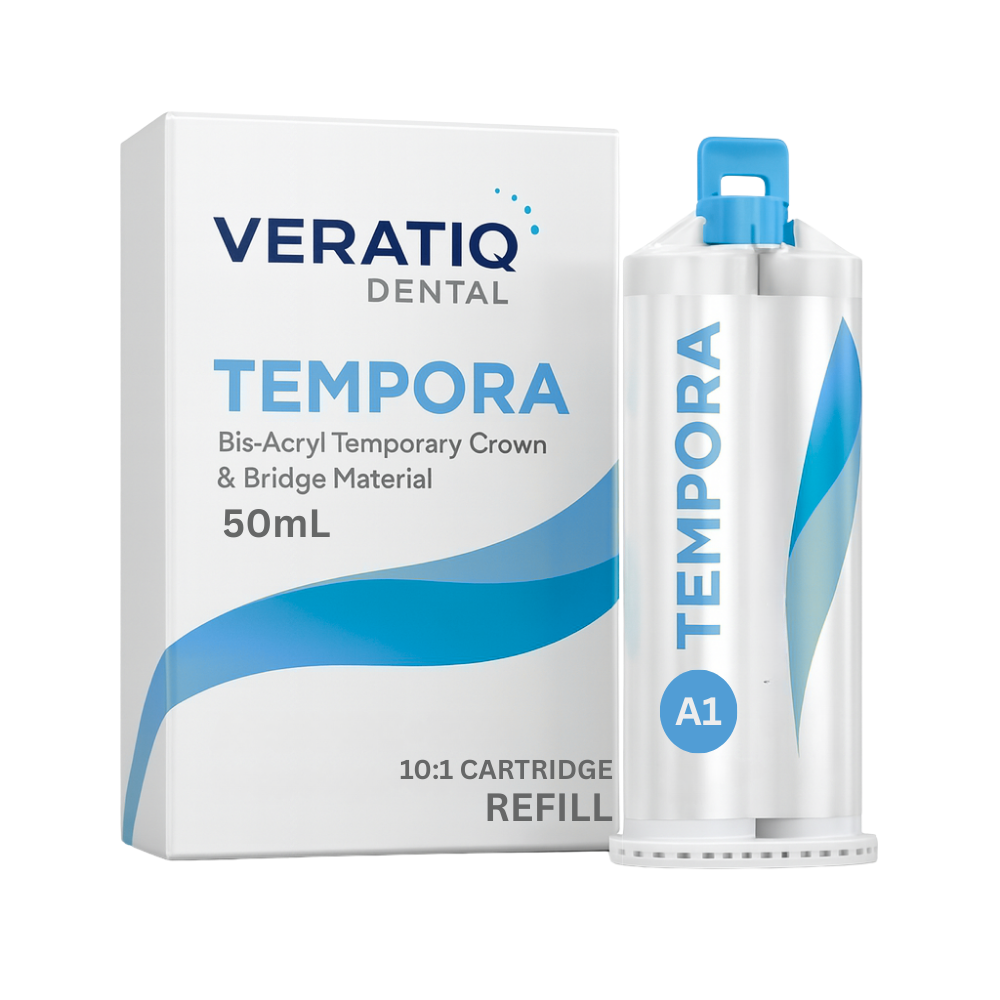
Veratiq Tempora Bis-Acryl Temporary Crown & Bridge Material, 10:1 Cartridge, 50 mL
In stock
161 sold this monthfrom $56.95


Questions
What is it used for?
The GingiPak Gingi-Wet Pre-Impression Solution, 16oz is a crown & bridge product supplied by GingiPak for crown and bridge procedures.
When does it ship?
In-stock orders placed before 3 PM ET ship the same day. An item we don't keep on the shelf shows its own ship-by date on its page, and you can cancel it for a full refund until it ships.Ground shipping is free over $49.
About retraction instruments & accessories
Gingival retraction instruments place the cord: a cord packing instrument is made to insert the retraction cord into the gingival sulcus. A review describes its working end as narrow enough to wind the cord into the sulcus, but not so sharp as to cause bleeding or perforation of the sulcus wall. The instrument can be double-ended, with the working edge at more than one angle, so the cord can be carried around the tooth without changing hand position or tool. Working ends are smooth or serrated: smooth rounded ends are used mainly for stranded cord and serrated ends for braided cord, and the serrations keep the cord from slipping but can cause fraying.
Gingival displacement is the deflection of the marginal gingiva away from a tooth, and gingival retraction is another name for the same thing. It opens space at the margin, so that a preparation below the gum line can be reached and enough impression material sits in the widened crevice. It also helps control bleeding, which matters for hydrophobic impression materials and for adhesive restorations. The techniques are grouped as mechanical, chemical, surgical, or a combination of those, and the mechanical one uses retraction cords.
How cords, agents and instruments differ
- Retraction Cord — The mechanical part: a thread packed into the sulcus to displace the tissue. It is used on its own or together with a hemostatic or vasoconstrictor agent.
- Hemostatic Agents & Paste — The chemical part: it stops the bleeding and dries the field rather than pushing the tissue aside. A retraction paste works without a cord: one widely used paste is kaolin with aluminium chloride, and it swells on contact with crevicular fluid.
- Retraction Instruments & Accessories — The tools that place the cord and carry the agent, rather than the materials themselves. A review notes that a periodontal probe is used for interproximal cords, and a flat plastic instrument where the gingival tissue is thin.
What to look at when choosing
Cord size: a review ties the numbers to the job, with 000 for anterior teeth and double packing, and 3 for areas of fairly thick gingival tissue where a significant amount of force is required. Cord construction: twisted cord frays and untwists more readily while being placed, so it is used less than braided and knitted cord.
Impression material: a review lists inhibition of the set of polyvinyl siloxane and polyether impressions among the disadvantages of both aluminium chloride and ferric sulfate. The same table lists tissue discoloration under ferric sulfate, and notes that ferric sulfate is compatible with aluminium chloride but not with epinephrine.
Bonding afterwards: studies have found that contamination with an aluminium chloride hemostatic agent can significantly decrease bond strength, one reason being that these acidic substances remove the smear layer and alter the dentine surface. Strength of the agent: a narrative review reports that ferric sulfate solutions above 15 percent are highly acidic and may cause considerable tissue irritation and postoperative root sensitivity.
Cord or no cord: a survey of 188 dentists found the cordless technique believed to be easier, faster and less traumatic to the gingival tissues, while the impression was believed to be more predictable with conventional cords and hemostatic medicaments. A paste depends on expanding in the sulcus, and a review notes it may not displace enough where the sulcus is deep.
Sources: The Glossary of Prosthodontic Terms, 9th edition (J Prosthet Dent 2017) · Dentists’ knowledge and preference regarding gingival displacement methods (BMC Oral Health 2023) · Present status and future directions: Soft tissue management in prosthodontics (World J Methodol 2025) · Effect of an aluminum chloride hemostatic agent on the dentin shear bond strength of a universal adhesive (Restor Dent Endod 2023) · Clinical applications of ferric sulfate in dentistry: A narrative review (J Conserv Dent 2017)
