

DentonicsShips in 3 business days
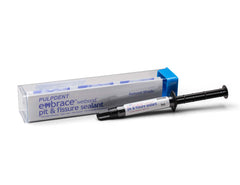
Dentonics Pit & Fissure Sealant, Light-Cure · Clear · 2 × 7 mL bottles
SKU 113-0040MFR# 12-103
Shade
Clear
Clear$87.00
Opaque
Pack
2 × 7 mL bottles
2 × 7 mL bottles$87.00
4 × 1.2 g syringes + 9 g etch$45.00
The Dentonics Pit & Fissure Sealant LC Opaque (4 X 1.2GM Syringe & 9GM ETCH) is a dental material supplied by Dentonics for chairside clinical use. Catalog code 12-156.
Dentonics Pit & Fissure Sealant, Light-Cure is a pit & fissure sealant from Dentonics.
This page carries 2 shade options: Clear, Opaque. This page carries 2 pack options: 2 × 7 mL bottles, 4 × 1.2 g syringes + 9 g etch.
Find it on our Preventive shelf, under Sealants.
Orders placed before 3 PM ET ship the same day when the item is on our shelf (otherwise within 3 business days), and ground shipping is free over $10.
Product
- Manufacturer
- Dentonics
- Manufacturer #
- 12-103
- Item code
- 113-0040
Catalog path
- Marketplace
- Clinical
- Category
- Preventive
- Subcategory
- Sealants
Ordering
- Status
- Ships in 3 business days
More from Sealants
Stocked in the same subcategory.

Pulpdent
Pulpdent Seal-Rite Low Viscosity Sealant Kit, Off-White, 4 x 1.2 mL Syringes + 8 Tips
106-1226
$50.25


Dharma
Citrine 5% Sodium Fluoride Varnish with TCP, Unit Doses
In stock
12 sold this monthfrom $24.89
Questions
What is it used for?
The Dentonics Pit & Fissure Sealant LC Opaque (4 X 1.2GM Syringe & 9GM ETCH) is a dental material supplied by Dentonics for chairside clinical use.
Which shade and pack options are on this page?
This page carries 2 shade options: Clear, Opaque. This page carries 2 pack options: 2 × 7 mL bottles, 4 × 1.2 g syringes + 9 g etch. Pick one to see its price, part number and stock.
When does it ship?
In-stock orders placed before 3 PM ET ship the same day; anything not on our shelf ships within 3 business days.Ground shipping is free over $10.
About pit and fissure sealants
Sealants are generally placed on the tooth in liquid form and then cured either chemically or with light activation. The tooth surface is first treated with an acid etch, to improve wetting of the tooth with the liquid sealant and the mechanical retention of the sealant. A sealant must also be of low enough viscosity to wet the tooth and flow readily into the pits and fissures. Traditional sealants are hydrophobic bis-GMA based materials that need a dry field; moisture-tolerant resin sealants have been developed that can be placed on slightly moist teeth.
A dental sealant is a material applied to the biting surface of a tooth to penetrate the pits and fissures and form a physical barrier on the tooth surface. The grooves, pits and fissures on the biting surfaces of permanent molars can trap food particles and promote bacterial biofilm, which increases the risk of a caries lesion. The FDA regulates a pit and fissure sealant and conditioner — a resin intended to seal pit and fissure depressions in the biting surfaces of teeth — as a Class II device (21 CFR 872.3765). A 2016 ADA and American Academy of Pediatric Dentistry guideline panel found sealants effective in preventing and arresting pit-and-fissure occlusal caries lesions of primary and permanent molars in children and adolescents, compared with not using sealants or using fluoride varnish. The same panel found sealants can minimize the progression of noncavitated occlusal caries lesions of the tooth that received the sealant.
Sealant materials divide by the reaction that sets them: glass ionomers undergo an acid-base reaction, while composite resins set through polymerization, usually started by a dental curing light. Resin-modified glass ionomers and polyacid-modified resins set by a combination of the two reactions, giving products along a continuum between traditional glass ionomers and composite resins. The ADA and AAPD report defined four sealant materials: resin-based sealants, glass ionomer cements or sealants, polyacid-modified resin sealants and resin-modified glass ionomer sealants. There was insufficient evidence at the time the guidelines were formulated to give specific recommendations on the relative merits of one type of sealant material over the others. The ADA states that although dental materials used to treat and prevent caries, sealants among them, can contribute very low level bisphenol A exposure for a few hours after placement, current evidence shows no health concern from BPA exposure from any dental material.
How the sealants and the applicators differ
- Pit & Fissure Sealants — The material that goes into the fissure and sets there. A review gives long endurance as the most significant advantage of resin-based sealing materials and fluoride release as the most significant advantage of glass ionomer sealants.
- Sealant Applicators & Accessories — The brushes and tips that place the sealant, not the sealant itself.
- Sealants & Adhesives — The sealant with its adhesive step, rather than the sealant alone.
What to look at when choosing a sealant
Retention: a study notes retention depends on the morphology of the pits and fissures, adequate isolation, conditioning of the enamel, application technique, and material characteristics such as viscosity, surface tension and adhesion.
Filled or unfilled: adding filler particles changes the viscosity, which changes both the penetration into the pits and fissures and the resistance to abrasive wear.
Clear or opaque: clear sealants allow visual examination of the enamel beneath them.
Moisture: a review notes conventional hydrophobic sealants have reported increased microleakage and reduced bond strength in fissures contaminated with saliva.
Shrinkage and fracture: polymerization shrinkage may result in microleakage, allowing saliva and bacteria to penetrate the occlusal barrier, while a glass ionomer seal may fracture because of its reduced ability to withstand occlusal forces.
Sources: ADA Oral Health Topics: Dental Sealants · FDA 21 CFR 872.3765, Pit and fissure sealant and conditioner · Priscilla et al. 2022, Moisture Tolerant Pit and Fissure Sealant: A Literature Review (Int J Clin Pediatr Dent) · FDA 21 CFR 872.3140, Resin applicator · Retention of resin-based filled and unfilled pit and fissure sealants: A comparative clinical study, 2015 (PMC4374312) · FDA 21 CFR 872.3200, Resin tooth bonding agent · The Effects of Opaque and Clear Pit and Fissure Sealants on Infrared Laser Fluorescence Measurements, 2014 (PMC4033085)
