
Reline & Repair
177 products


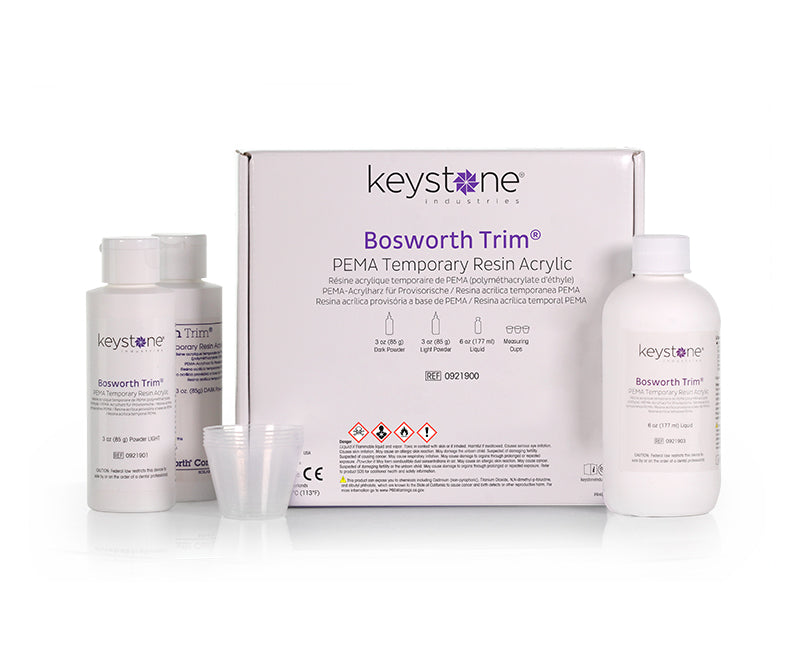



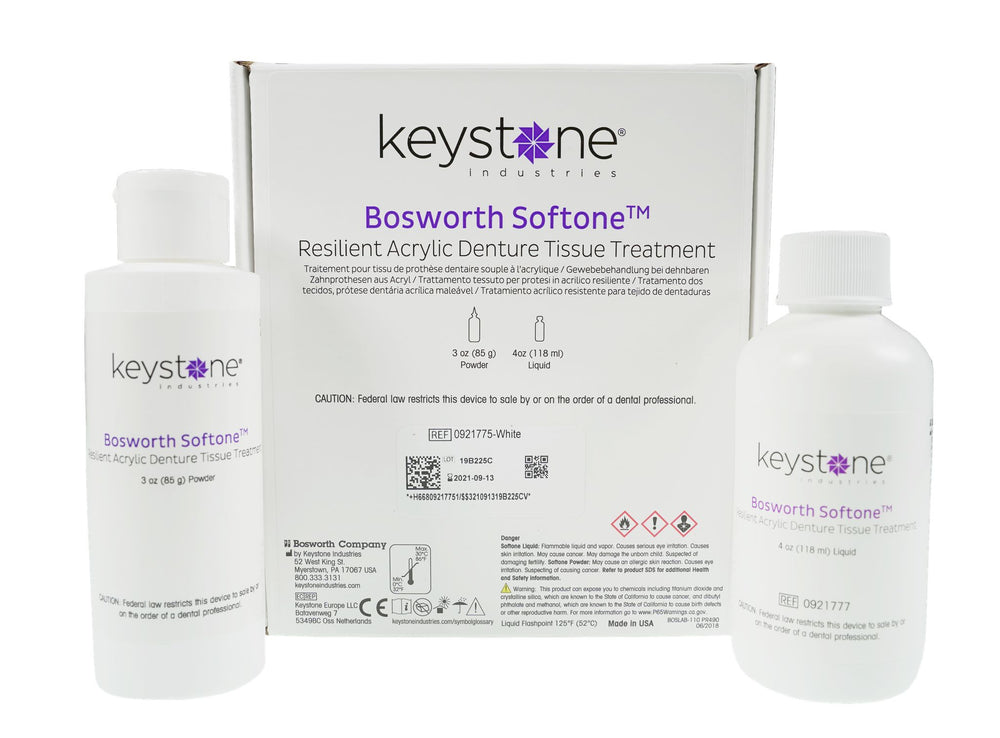


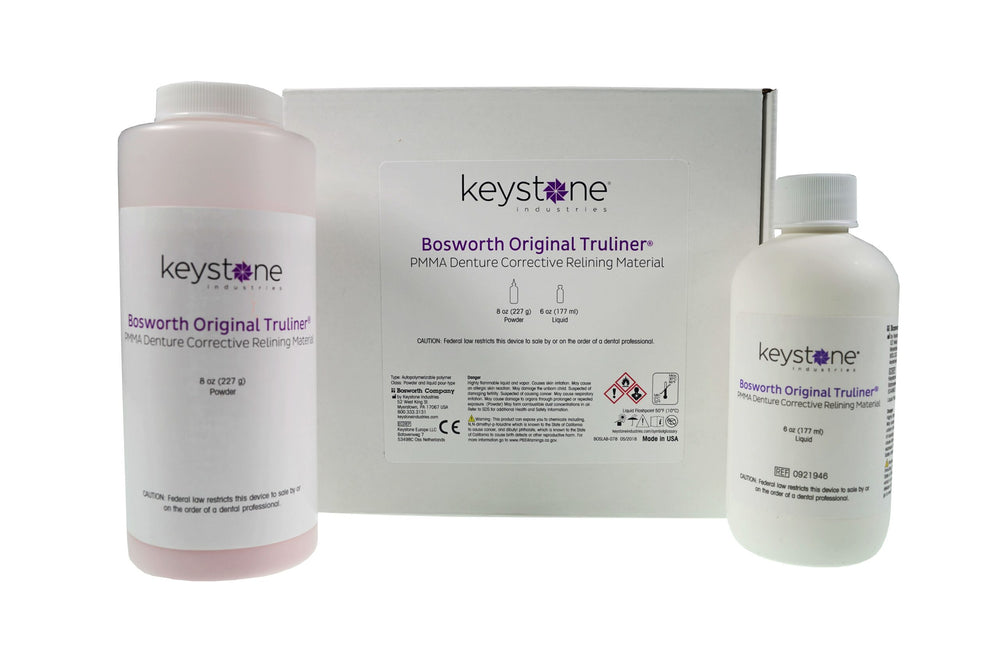
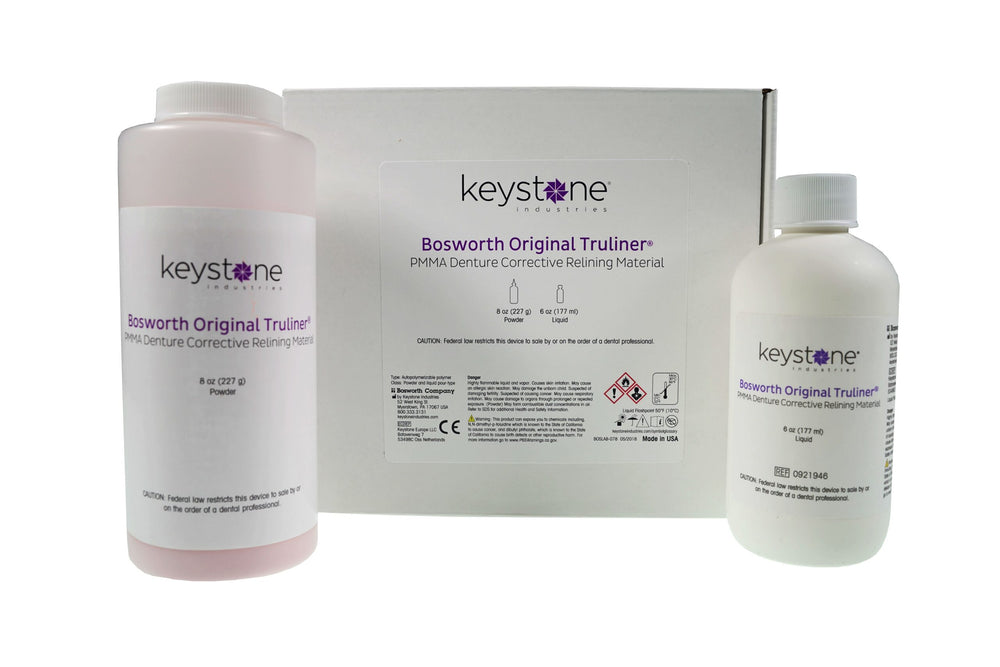
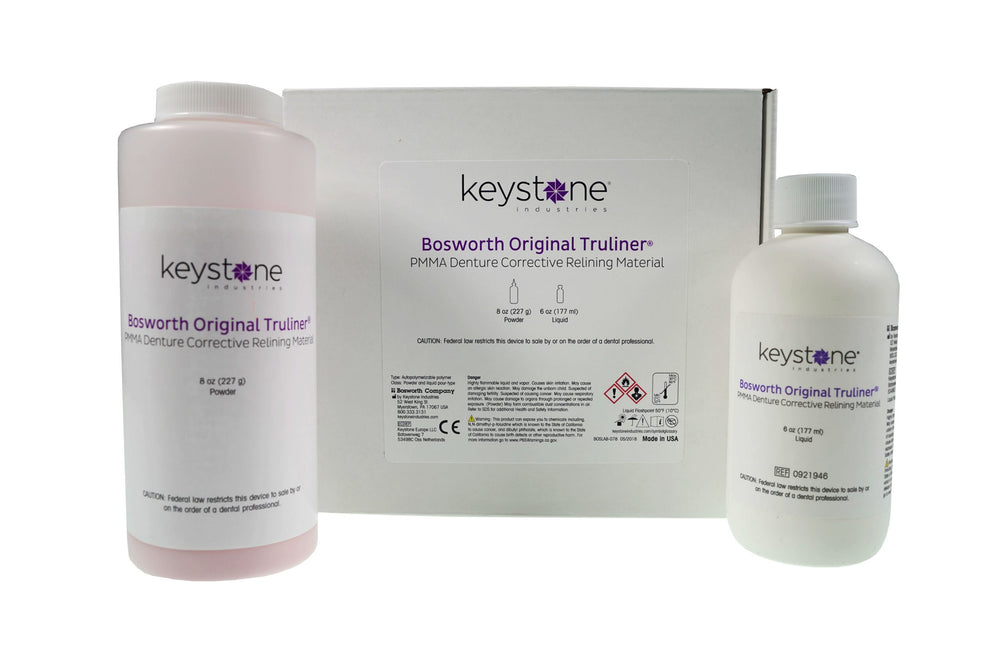

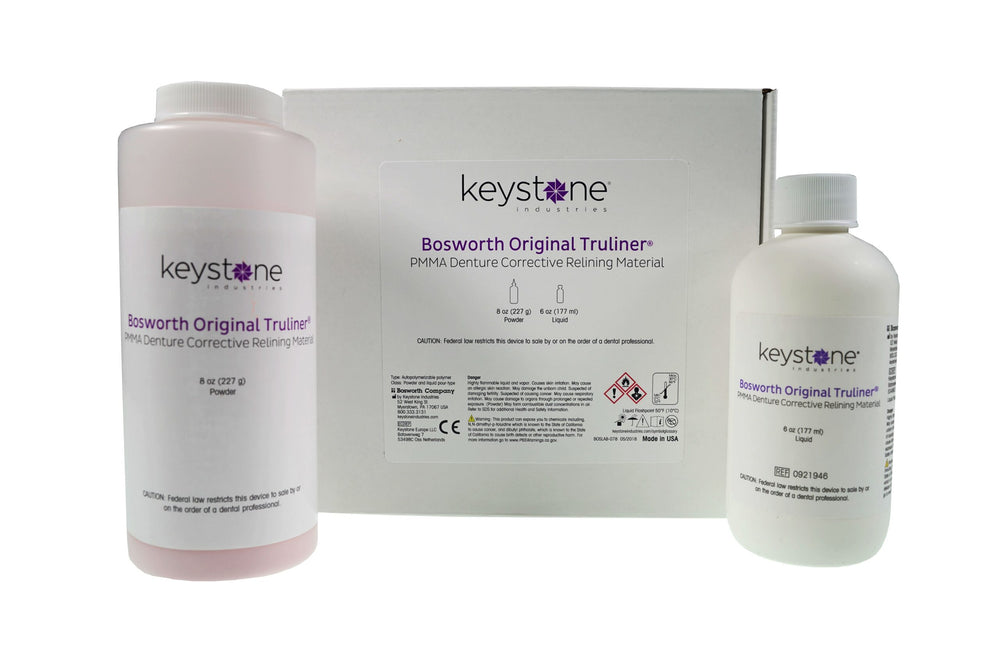


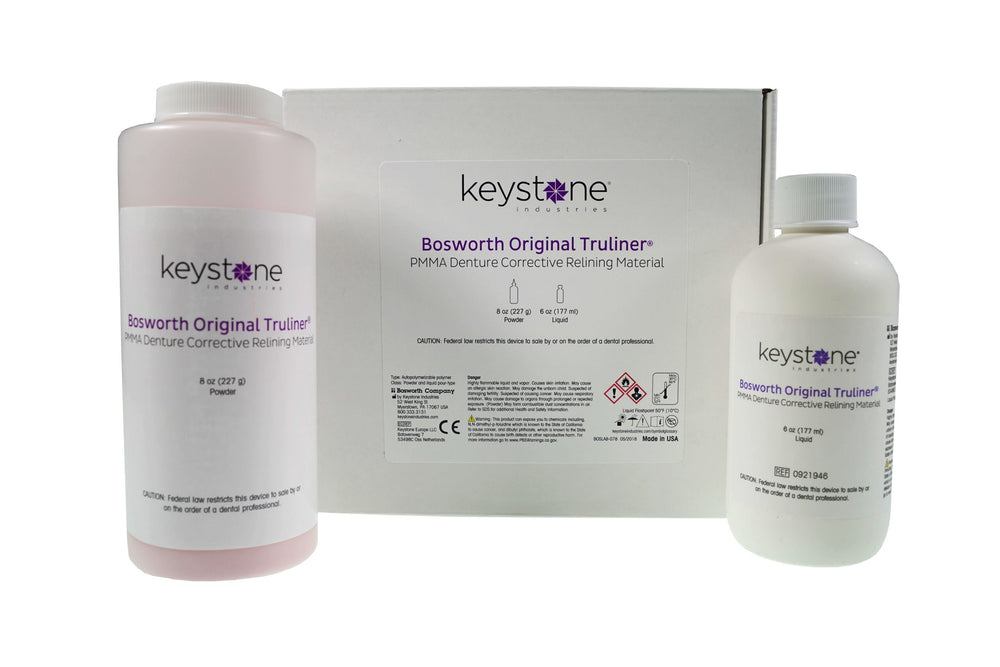

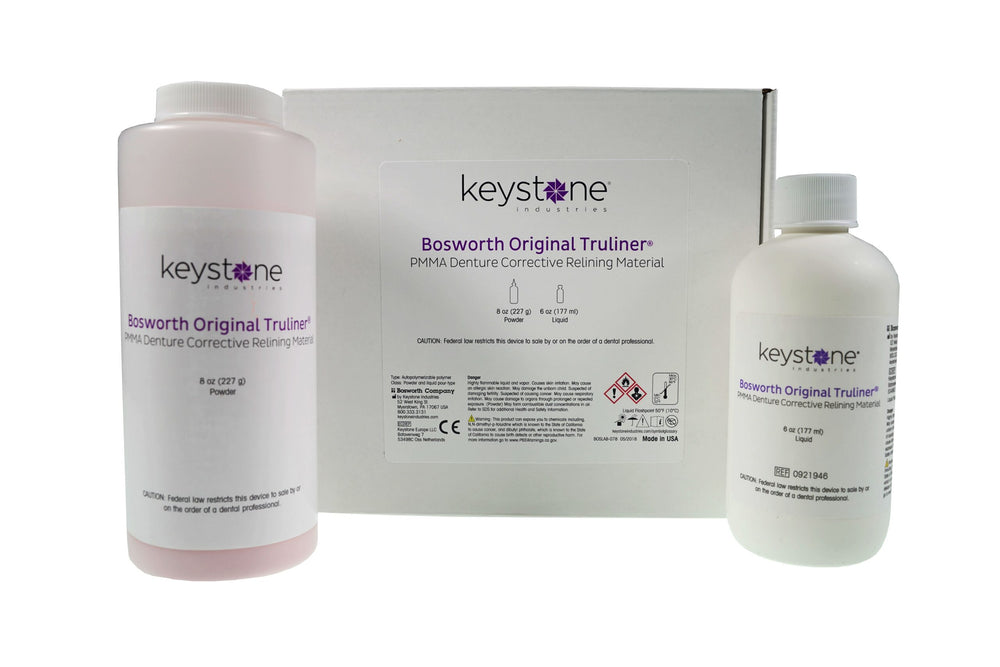


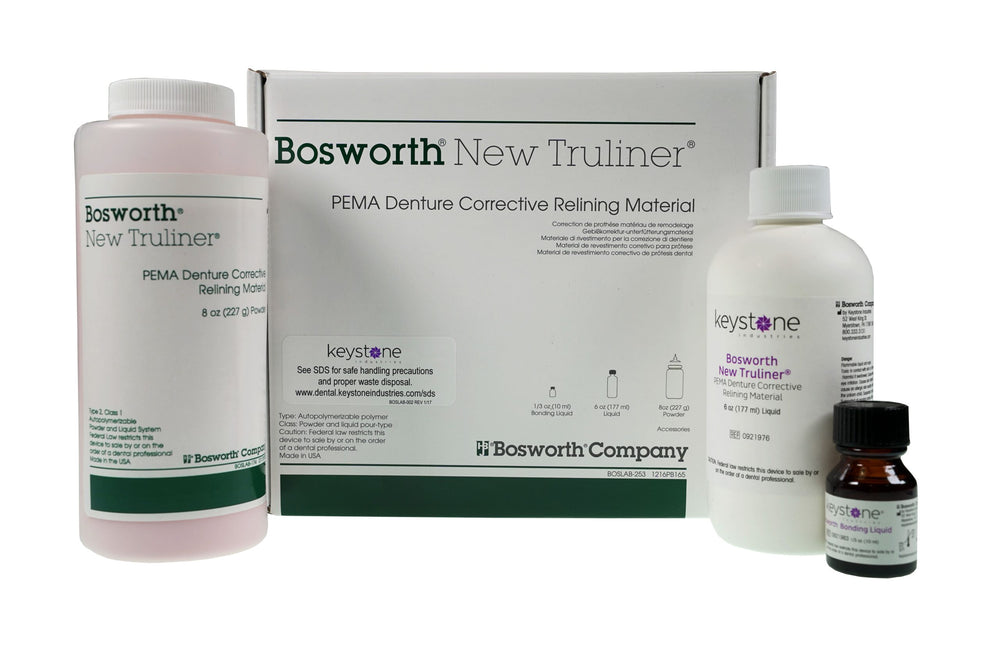

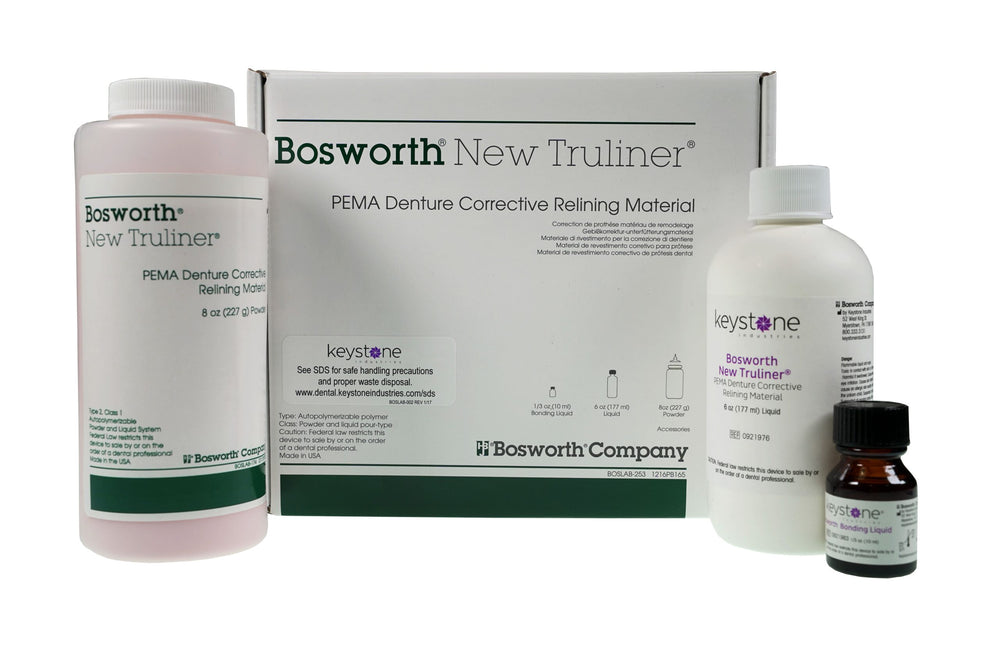

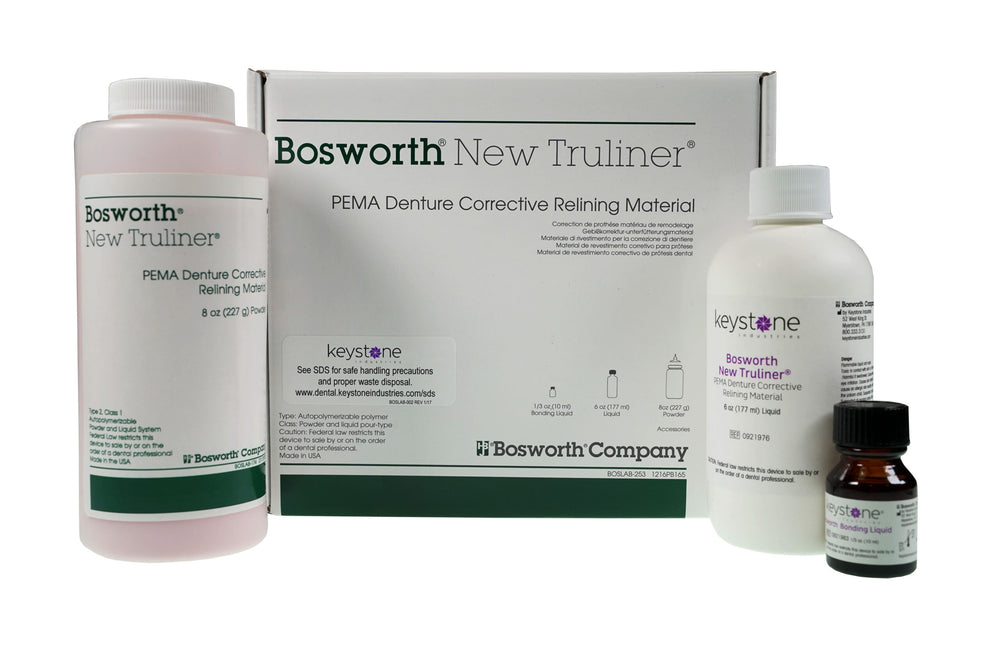
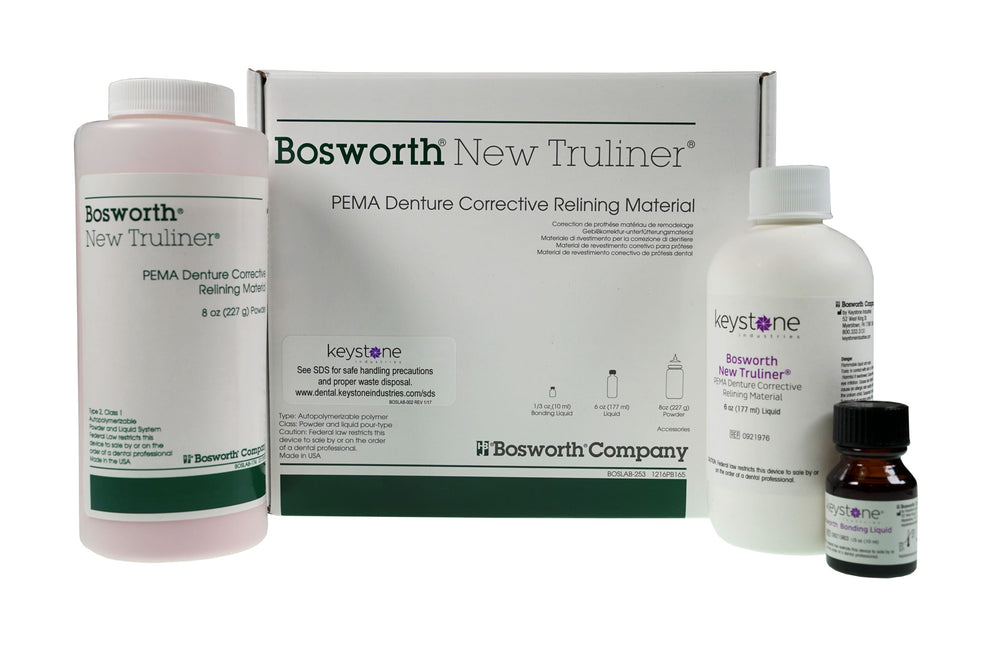
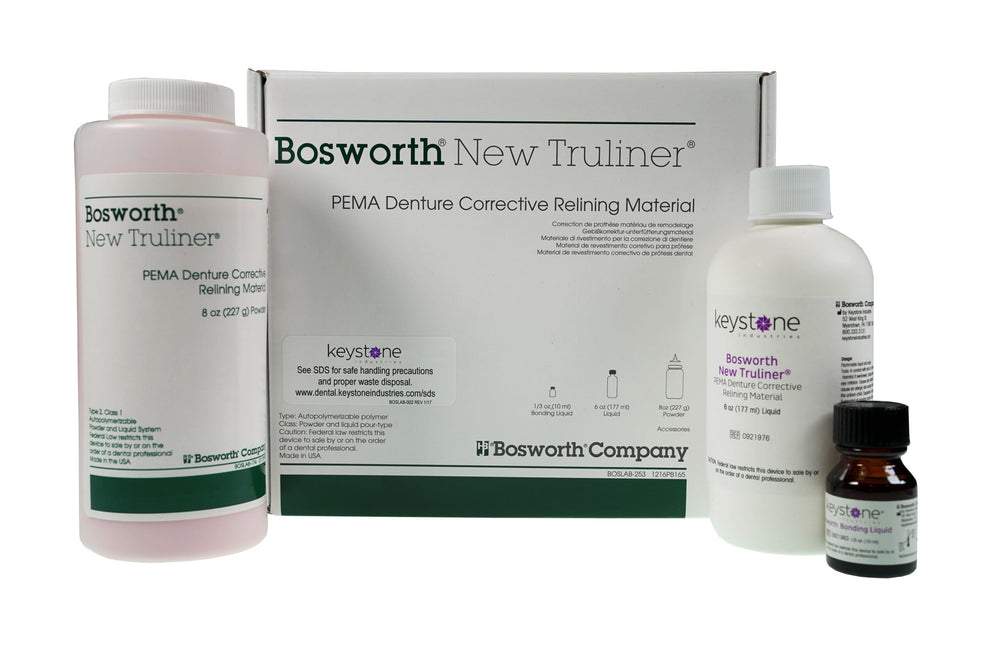
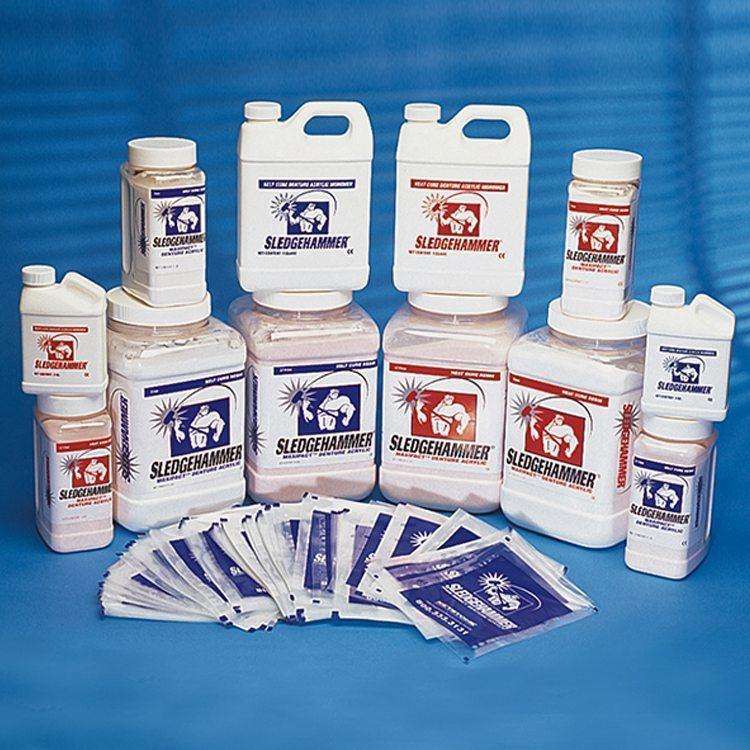
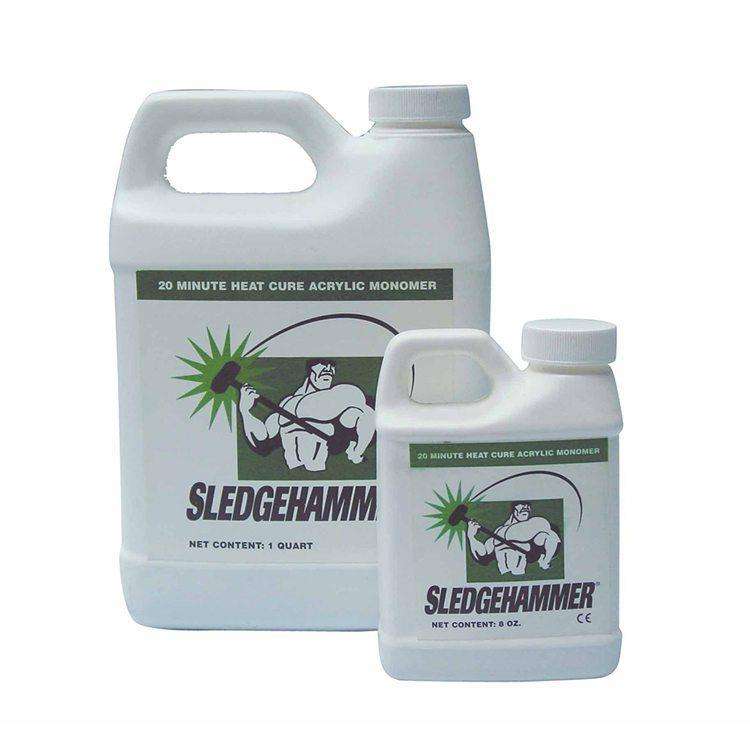

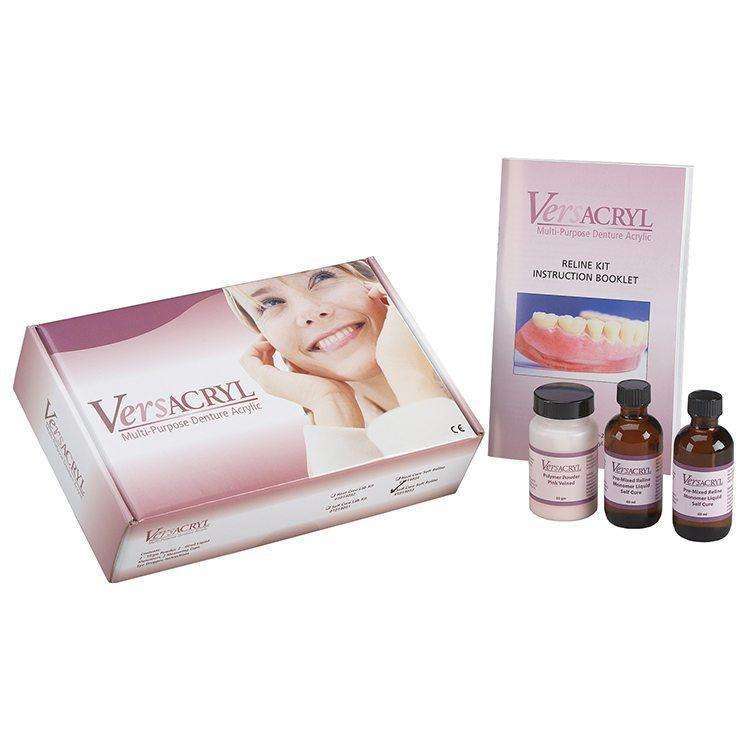
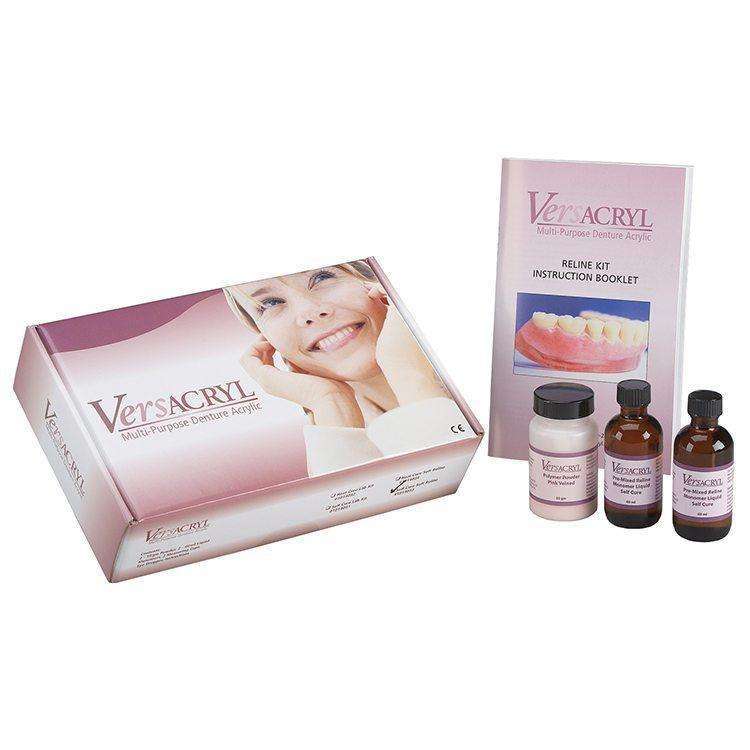
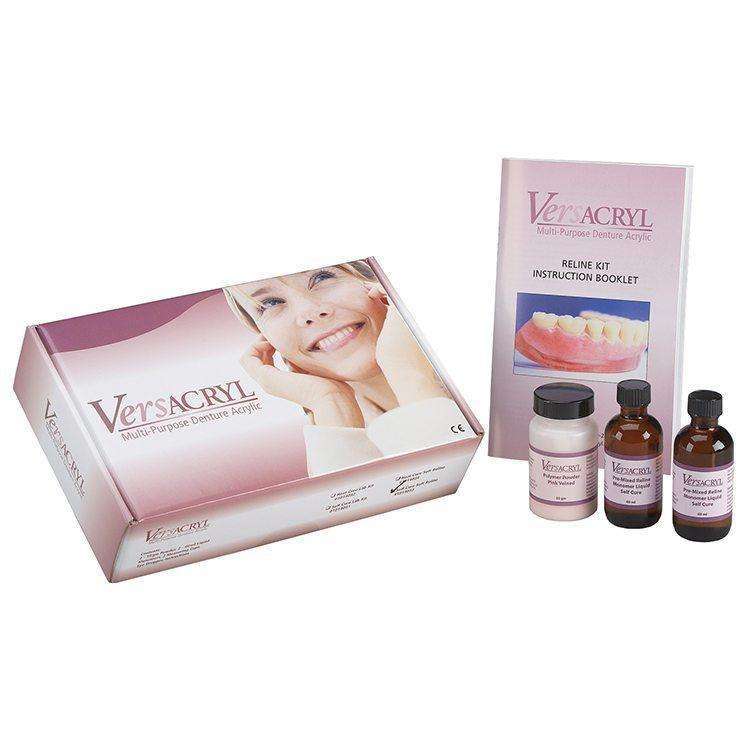


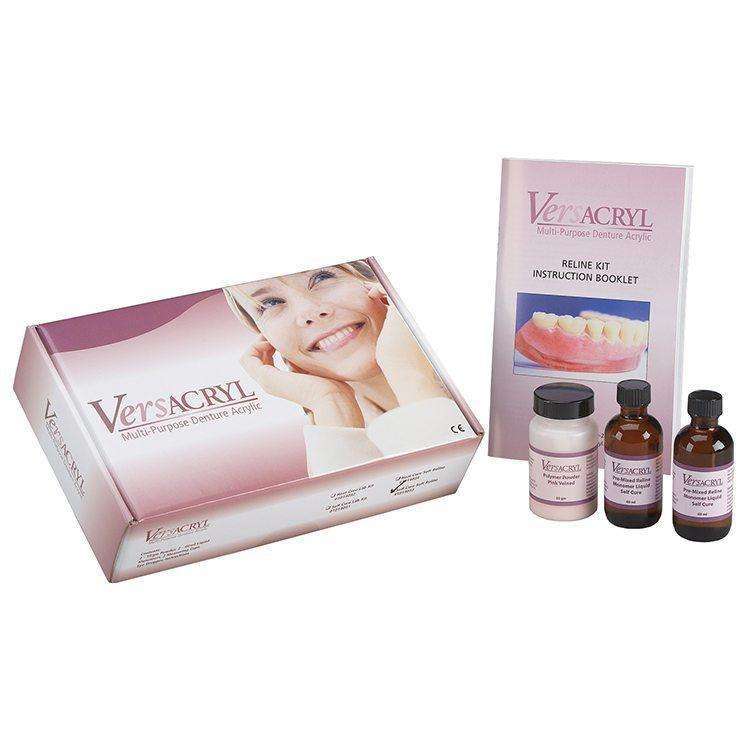


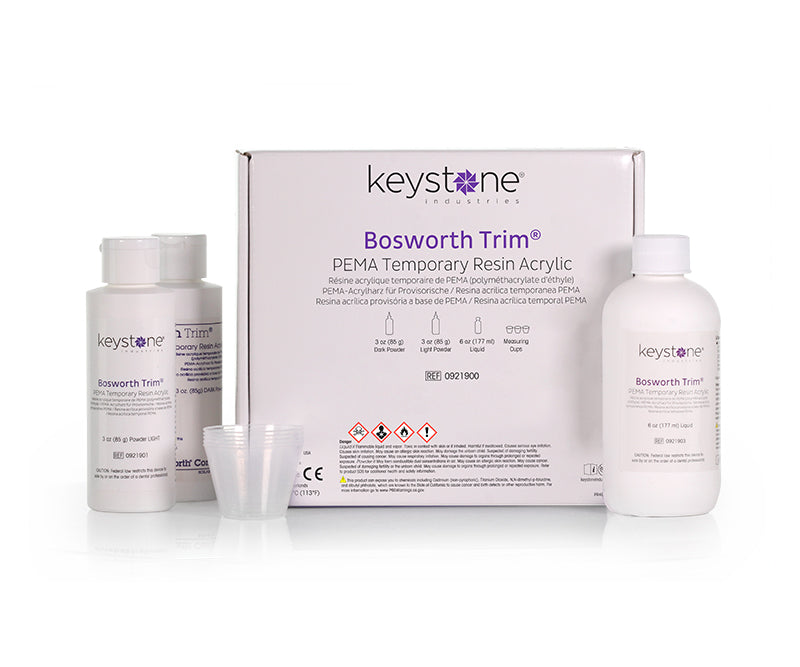


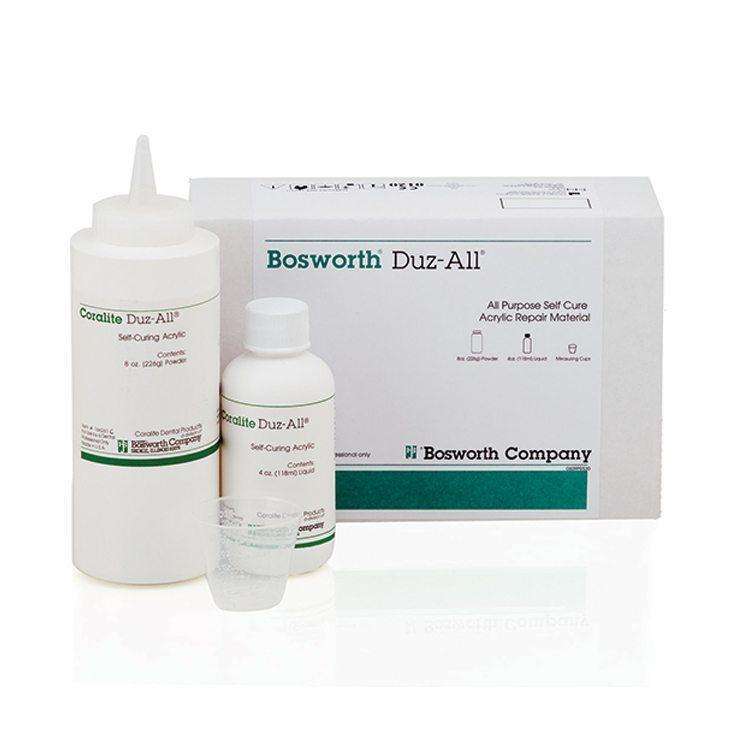

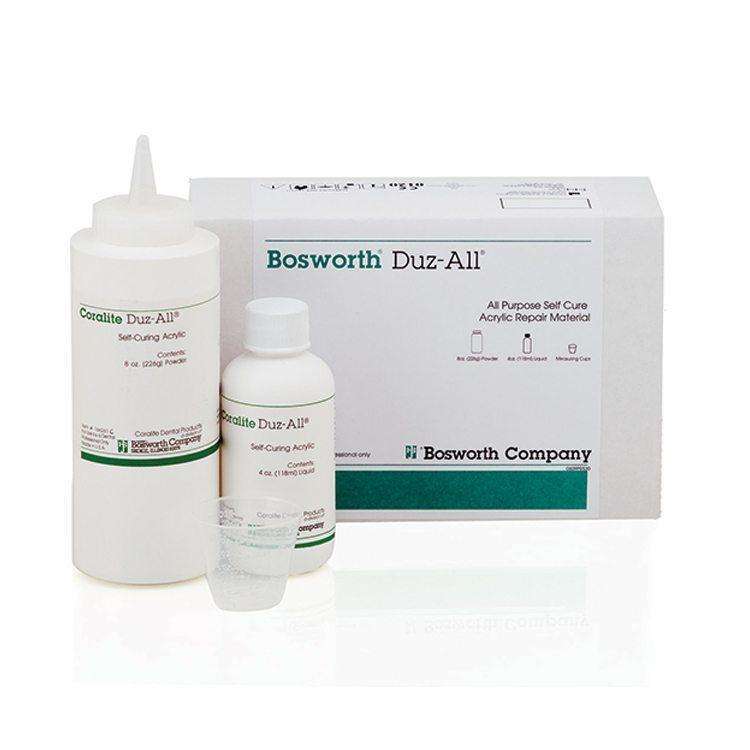


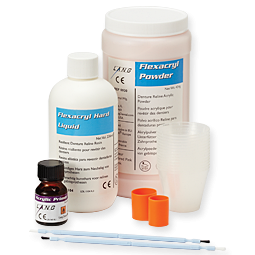
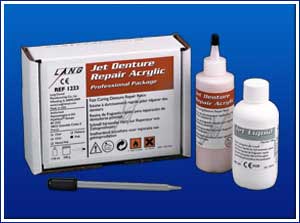
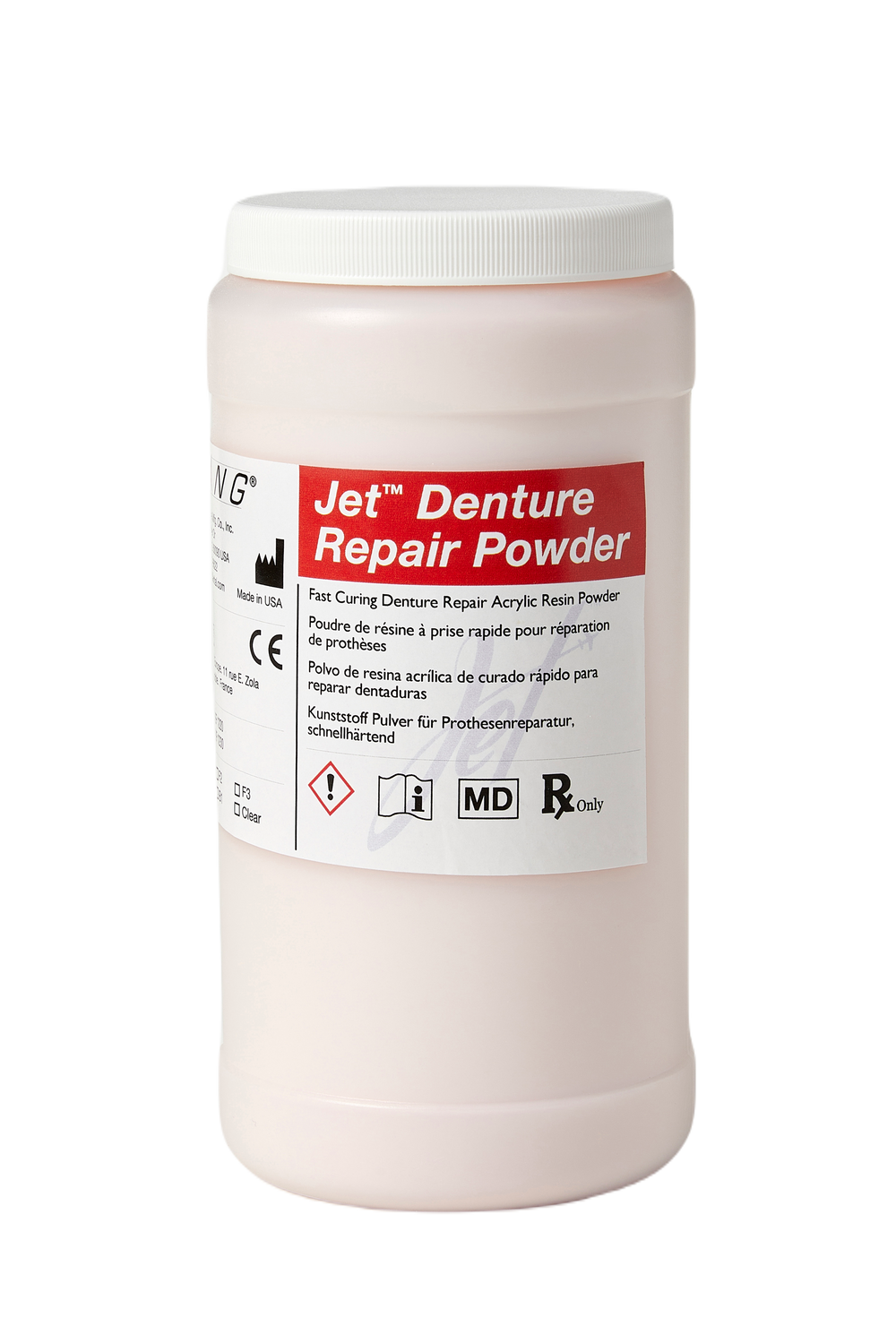


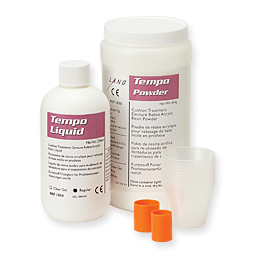
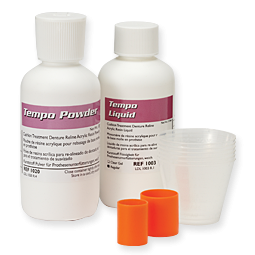
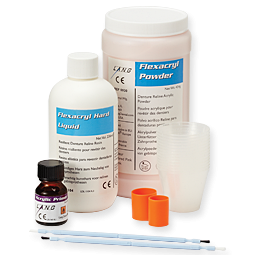
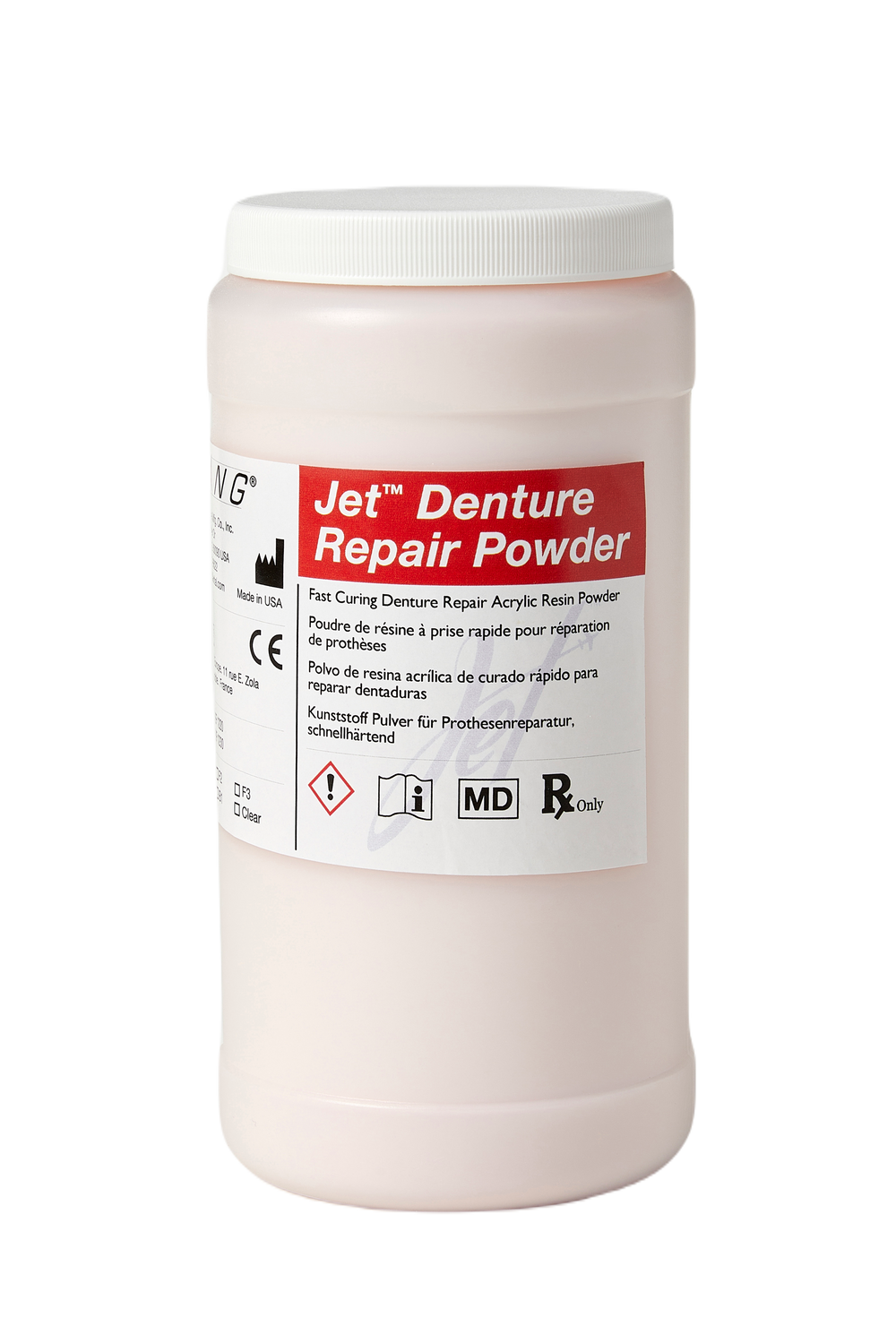
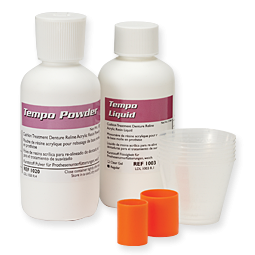

A denture that no longer seats is either a reline case or a repair case, and the material you reach for is different for each. This shelf carries denture reline material, denture repair acrylic and tissue conditioners in roughly 180 listings from Keystone Industries, Lang Dental, Garreco Dental, TCS, New Stetic, Parkell, Buffalo Dental and J-Morita.
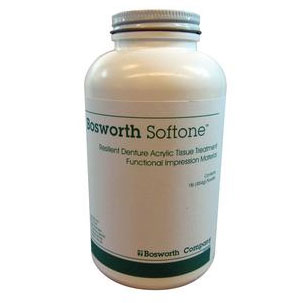
Hard relines are conventional acrylic: they restore fit against a resorbed ridge and leave a rigid, polishable surface that behaves like the original base. A soft reline is a resilient liner for a thin, tender or knife-edge ridge, where a rigid base would keep traumatizing the mucosa. Tissue conditioners sit between the two, used as a short-term, plastic-flow liner to let inflamed tissue recover before a definitive impression; Keystone Softone is stocked as a powder-and-liquid standard kit. Parkell MucoSoft bonding liner adhesive covers the bonding step for resilient liners.
For fractures, additions and clasp repairs, self-curing repair acrylic is the workhorse, and New Stetic Opti-Cryl self curing powder and 32 oz monomer supply it in lab quantities. Flexible partial repairs are a separate chemistry, handled with TCS cartridges rather than with PMMA.
How to choose
- Separate the problem first: a fit problem is a reline, a fracture or a missing tooth is a repair, and inflamed tissue is a conditioning step before either.
- Choose hard reline material for a stable ridge that needs fit restored and a durable, polishable surface.
- Choose a soft reline when the ridge is thin, sharp or sore and the patient needs a resilient intaglio rather than a rigid one.
- Use a tissue conditioner as the interim step; it flows under function for days to weeks and is not a definitive liner.
- For resilient liners, order the matching bonding agent or primer with the material, since adhesion failure at the base is the usual reason a soft liner fails.
- For flexible thermoplastic partials, order a cartridge from the same flexible system; conventional denture repair acrylic will not bond to them.
Frequently asked questions
What is the difference between a hard and a soft reline?
A hard reline adds conventional acrylic to the intaglio surface, restoring fit with a rigid, polishable finish that lasts. A soft reline adds a resilient liner that cushions a thin, sharp or sore ridge. Soft liners need periodic replacement and are chosen for tissue tolerance rather than longevity.
How long does a soft reline last?
Resilient liners are a maintained material, not a permanent one: they gradually harden, discolour and can debond at the margins, so most are replaced on a recall schedule rather than left indefinitely. Service life depends on the product, the patient's hygiene and whether the liner was bonded with the matching adhesive.
What is a tissue conditioner used for?
A tissue conditioner is a plastic-flow liner placed for days to a few weeks so that inflamed or distorted mucosa can recover before a definitive impression, reline or new denture. It is supplied as a powder and liquid, mixed and seated in the denture, and replaced as it stiffens.
Can a fractured denture be repaired with self-cure acrylic?
Yes, that is what denture repair acrylic is for. The fragments are reassembled on a cast or with a repair jig, the fracture line is relieved to create bulk, and self-curing powder and monomer are added and cured under warm water and pressure to reduce porosity before trimming and polishing.
How fast can I get reline and repair materials?
In-stock reline and repair items ordered by 3 PM ET ship the same day from our Northern Virginia warehouse. Kits that include a liquid monomer may be routed on a ground service because the monomer is a flammable liquid.