

Zest Dental SolutionsShips in 3 business days
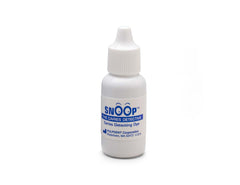
Zest Caries Finder Caries Detection Dye, 10 mL · Green
SKU 111-0088MFR# 80004-M
Color
Green
Red$65.96
Green$65.96
Zest Caries Finder Red (10 ml). Catalog code 80010-M.
Zest Caries Finder Caries Detection Dye, 10 mL is a root canal & caries locator from Zest Dental Solutions.
This page carries 2 color options: Red, Green.
Find it on our Endodontics shelf, under Apex Locators, Pulp Testers & Endo Motors.
Orders placed before 3 PM ET ship the same day when the item is on our shelf (otherwise within 3 business days), and ground shipping is free over $10.
Product
- Manufacturer
- Zest Dental Solutions
- Manufacturer #
- 80004-M
- Item code
- 111-0088
Catalog path
- Marketplace
- Clinical
- Category
- Equipment
- Subcategory
- Apex Locators, Pulp Testers & Endo Motors
Ordering
- Status
- Ships in 3 business days
More from Apex Locators, Pulp Testers & Endo Motors
Stocked in the same subcategory.




Questions
Which color options are on this page?
This page carries 2 color options: Red, Green. Pick one to see its price, part number and stock.
When does it ship?
In-stock orders placed before 3 PM ET ship the same day; anything not on our shelf ships within 3 business days.Ground shipping is free over $10.
About root canal and caries locators
This type holds two things the store groups together: what locates the end of a canal, and the dyes used to show where carious dentin is. The FDA has a class for a caries detection device, which shows the existence of decay in a tooth by use of electrical current, and classes it as Class II (21 CFR 872.1740). A caries detector dye is a different thing: typically 1 percent acid red in propylene glycol, used to distinguish demineralized dentin from sound tissue during excavation.
Root canal treatment is meant to stay inside the root canal space, so the length of the canal has to be established first. An electronic apex locator is one accepted way of finding that length; the other common way is a radiograph, which carries superimposed structures, geometric distortion and radiation exposure. A pulp tester answers a different question: it evaluates the vitality of the pulp by passing a high-frequency current through an electrode to stimulate the nerve tissue inside the tooth, and the FDA classes it as Class II (21 CFR 872.1720).
An endo motor turns the file. Reciprocating motion was introduced as an alternative to continuous rotation because it puts less cyclic and torsional stress on the instrument, which lowers the risk of fracture. Motors come corded and cordless, and let the user set reciprocation direction, angle, speed and torque. Some motors have an electronic apex locator built in, which can be used on its own or while the canal is being shaped.
How the types on this shelf differ
- Handpieces & Motors — The powered part that turns a bur or a file, as against the parts and consumables that fit it. Handpieces and attachments are semicritical items that must be heat sterilized between patients according to the maker’s instructions.
- Endo Equipment Parts & Accessories — Fits an endodontic unit; it is not the unit itself. Sonic activation uses much lower frequencies, roughly 150 to 300 Hz, with polymer tips that oscillate to stir the irrigant.
- Pulp Vitality Testers — Reads whether the nerve in the pulp responds, not how long the canal is. A scoping review of pulpotomy studies found markedly higher positive response rates with electric pulp testing than with cold testing.
- Root Canal & Caries Locators — Shows where something is rather than how the tooth responds. Published studies disagree about the dyes: some report that they overstain and lead to unnecessary removal of sound dentin, others that without them carious tissue goes undiagnosed.
- Apex Locators — Measures length; the pulp tester on the same shelf measures nerve response. A scoping review concluded that the accuracy of these devices is acceptable in most cases but that a radiograph alongside remains advisable to confirm the measurement.
- Measuring & Marking Instruments — Reads or holds a measurement by hand, with no power supply and no electrode.
Pages for curing lights, canal preparation gels, files, posts, irrigating devices and scaler tips also sit on this shelf; those types have homes of their own elsewhere.
What to look at when choosing
Reading conditions: a scoping review identified twenty factors that affect how accurate an apex locator reading is, among them canal curvature and length, tooth type, file size and alloy, apical patency, resorption, perforation, irrigants and medicaments.
Motor settings: corded and cordless motors differ in what they let you set, and reciprocation was introduced to reduce cyclic and torsional stress on the file. Some motors carry an apex locator inside, usable on its own or during instrumentation.
Pulp testing: cold, heat and electric tests all read nerve response rather than the blood supply of the pulp, and none has consistently achieved ideal sensitivity and specificity across clinical situations.
Patients with implanted cardiac devices: the ADA reports that at a distance of at least 15 centimetres, interference from ultrasonic scalers, apex locators and other dental devices is not considered likely to present any clinical risk. In laboratory tests apex locators were a low risk for light electromagnetic interference, though one in-vivo study induced a symptomatic interruption of pacing.
Sources: Factors influencing the accuracy of electronic apex locators: a scoping review (Dent Res J, PMC12252002) · FDA 21 CFR 872.1720, Pulp tester · Osaki et al. 2026, In vitro assessment of integrated apex locator systems (J Clin Exp Dent) · FDA 21 CFR 872.4200, Dental handpiece and accessories · ISO 14457:2017, Dentistry — Handpieces and motors · ADA Oral Health Topics: Infection Control and Sterilization · Comparative in vitro evaluation of sonic, passive ultrasonic, and laser-activated irrigation (BMC Oral Health, PMC13589355) · Pulp sensibility assessment following permanent tooth pulpotomy: a scoping review (Front Dent Med, PMC13639861) · Diagnostic accuracy of individual and multimodal pulp sensibility tests (Cureus, PMC13539165) · FDA 21 CFR 872.1740, Caries detection device · Iglesias-Poveda et al. 2025, Caries detector dyes and laser fluorescence systems: a scoping review (Front Dent Med) · FDA 21 CFR 872.4565, Dental hand instrument · ADA Oral Health Topics: Cardiac Implantable Devices and Electronic Dental Instruments
