


VentyvShips in 3 business days
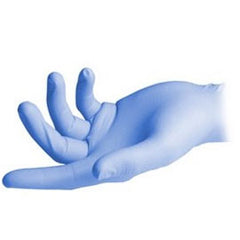
Ventyv Plus 3.5 Nitrile Exam Gloves, Powder-Free, Violet Blue — 200/Box · Small
SKU 001-4000MFR# 10334101
Size
Small
Ventyv Plus 3.5 (Elephant) Nitrile Powder-free Exam Gloves, Violet Blue, Large, 200/Box. Polymer coated. Finger thickness: 4 mils (0.09 mm). Palm thickness: 3 mils (0.07 mm). Textured, rolled cuffs, chemo tested. Non-Sterile. Not made with natural rubber latex.
Product
- Manufacturer
- Ventyv
- Manufacturer #
- 10334101
- Item code
- 001-4000
Catalog path
- Marketplace
- Clinical
- Category
- Gloves, Masks & Apparel
- Subcategory
- Gloves
Ordering
- Status
- Ships in 3 business days
More from Gloves
Stocked in the same subcategory.



RMH3 Dental
Blue Disposable Isolation Gowns, One Size Fits All (Regular/Large) — 50/Case
In stock
111 sold this month$25.58


Questions
Which size options are on this page?
This page carries 3 size options: Small, Medium, Large. Pick one to see its price, part number and stock.
When does it ship?
In-stock orders placed before 3 PM ET ship the same day; anything not on our shelf ships within 3 business days.Ground shipping is free over $10.
About medical gloves
Medical gloves are personal protective equipment worn to protect the wearer and the patient from the spread of micro-organisms that may cause infection or illness during medical procedures and examinations. They are one part of an infection-control strategy. Medical gloves are disposable, and the group covers examination gloves, surgical gloves and gloves for handling chemotherapy agents. The FDA regulates them as Class I reserved devices that require a 510(k) premarket notification, and reviews them for performance criteria such as leak resistance, certain physical properties and biocompatibility.
A non-powdered patient examination glove is a disposable device worn on the examiner's hand or finger to prevent contamination between patient and examiner, a Class I device under general controls (21 CFR 880.6250). A non-powdered surgeon's glove is worn on the hands of operating room personnel to protect a surgical wound from contamination, and is also Class I under general controls (21 CFR 878.4460). More rigorous standards are applied to surgeon's gloves than to examination gloves. Powdered gloves are banned: in December 2016 the FDA published a final rule banning powdered surgeon's gloves, powdered patient examination gloves and absorbable powder for lubricating a surgeon's glove. The risks the FDA named include severe airway inflammation and hypersensitivity reactions when internal body tissue is exposed to the powder.
Natural rubber latex contains protein that can cause allergic reactions, and synthetic gloves made of nitrile or vinyl are not made with that protein. The ADA puts latex allergy at about 1 percent of the general population and 8 to 12 percent of healthcare workers. The FDA requires makers to identify on the package labelling the materials the gloves are made from. For products without latex the FDA recommends labelling that says they were not made with natural rubber latex, because a latex free claim could be inaccurate.
What to look at when choosing gloves
Material and integrity: the CDC reports that leakage rates vary by glove material, such as latex, vinyl and nitrile, by how long the glove is worn and by the procedure performed. Studies found that gloves developed defects in 30 minutes to 3 hours depending on the type of glove and the procedure, and that wearers are frequently unaware of minute tears.
Chemical compatibility: disinfectants, antiseptics, composite resins and bonding agents can compromise the integrity of latex as well as vinyl, nitrile and other synthetic glove materials. Latex gloves can interfere with the setting of vinyl polysiloxane impression materials, which synthetic vinyl gloves apparently do not affect. The CDC advises consulting glove makers about the chemical compatibility of the glove material and the dental materials used.
Single use: medical gloves, both patient examination and surgeon's gloves, are made as single-use disposable items to be used for only one patient and then discarded. Washing latex gloves with plain soap, chlorhexidine or alcohol can form glove micropunctures, so washing gloves is not recommended. Under the bloodborne pathogens standard, disposable gloves are replaced as soon as practical when contaminated or as soon as feasible if torn or punctured, and are not washed or decontaminated for re-use.
Quality level: the FDA tests sampled gloves by visual examination and by a water leak test using 1,000 millilitres of water, and counts a leak as the appearance of water on the outside of the glove. It treats a 1.5 acceptable quality level as the minimum for surgeons' gloves and a 2.5 acceptable quality level as the minimum for patient examination gloves (21 CFR 800.20).
Fit and size: the FDA advises making sure gloves fit properly so they can be worn comfortably during all patient care activities. For staff allergic to the gloves normally provided, the bloodborne pathogens standard requires that hypoallergenic gloves, glove liners, powderless gloves or similar alternatives be readily accessible.
Utility gloves are a separate thing: general-purpose utility gloves are used in dental settings but are not regulated by the FDA because they are not promoted for medical use. The CDC describes puncture- and chemical-resistant utility gloves for cleaning instruments and for housekeeping tasks involving contact with blood. There is no separate utility glove type on this shelf.
Sources: FDA 21 CFR 880.6250, Non-powdered patient examination glove · FDA 21 CFR 878.4460, Non-powdered surgeon's glove · CDC: Guidelines for Infection Control in Dental Health-Care Settings, 2003 (MMWR 52(RR-17)) · FDA: Medical Gloves · ADA Oral Health Topics: Latex Allergy · OSHA 29 CFR 1910.1030, Bloodborne pathogens · FDA 21 CFR 800.20, Patient examination gloves and surgeons' gloves; sample plans and test method for leakage defects
