


VanimanShips in 3 business days
Vaniman StoneVac Dust Collector Parts · 2834 · Clean/Shaker Motor Assembly (with quick-disconnect wire)
SKU 005-0063MFR# 2834
Part
2834 · Clean/Shaker Motor Assembly (with quick-disconnect wire)
2834 · Clean/Shaker Motor Assembly (with quick-disconnect wire)$73.19
3526 · Clean/Shaker Clamp$6.67
10511 · Cleaning Kit for StoneVac Dust Collectors$87.25
97001 · Replacement HEPA Filter (StoneVac series)$89.24
97002 · Dust Bin Bags, 10-Pack$10.53
97003 · Clean/Shaker Motor only (for motors with a wiring connector)$57.68
The Vaniman Manufacturing stone vac filter is a dental product supplied by Vaniman Manufacturing for dental laboratory and clinical use. Catalog code 97001.
Vaniman StoneVac Dust Collector Parts is a dust collection & filtration from Vaniman.
This page carries 6 part options: 2834 · Clean/Shaker Motor Assembly (with quick-disconnect wire), 3526 · Clean/Shaker Clamp, 10511 · Cleaning Kit for StoneVac Dust Collectors, 97001 · Replacement HEPA Filter (StoneVac series), 97002 · Dust Bin Bags, 10-Pack, 97003 · Clean/Shaker Motor only (for motors with a wiring connector).
Find it on our Lab Equipment shelf, under Surface Prep & Dust Collection.
Orders placed before 3 PM ET ship the same day when the item is on our shelf (otherwise within 3 business days), and ground shipping is free over $10.
Product
- Manufacturer
- Vaniman
- Manufacturer #
- 2834
- Item code
- 005-0063
Catalog path
- Marketplace
- Laboratory
- Category
- Lab Equipment
- Subcategory
- Surface Prep & Dust Collection
Ordering
- Status
- Ships in 3 business days
More from Surface Prep & Dust Collection
Stocked in the same subcategory.


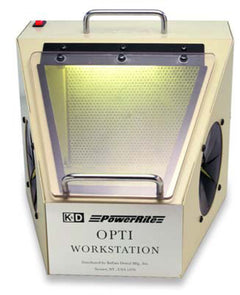
Buffalo Dental
Buffalo Optiblast II Microblaster Finishing System Intro Kit (Including 60 Degree Tip
055-0340
$213.60


Questions
What is Vaniman StoneVac Dust Collector Parts used for?
The Vaniman Manufacturing stone vac filter is a dental product supplied by Vaniman Manufacturing for dental laboratory and clinical use.
Which part options are on this page?
This page carries 6 part options: 2834 · Clean/Shaker Motor Assembly (with quick-disconnect wire), 3526 · Clean/Shaker Clamp, 10511 · Cleaning Kit for StoneVac Dust Collectors, 97001 · Replacement HEPA Filter (StoneVac series), 97002 · Dust Bin Bags, 10-Pack, 97003 · Clean/Shaker Motor only (for motors with a wiring connector). Pick one to see its price, part number and stock.
When does it ship?
In-stock orders placed before 3 PM ET ship the same day; anything not on our shelf ships within 3 business days.Ground shipping is free over $10.
About dust collection and filtration
Dust collection and filtration parts on the dust collectors shelf: the bags, filters and accessories of units that separate dust from exhaust air. A dust collector is a device, or a combination of devices, that separates dust from the air an exhaust system draws off. OSHA describes an exhaust ventilation system as two or more of these parts: an enclosure or hood, duct work, dust collecting equipment, an exhauster and a discharge stack.
A dust collector is a device, or a combination of devices, that separates dust from the air an exhaust system draws off. A sandblaster does what dentistry calls airborne-particle abrasion: it alters the surface of a material with abrasive particles propelled by compressed air.
The CDC reports that dental laboratory technicians can breathe in crystalline silica dust when mixing powders, removing castings from moulds, grinding and polishing castings and porcelain, and blasting with silica sand. Silicosis, the lung disease caused by breathing in that dust, is preventable.
How dust collection and sandblasting equipment differ
- Dust Collection & Filtration — Takes the dust out of the air that grinding, polishing and blasting put it into.
- Sandblasting Equipment — Works on the surface itself, with abrasive driven by compressed air.
- General Repair & Replacement Parts — Replacement motors, windows, shields, switches and media jars for the units.
- Hoses Tubing & Fittings — Hoses, hose ends, nozzles and disconnect kits: what joins a unit to the bench.
- Filters — Replacement filters, bags, screens and cartridge kits.
What to look at when choosing
Dust: blasting shatters the abrasive and the surface being blasted, and the dust formed contains particles small enough to be breathed in.
Exposure limit: OSHA limits respirable crystalline silica in the air to 50 micrograms per cubic metre, averaged over an 8-hour day.
Particle size and pressure: smaller particles at lower pressure remove less material with more precision, and larger particles at higher pressure remove material faster.
Noise: a study of dental laboratories names sandblasters among the equipment with high sound levels and puts compressed-air blasting at up to 105 dB.
Sources: OSHA 29 CFR 1910.94, Ventilation (abrasive blasting; grinding, polishing and buffing) · The Glossary of Prosthodontic Terms, 9th edition (J Prosthet Dent 2017) · CDC, Silicosis in Dental Laboratory Technicians, Five States, 1994-2000 (MMWR 53(09)) · OSHA 29 CFR 1910.1053, Respirable crystalline silica · Air-Abrasion in Dentistry: A Short Review of the Materials and Performance Parameters (J Biomed Phys Eng 2024) · Assessment of hearing performance of dental technicians due to the professional noise exposure (BMC Oral Health 2023)
