

Sold out
RenfertSold out
Renfert Vacuum Pump for Twister 1820/1821
SKU 043-0360MFR# 900021343
$383.13
· Sold out
The Renfert Vacuum Pump for Twister 1820/1821 is a dental laboratory product supplied by Renfert for dental laboratory use. Catalog code 900021343.
Renfert Vacuum Pump for Twister 1820/1821 belongs to our general repair & replacement parts range, made by Renfert. Manufacturer part number 900021343.
Find it on our Lab Equipment shelf, under Lab Fabrication & Finishing Equipment.
Orders placed before 3 PM ET ship the same day when the item is on our shelf (otherwise within 3 business days), and ground shipping is free over $10.
Product
- Manufacturer
- Renfert
- Manufacturer #
- 900021343
- Item code
- 043-0360
- UPC / Barcode
- 900021343
Catalog path
- Marketplace
- Laboratory
- Category
- Lab Equipment
- Subcategory
- Lab Fabrication & Finishing Equipment
Ordering
- Status
- Sold out
More from Lab Fabrication & Finishing Equipment
In stock in the same subcategory. Not the same product — check the specs before you swap.
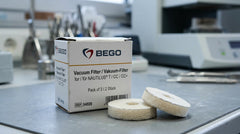
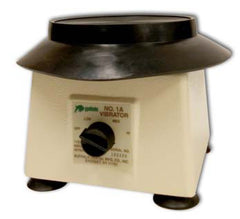
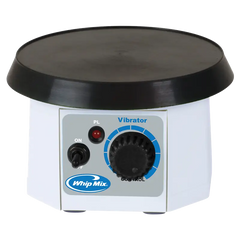


Questions
What is it used for?
The Renfert Vacuum Pump for Twister 1820/1821 is a dental laboratory product supplied by Renfert for dental laboratory use.
When does it ship?
In-stock orders placed before 3 PM ET ship the same day. An item we don't keep on the shelf shows its own ship-by date on its page, and you can cancel it for a full refund until it ships.Ground shipping is free over $10.
About fabrication equipment parts
General repair and replacement parts on the lab fabrication and finishing shelf are chucks, spindles, vacuum mixer parts, O-rings, fuses and regulators.
This shelf holds the bench machines of a dental laboratory: lathes, model trimmers, vibrators, mixers, and casting and polishing units. A cast is a life-size likeness formed from a material poured into an impression. Polishing is the act of making a denture or casting smooth and glossy, usually by friction.
A study of dental laboratories lists finishing crowns, bridges and partial dentures among its noisiest work, and names vibrators, polishing equipment and sandblasters as sources of high sound levels.
How the machines differ
- Lathes — Spins the wheels, cones and buffs used for polishing; the CDC lists lathes among the items to be cleaned and disinfected between patients.
- Lab Vibrators — Shakes the mix into the impression after it has been mixed.
- Mixing Equipment — Blends powder and water, under vacuum, before the mix is poured.
- Electro-Polishing Equipment — Brightens metal by removing a thin layer electrolytically, where a lathe polishes by friction.
- Casting Units — Fills a mould with molten material, where the other machines here shape or finish a solid one.
- Casting Machine Parts — The parts of a casting machine, where casting units are the machines.
- Filters — Air filters for vacuum mixers and filter parts for a casting machine.
- General Repair & Replacement Parts — Chucks, spindles, vacuum mixer parts, O-rings, fuses and regulators.
- Model Trimmers — Wet and dry model trimmers and arch trimmers, with their discs and parts.
- Mixing Bowls & Lab Vessels — The bowls, paddles and lids of a vacuum mixer, where mixing equipment is the mixer.
The shelf also holds model trimmers; no source on our allowed list describes them, so this guide does not.
What to look at when choosing
Air in the mix: the strength, hardness and abrasion resistance of a gypsum cast are affected by the number and size of the voids in it.
Surface after polishing: studies cited in the denture literature put the acceptable roughness of a hard surface in the mouth at no more than 0.2 micrometres.
The CDC reports that dental laboratory technicians can breathe in crystalline silica dust when mixing powders, removing castings from moulds, grinding and polishing castings and porcelain, and blasting with silica sand.
Cleaning between cases: the CDC notes that pressure pots and water baths are particularly susceptible to contamination and should be cleaned and disinfected between patients.
Sources: The Glossary of Prosthodontic Terms, 9th edition (J Prosthet Dent 2017) · Assessment of hearing performance of dental technicians due to the professional noise exposure (BMC Oral Health 2023) · Rao et al. 2015, Surface roughness of three heat-cured acrylic denture base resins with different conventional lathe polishing techniques (J Indian Prosthodont Soc) · CDC, Guidelines for Infection Control in Dental Health-Care Settings, 2003 (MMWR 52 RR-17) · A new dental casting technique for production of void-free dental models (Eur Oral Res 2020) · CDC, Silicosis in Dental Laboratory Technicians, Five States, 1994-2000 (MMWR 53(09))