


Grit
Fine (Red Band)
Fine (Red Band)$27.20
Coarse (Blue Band)$24.99
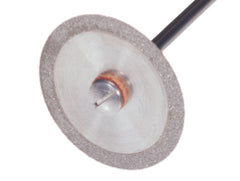
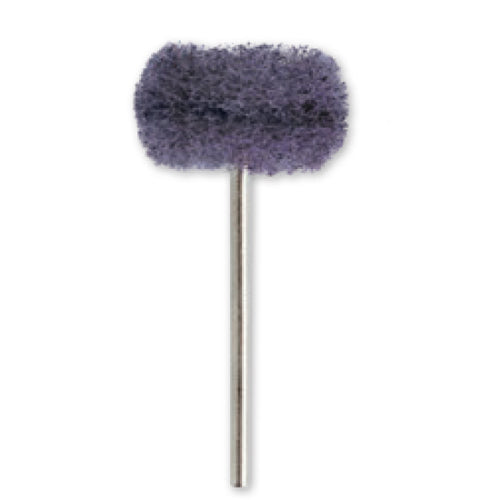
The Tcs Thermoplastic Comfort System Pink Zirconia Fine Bur is a dental laboratory product supplied by Tcs Thermoplastic Comfort System for dental lab use. Catalog code 5035Z.
TCS Pink Zirconia Bur is a diamond bur from TCS.
This page carries 2 grit options: Fine (Red Band), Coarse (Blue Band).
Find it on our Lab Burs & Rotary shelf, under Diamond Rotary Instruments.
Orders placed before 3 PM ET ship the same day when the item is on our shelf (otherwise within 3 business days), and ground shipping is free over $10.
Product
- Manufacturer
- TCS
- Manufacturer #
- 5035Z
- Item code
- 008-1271
Catalog path
- Marketplace
- Laboratory
- Category
- Lab Burs & Rotary
- Subcategory
- Diamond Rotary Instruments
Ordering
- Status
- Ships in 3 business days
More from Diamond Rotary Instruments
Stocked in the same subcategory.
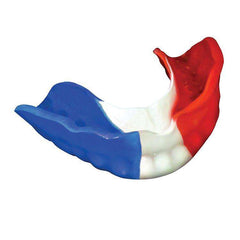
Keystone Industries
Keystone Pro-Form Mouthguard Laminates, .160", 5" × 5" — 12/Pack
010-2890
$83.39




Questions
What is TCS Pink Zirconia Bur used for?
The Tcs Thermoplastic Comfort System Pink Zirconia Fine Bur is a dental laboratory product supplied by Tcs Thermoplastic Comfort System for dental lab use.
Which grit options are on this page?
This page carries 2 grit options: Fine (Red Band), Coarse (Blue Band). Pick one to see its price, part number and stock.
When does it ship?
In-stock orders placed before 3 PM ET ship the same day; anything not on our shelf ships within 3 business days.Ground shipping is free over $10.
About diamond burs
A diamond bur has a head with diamond chips embedded in it on a shaft that fits the handpiece. ISO 7711-1 applies to every type and shape of diamond rotary instrument except discs.
A dental diamond instrument is an abrasive device: a shaft that goes into a handpiece and a head with diamond chips embedded in it. Its rotation gives an abrasive action, where a bur is a cutting device. The FDA lists it as Class I (21 CFR 872.4535).
ISO 7711-1 sets the general requirements for diamond rotary instruments, including their designation, colour code and grit sizes.
How the types on this shelf differ
- Diamond Burs — A shaped diamond head on its own shaft.
- Diamond Discs — A flat disc for cutting, covered by its own part of the ISO standard.
- Laboratory Diamond Burs — A diamond instrument sized for bench work.
- Laboratory Carbides — Used at the bench on the metals, plastics and porcelains of dental devices, not in the mouth.
- Flexible Silicone Polishers — The abrasive is embedded in a flexible silicone body.
What to look at when choosing a diamond instrument
Grit: ISO 7711-1 covers the grit sizes of diamond instruments and the colour code that marks them. Coarse tools shape the work and remove excess material; medium ones smooth out the grooves and scratches the coarse ones leave.
Size: ISO 2157 sets the nominal diameters of the working part of burs, laboratory burs, grinding instruments, diamond instruments and mandrels, and how they are designated.
Shank: the part that fits into the handpiece. ISO 1797 sets shank dimensions and material properties.
Reuse: the CDC states that burs, polishing points and rag wheels used on contaminated appliances or prostheses should be heat-sterilised, disinfected between patients, or discarded.
Sources: FDA 21 CFR 872.4535, Dental diamond instrument · ISO 7711-1:2021, Diamond rotary instruments, Part 1: General requirements · ISO 7711-2:2011, Rotary diamond instruments, Part 2: Discs · ISO 10323:2013, Bore diameters for rotary instruments such as discs and wheels · ISO 2157:2016, Nominal diameters and designation code numbers for rotary instruments · ISO 7787-2:2020, Laboratory cutters, Part 2: Carbide laboratory cutters · Rao et al. 2015, Surface roughness of three heat-cured acrylic denture base resins with different conventional lathe polishing techniques (J Indian Prosthodont Soc) · FDA 21 CFR 872.3240, Dental bur · Does Sterilization Affect the Performance of Single-Step Resin Composite Polishers? (Dent J 2023) · A Comprehensive Review of the Surface and Chromatic Properties of Monolithic Zirconia: Polishing and Finishing Methods (Cureus 2024) · ISO 1797:2017, Shanks for rotary and oscillating instruments · CDC, Guidelines for Infection Control in Dental Health-Care Settings, 2003 (MMWR 52 RR-17)
