

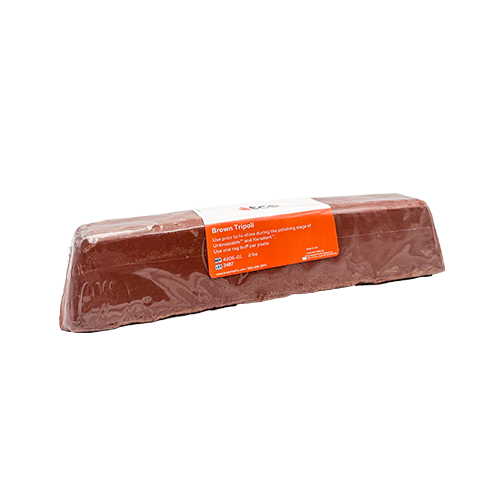
TCS Brown Tripoli polishing compound, used for finishing and polishing dental lab restorations. Catalog code 4206-01.
TCS Brown Tripoli Polishing Compound belongs to our rouge & tripoli range, made by TCS. Key facts — Abrasive: Compound. Manufacturer part number 4206-01.
Find it on our Abrasives, Buffs & Brushes shelf, under Polishing Compounds & Accessories.
Orders placed before 3 PM ET ship the same day when the item is on our shelf (otherwise within 3 business days), and ground shipping is free over $10.
| Abrasive | Compound |
|---|
Product
- Manufacturer
- TCS
- Manufacturer #
- 4206-01
- Item code
- 008-1039
- UPC / Barcode
- 4206-01
Catalog path
- Marketplace
- Laboratory
- Category
- Abrasives, Buffs & Brushes
- Subcategory
- Polishing Compounds & Accessories
Ordering
- Status
- Ships from the manufacturer
More from Polishing Compounds & Accessories
Stocked in the same subcategory.


Keystone Industries
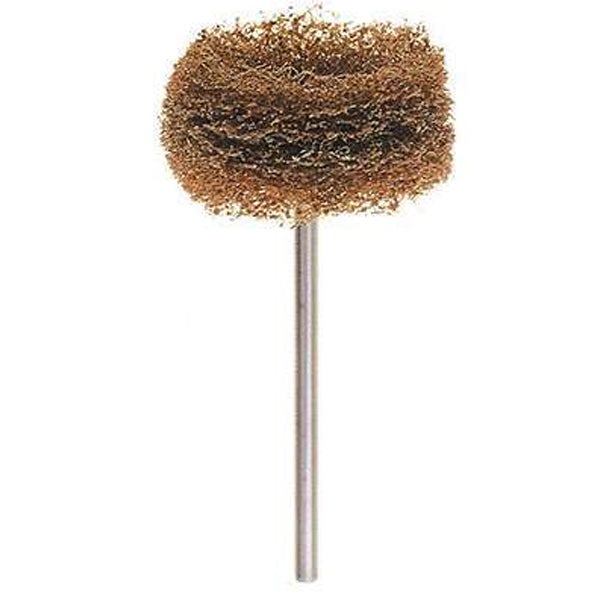
Keystone Scotch-Brite Miniature Brushes — 12/Pack
In stock
350 sold this monthfrom $18.82




Questions
What is TCS Brown Tripoli Polishing Compound used for?
TCS Brown Tripoli polishing compound, used for finishing and polishing dental lab restorations.
When does it ship?
In-stock orders placed before 3 PM ET ship the same day. An item we don't keep on the shelf shows its own ship-by date on its page, and you can cancel it for a full refund until it ships.Ground shipping is free over $10.
About rouge and tripoli
Rouge is a compound of ferric oxide and binders used to give a high lustre to a polished surface. In one published sequence rouge on a soft cloth wheel gave denture acrylic its final high shine. No source on our allowed list describes tripoli, so this guide does not.
A polishing agent is any material used to give lustre to a surface. Polishing is making a denture or casting smooth and glossy.
One published sequence for denture acrylic polishes first with pumice on a wet felt cone and then with rouge on a soft cloth wheel.
How polishing paste, pumice and rouge differ
- Polishing Paste — A ready-mixed polishing agent.
- Pumice — The abrasive for the first shine.
- Rouge & Tripoli — Rouge is for the final high lustre.
What to look at when choosing a polishing compound
The step: pumice comes before rouge in the published sequence.
Surface: 0.2 micrometres of roughness is considered the threshold for a clinically acceptable restoration.
Dust: the CDC names grinding and polishing castings and porcelain among the laboratory steps that put dust in the air.
Sources: The Glossary of Prosthodontic Terms, 9th edition (J Prosthet Dent 2017) · Rao et al. 2015, Surface roughness of three heat-cured acrylic denture base resins with different conventional lathe polishing techniques (J Indian Prosthodont Soc) · Does Sterilization Affect the Performance of Single-Step Resin Composite Polishers? (Dent J 2023) · CDC, Silicosis in Dental Laboratory Technicians, Five States, 1994-2000 (MMWR 53(09))
