


Color
Blue
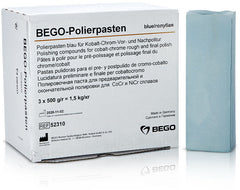
This Blue Polishing Compound is an abrasive accessory for dental applications. It functions as a polishing compound, suitable for use with buffs and brushes in dental procedures. Its primary uses include polishing, brushing, and cleaning various dental materials and surfaces.
The compound is distinguished by its blue color and is provided in a 4oz pack size. This format is intended for dental professionals, including dentists, hygienists, and lab technicians, who require a standard volume of compound for routine finishing and maintenance tasks.
Product
- Manufacturer
- RMH3 Dental
- Manufacturer #
- 2032
- Item code
- 001-0047
Catalog path
- Marketplace
- Laboratory
- Category
- Abrasives, Buffs & Brushes
- Subcategory
- Polishing Compounds & Accessories
Ordering
- Status
- In stock
More from Polishing Compounds & Accessories
Stocked in the same subcategory.


Keystone Industries
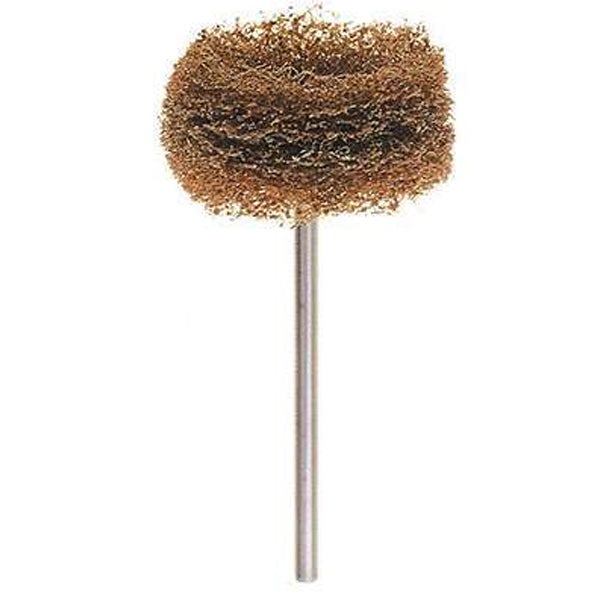
Keystone Scotch-Brite Miniature Brushes — 12/Pack
In stock
307 sold this monthfrom $18.82



Questions
What is RMH3 Dental Polishing Compound — 4 oz used for?
This Blue Polishing Compound is an abrasive accessory for dental applications.
Which color options are on this page?
This page carries 3 color options: Blue, Green, White. Pick one to see its price, part number and stock.
When does it ship?
In-stock orders placed before 3 PM ET ship the same day; anything not on our shelf ships within 3 business days.Ground shipping is free over $10.
About polishing paste
A polishing agent is any material used to give lustre to a surface. One published study polished denture acrylic with a universal polishing paste composed of aluminum oxide.
A polishing agent is any material used to give lustre to a surface. Polishing is making a denture or casting smooth and glossy.
One published sequence for denture acrylic polishes first with pumice on a wet felt cone and then with rouge on a soft cloth wheel.
How polishing paste, pumice and rouge differ
- Polishing Paste — A ready-mixed polishing agent.
- Pumice — The abrasive for the first shine.
- Rouge & Tripoli — Rouge is for the final high lustre.
What to look at when choosing a polishing compound
The step: pumice comes before rouge in the published sequence.
Surface: 0.2 micrometres of roughness is considered the threshold for a clinically acceptable restoration.
Dust: the CDC names grinding and polishing castings and porcelain among the laboratory steps that put dust in the air.
Sources: The Glossary of Prosthodontic Terms, 9th edition (J Prosthet Dent 2017) · Rao et al. 2015, Surface roughness of three heat-cured acrylic denture base resins with different conventional lathe polishing techniques (J Indian Prosthodont Soc) · Does Sterilization Affect the Performance of Single-Step Resin Composite Polishers? (Dent J 2023) · CDC, Silicosis in Dental Laboratory Technicians, Five States, 1994-2000 (MMWR 53(09))
