

S&S ScheftnerSpecial order
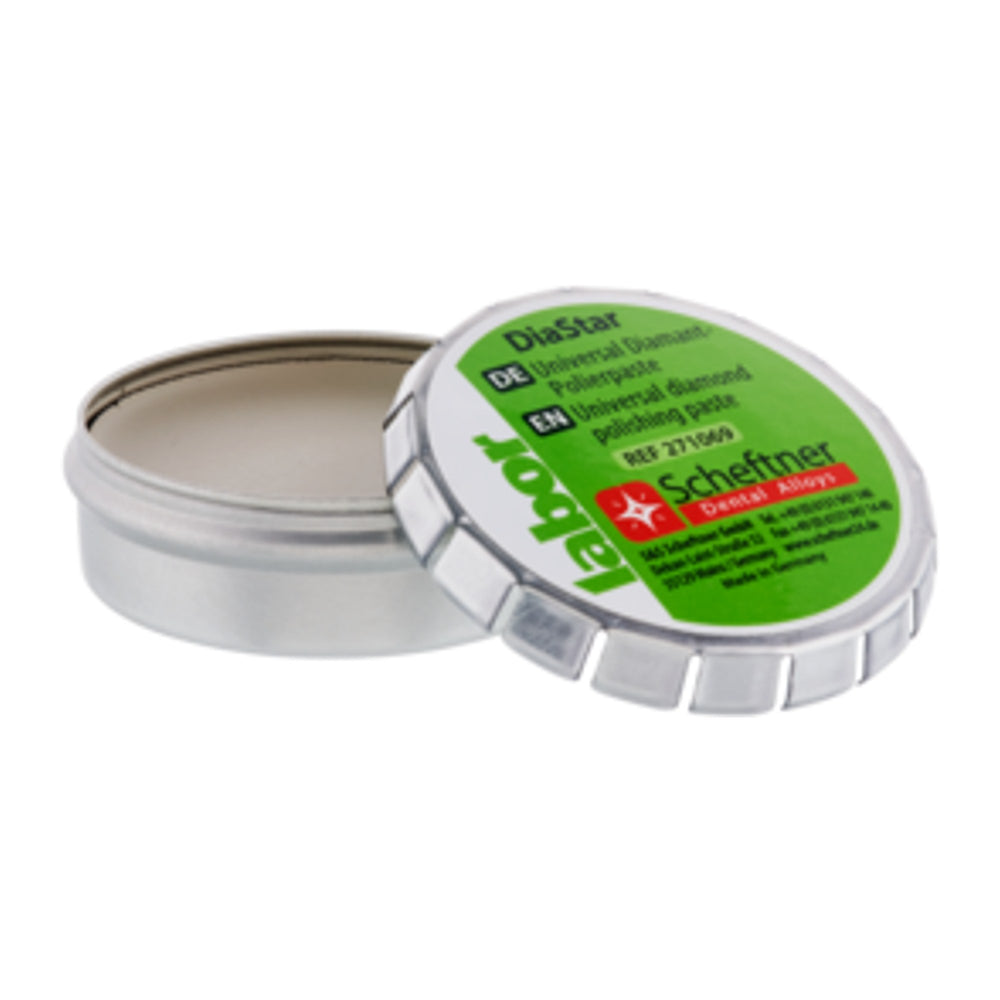
S&S Scheftner DiaStar Diamond Polishing Compound · 5 g
SKU 119-0235MFR# 271065
Size
5 g
5 g$14.86
30 g$48.30
DiaStar is an all-in-one diamond polishing paste for metals, ceramics, zirconia, composites and acrylics. It has a very high diamond content and a hard consistency, so it doses economically and does not splash or smear. It is for laboratory use, not for use in the mouth.
What Scheftner says about it
- Very high diamond content
- Hard paste consistency, thereby more efficient dosing
- No splashing or smearing - clean and economical
- Not suitable for intraoral use!
On this page
| 5 g | Scheftner Ref. 271065 |
|---|---|
| 30 g | Scheftner Ref. 271069 |
Questions about this product
- What is DiaStar used for?
- DiaStar is an all-in-one diamond polishing paste for metals, ceramics, zirconia, composites and acrylics. It has a very high diamond content and a hard consistency, so it doses economically and does not splash or smear. It is for laboratory use, not for use in the mouth.
- Which options are on this page?
- 5 g (Ref. 271065); 30 g (Ref. 271069).
- Who makes DiaStar?
- S&S Scheftner, a dental alloy and laboratory materials maker in Mainz, Germany.
Product
- Manufacturer
- S&S Scheftner
- Manufacturer #
- 271065
- Item code
- 119-0235
Catalog path
- Marketplace
- Laboratory
- Category
- Abrasives, Buffs & Brushes
- Subcategory
- Polishing Compounds & Accessories
Ordering
- Status
- Special order
More from Polishing Compounds & Accessories
Stocked in the same subcategory.


Keystone Industries
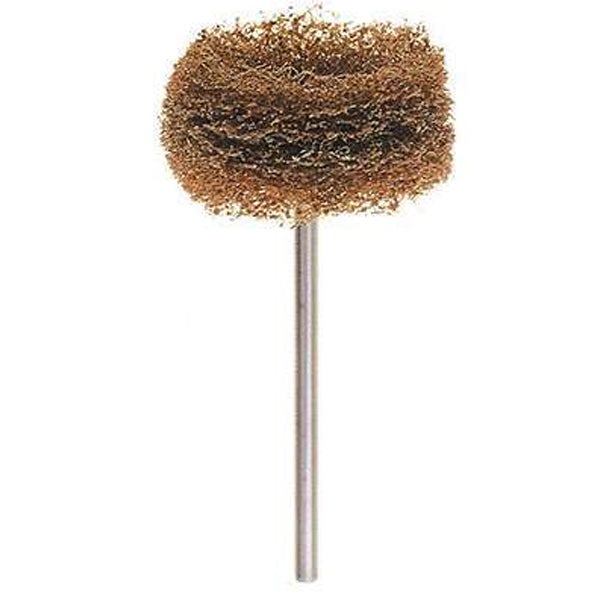
Keystone Scotch-Brite Miniature Brushes — 12/Pack
In stock
341 sold this monthfrom $18.82




About polishing paste
A polishing agent is any material used to give lustre to a surface. One published study polished denture acrylic with a universal polishing paste composed of aluminum oxide.
A polishing agent is any material used to give lustre to a surface. Polishing is making a denture or casting smooth and glossy.
One published sequence for denture acrylic polishes first with pumice on a wet felt cone and then with rouge on a soft cloth wheel.
How polishing paste, pumice and rouge differ
- Polishing Paste — A ready-mixed polishing agent.
- Pumice — The abrasive for the first shine.
- Rouge & Tripoli — Rouge is for the final high lustre.
What to look at when choosing a polishing compound
The step: pumice comes before rouge in the published sequence.
Surface: 0.2 micrometres of roughness is considered the threshold for a clinically acceptable restoration.
Dust: the CDC names grinding and polishing castings and porcelain among the laboratory steps that put dust in the air.
Sources: The Glossary of Prosthodontic Terms, 9th edition (J Prosthet Dent 2017) · Rao et al. 2015, Surface roughness of three heat-cured acrylic denture base resins with different conventional lathe polishing techniques (J Indian Prosthodont Soc) · Does Sterilization Affect the Performance of Single-Step Resin Composite Polishers? (Dent J 2023) · CDC, Silicosis in Dental Laboratory Technicians, Five States, 1994-2000 (MMWR 53(09))
