

Keystone IndustriesShips from the manufacturer
Keystone Quart Mizzy Debubblizer
SKU 010-2120MFR# 6121800
The Keystone Quart Mizzy Debubblizer is a dental product supplied by Keystone for dental use. Catalog code 6121800.
Keystone Quart Mizzy Debubblizer is a debubblizer from Keystone Industries, part of the Mizzy line. Manufacturer part number 6121800.
Find it on our Chemicals & Solutions shelf, under Casting & Lab Process Chemicals.
Orders placed before 3 PM ET ship the same day when the item is on our shelf (otherwise within 3 business days), and ground shipping is free over $49.
Product
- Manufacturer
- Keystone Industries
- Manufacturer #
- 6121800
- Item code
- 010-2120
- UPC / Barcode
- 6121800
Catalog path
- Marketplace
- Laboratory
- Category
- Chemicals & Solutions
- Subcategory
- Casting & Lab Process Chemicals
Ordering
- Status
- Ships from the manufacturer
More from Casting & Lab Process Chemicals
Stocked in the same subcategory.


Keystone Industries
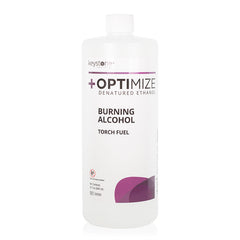
Keystone EPR Burning Alcohol (Denatured Ethanol), 1 Quart
In stock
10 sold this month$10.81

Questions
What is Keystone Quart Mizzy Debubblizer used for?
The Keystone Quart Mizzy Debubblizer is a dental product supplied by Keystone for dental use.
When does it ship?
In-stock orders placed before 3 PM ET ship the same day. An item we don't keep on the shelf shows its own ship-by date on its page, and you can cancel it for a full refund until it ships.Ground shipping is free over $49.
About debubblizers
A debubblizer is a surfactant: a surface-active substance, such as a detergent, applied to a surface to help another material wet it. In laboratory work it is sprayed on an impression before the stone is poured.
This shelf holds the process liquids of casting and model work: debubblizers, hardeners and accelerators, and electrolytes. Investing is covering an object such as a wax form with investment material before processing, soldering or casting.
How the types differ
- Debubblizers — Used before pouring or investing, so the mix wets the surface.
- Electrolyte and polishing solutions — Used after casting, on the metal.
- Hardening & Accelerating Agents — An accelerator, a speed liquid and a wash, each sold as a liquid.
What to look at when choosing
Hardeners: Type IV dental stone is the usual material for working dies, and a die hardener is applied to it. One laboratory study compared cyanoacrylate, resin-based and colloidal silica-based hardeners and found that both the type of hardener and the drying method changed surface hardness and compressive strength.
Electrolytic polishing: in one study it brought cobalt-chromium surfaces to a roughness in the nanometre range, comparable to conventional mechanical polishing.
Safety data sheet: OSHA requires a safety data sheet in the workplace for each hazardous chemical in use, and the maker or importer has to supply one. Labels on incoming containers of hazardous chemicals are not to be removed or defaced.
Sources: The Glossary of Prosthodontic Terms, 9th edition (J Prosthet Dent 2017) · Marginal and Internal Gap of Metal Copings Fabricated Using Three Types of Resin Patterns with Subtractive and Additive Technology (Materials 2022) · Mechanical and Plasma Electrolytic Polishing of Dental Alloys (Materials 2023) · Effect of Three Commercially Available Die Hardening Agents on the Compressive Strength and Surface Hardness of Type IV Dental Stone (Cureus 2026) · OSHA 29 CFR 1910.1200, Hazard Communication
