

PulpdentShips in 3 business days
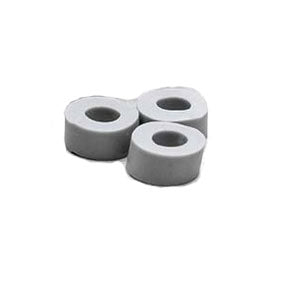
Pulpdent Silicone Code Rings · Standard, 1/8" ID x 1/8" Wide · Grey · Box of 50
SKU 106-1079MFR# CR7-50
Size
Standard, 1/8" ID x 1/8" Wide
Standard, 1/8" ID x 1/8" Wide$10.95
Large, 7/32" ID x 5/32" Wide
Color
Grey
Blue$10.95
Red$10.95
Yellow$10.95
Green$10.95
Assorted (11 Colors)White$10.95
Mauve$10.95
Pink$10.95
Black$10.95
Grey$10.95
Brown$10.95
Orange$10.95
Assorted (7 Colors)
Pack
Box of 50
Pulpdent Code Rings are medical-grade silicone rings used for the identification and organization of dental instruments. They provide a method for distinguishing instruments, aiding in their efficient tracking through sterilization processes and daily clinical application.
This product supplies 100 orange rings, each with a 1/8" ID and 1/8" width. The silicone material is suitable for repeated sterilization without degradation. This specific format supports dental practices and labs in establishing a clear, color-coded system for instrument management and inventory control.
Product
- Manufacturer
- Pulpdent
- Manufacturer #
- CR7-50
- Item code
- 106-1079
Catalog path
- Marketplace
- Clinical
- Category
- Instruments
- Subcategory
- Cassettes, Storage & Care
Ordering
- Status
- Ships in 3 business days
More from Cassettes, Storage & Care
Stocked in the same subcategory.


Questions
What is Pulpdent Silicone Code Rings used for?
Pulpdent Code Rings are medical-grade silicone rings used for the identification and organization of dental instruments.
Which size and color and pack options are on this page?
This page carries 2 size options: Standard, 1/8" ID x 1/8" Wide, Large, 7/32" ID x 5/32" Wide. This page carries 13 color options: Blue, Red, Yellow, Green, Assorted (11 Colors), White, Mauve, Pink and 5 more. This page carries 3 pack options: Box of 100, Box of 50, Pack of 60. Pick one to see its price, part number and stock.
When does it ship?
In-stock orders placed before 3 PM ET ship the same day; anything not on our shelf ships within 3 business days.Ground shipping is free over $10.
About storage and organization
Storage of wrapped sterilized instruments is run either by date, where packages are expiration-dated and used first in, first out, or by event, where a package stays sterile until something such as tearing or wetting contaminates it. The CDC states that packaging should be inspected before opening, and that a package found wet, torn or punctured goes back to be cleaned, packaged and heat-sterilized again.
The CDC sorts patient-care items by the risk they carry: critical items penetrate soft tissue or bone and should always be heat sterilized, while semicritical items touch mucous membranes and most of them can and therefore should be heat sterilized too. After cleaning, instruments are dried, inspected, then wrapped, packaged or placed into container systems before heat sterilization, because wet instruments can compromise the packaging.
The CDC names wrapped perforated instrument cassettes, peel pouches of plastic or paper and sterilization wraps as the materials that keep instruments sterile through transport and storage. ISO 11607-1 is the international standard for that packaging: materials and sterile barrier systems meant to keep a sterilized device sterile until the point of use.
How the cassettes, storage and care items differ
- Trays and cassettes — The container the instruments stay in from the sink to the sterilizer to the shelf.
- Storage and organization — Where the finished package waits; the CDC discourages storing unwrapped semicritical instruments at all.
- Storage accessories — The rings, markers and covered containers used around a tray, rather than the sterile barrier itself.
- Clamps and holders — The part that holds the instruments down, not the tray or the wrap around them.
- Case organizers — Fixes the order of the set inside the case; it is not itself the sterile barrier.
- Sharpening — Restores a cutting edge rather than cleaning or storing, and a sharp edge has been associated with more tactile sensitivity and less lateral pressure on the instrument.
- Bur blocks — Holds small rotary instruments rather than hand instruments.
What to look at when choosing a cassette or storage item
Match to the cycle: packaging materials allow the sterilizing agent to penetrate and hold sterility afterwards, and the CDC states they should be designed for the type of sterilization process being used.
Indicators: an internal chemical indicator belongs in every package, with an external one when the internal indicator cannot be seen from outside.
Room for the load: hinged instruments are processed open and unlocked.
Labelling: before a package goes into the sterilizer the CDC asks for at least the sterilizer used and the cycle or load number on the label.
Standard: ISO 11607-1 covers packaging and sterile barrier systems wherever medical devices are placed in sterile barrier systems and sterilized, in industry and in health care facilities alike.
Safe handling: a covered, puncture-resistant and leak-proof container for transport, and no hand reaching into a container of unseen sharp instruments.
Sources: CDC: Best Practices for Sterilization in Dental Settings · CDC: Guidelines for Infection Control in Dental Health-Care Settings — 2003 (MMWR 52(RR-17)) · ISO 11607-1:2019, Packaging for terminally sterilized medical devices — Part 1: Requirements for materials, sterile barrier systems and packaging systems · Periodontal instrumentation technique: an exploratory analysis of clinical outcomes and financial aspects, 2023 (Br Dent J) · Nimmanon et al. 2022, Scanning electron microscope analysis of working ends of standard and modified Gracey curettes (J Indian Soc Periodontol)
