

Pac-DentShips in 3 business days
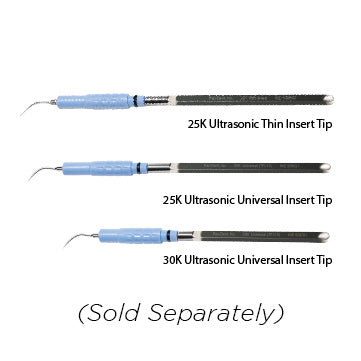
Pac-Dent Autoscaler Ultrasonic Inserts · Universal (TFI-10) · 25K
SKU 103-0134MFR# INS 508601
Insert
Universal (TFI-10)
Universal (TFI-10)$124.95
Thin universal$174.93
Frequency
25K
25K$124.95
30K$124.95
The Pac-Dent PAC-DENT INSERT 25K UNIVERSAL (TFI-10) is an ultrasonic scaler insert for use with compatible Pac-Dent scaler units. Catalog code INS 508601.
Pac-Dent Autoscaler Ultrasonic Inserts is a scaler tips & insert from Pac-Dent.
This page carries 2 insert options: Universal (TFI-10), Thin universal. This page carries 2 frequency options: 25K, 30K.
Find it on our Equipment shelf, under Scaler Tips & Inserts.
Orders placed before 3 PM ET ship the same day when the item is on our shelf (otherwise within 3 business days), and ground shipping is free over $10.
Product
- Manufacturer
- Pac-Dent
- Manufacturer #
- INS 508601
- Item code
- 103-0134
Catalog path
- Marketplace
- Clinical
- Category
- Equipment
- Subcategory
- Scaler Tips & Inserts
Ordering
- Status
- Ships in 3 business days
More from Scaler Tips & Inserts
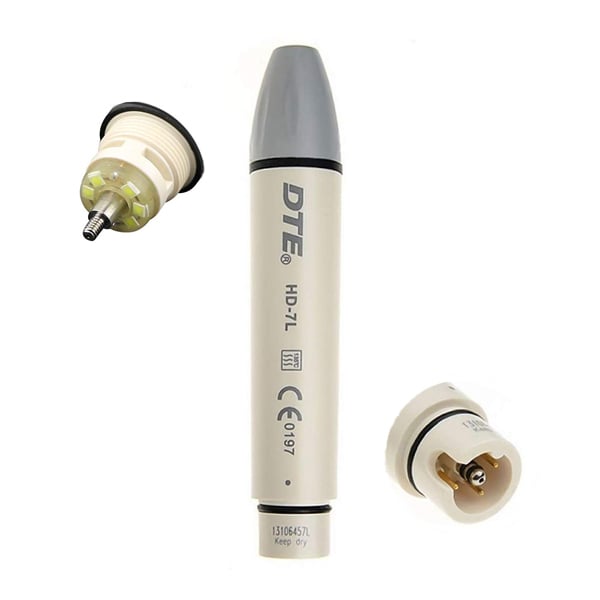
Stocked in the same subcategory.




Questions
What is Pac-Dent Autoscaler Ultrasonic Inserts used for?
The Pac-Dent PAC-DENT INSERT 25K UNIVERSAL (TFI-10) is an ultrasonic scaler insert for use with compatible Pac-Dent scaler units.
Which insert and frequency options are on this page?
This page carries 2 insert options: Universal (TFI-10), Thin universal. This page carries 2 frequency options: 25K, 30K. Pick one to see its price, part number and stock.
When does it ship?
In-stock orders placed before 3 PM ET ship the same day; anything not on our shelf ships within 3 business days.Ground shipping is free over $10.
About scaler tips and inserts
A scaler tip or insert is the working end that is fitted to a powered scaler and changed to suit the unit and the job; the insert form is the one used by magnetostrictive units and the screw-on tip the one used by piezoelectric units. ISO 18397 treats the handpiece and the tip as one subject, for air-powered and electrical-powered scalers of both the piezo and the magnetostrictive type, used alone or connected to a dental unit. The tip is what removes the deposit: an ultrasonic scaler removes calculus deposits from teeth by application of an ultrasonic vibrating scaler tip to the teeth. Tip design changes the outcome: one study reported significantly lower tooth substance loss with a narrow tip design than with a wider tip, and worn tips were associated with increased surface roughness compared to new tips.
A scaler tip is the working end of a powered scaler: an ultrasonic scaler removes calculus deposits from teeth by application of an ultrasonic vibrating scaler tip to the teeth, and the FDA classes the scaler as Class II (21 CFR 872.4850). ISO 18397 is the international standard that covers scaler handpieces and scaler tips together, for air-powered and electrical-powered scalers of both the piezo and the magnetostrictive type. Which tip fits depends on the unit, because there are two categories of ultrasonic scaler, magnetostrictive and piezoelectric.
The two categories move their tips differently: a piezoelectric scaler has a linear movement, with the working tip moving back and forth in a longitudinal plane and being active laterally. A magnetostrictive scaler moves more elliptically, across multiple planes, and its tip is activated on all surfaces. Displacement amplitude at the tip is highly sensitive and varies among different generators.
What to look at when choosing tips and inserts
Unit type: magnetostrictive scalers generate tip vibrations from 18 to 45 kHz, while piezoelectric scalers generate tip vibrations from 25 to 50 kHz. ISO 18397 treats the handpiece and the tip as one subject, for both types and whether the scaler stands alone or is connected to a dental unit.
Tip width: one study reported that tooth substance loss was significantly lower with a narrow tip design than with a wider tip. A slim tip design produced an elliptical oscillation pattern which, under load during scaling, was damped into a linear pattern.
Tip material: stainless-steel ultrasonic scalers produced fine superficial scratches with minimal surface roughness, whereas titanium tips produced deeper, more pronounced defects, in the studies a narrative review compared.
Wear: worn scaler tips were associated with increased surface roughness compared to new tips. Lower pressure and shorter instrumentation time were associated with reduced surface damage, which makes the effect of a tip partly operator-dependent.
Power setting: a study comparing the two scaler types notes that low power is recommended in order to reduce discomfort and loss of hard tissue. A narrative review reported a positive correlation between the ultrasonic power setting and the degree of surface alteration.
Between patients: the CDC recommends that devices entering the mouth, ultrasonic scalers among them, be connected to the waterline and flushed for at least 20 seconds.
Sources: FDA 21 CFR 872.4850, Ultrasonic scaler · ISO 18397:2025, Dentistry — Powered scalers · You et al. 2024, Effects of a new magnetostrictive ultrasonic scaler and a traditional piezoelectric ultrasonic scaler (Sci Rep) · Influence of scaler tip design on root surface roughness, tooth substance loss and pain perception (BMC Oral Health, PMC8011415) · The Impact of Periodontal Instrumentation on Enamel and Cementum: A Narrative Review (Dent J, PMC13205519) · ADA Oral Health Topics: Dental Unit Waterlines
