

New SteticShips in 3 business days
New Stetic Portux CAD/CAM Multi-Layer PMMA Disc — 98.5 mm · A1 · 35 mm
SKU 024-1509MFR# 22576
Thickness
35 mm
New Stetic Portux Multi-Layer PMMA Disc, 98.5 x 18 mm, Shade A1, 1/Pk. Distribution of 10 layers gives natural results from an ideal transition to an incisal with translucency. Anatomical functional design with color and dimensional stability. Easy handling provides homogenization in the surface texture and high polishability. Catalog code 21846.
Product
- Manufacturer
- New Stetic
- Manufacturer #
- 22576
- Item code
- 024-1509
Catalog path
- Marketplace
- Laboratory
- Category
- Digital Lab & CAD/CAM
- Subcategory
- CAD/CAM Blocks & Discs
Ordering
- Status
- Ships in 3 business days
More from CAD/CAM Blocks & Discs
Stocked in the same subcategory.



Keystone Industries
Keystone KeyPrint KeySplint 3D Printing Resin
In stock
15 sold this monthfrom $214.17


Keystone Industries
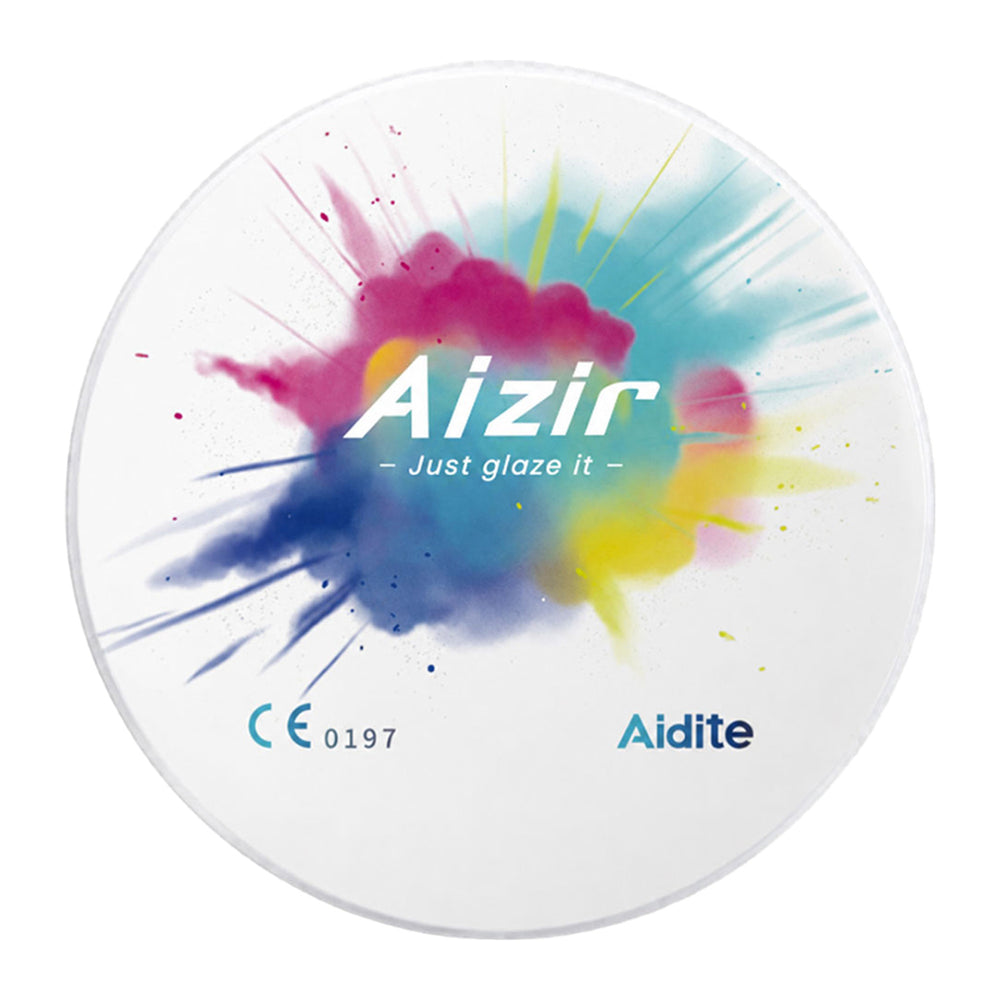
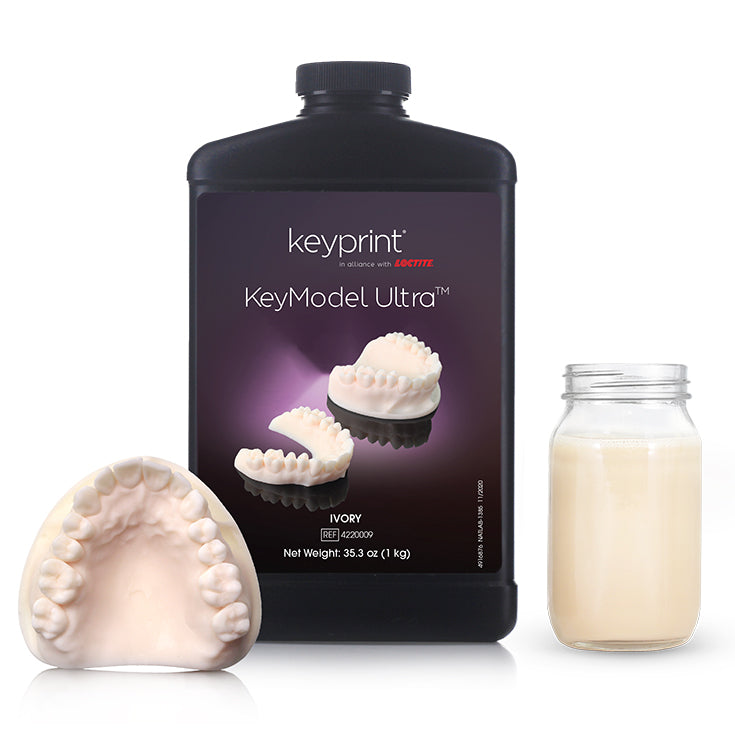
Keystone KeyPrint KeyModel Ultra 3D Printing Resin
In stock
11 sold this monthfrom $73.80
Questions
Which shade and thickness options are on this page?
This page carries 13 shade options: A1, A2, A3, A3.5, B1, B2, C1, C2 and 5 more. This page carries 5 thickness options: 18 mm, 20 mm, 30 mm, 35 mm, 25 mm. Pick one to see its price, part number and stock.
When does it ship?
In-stock orders placed before 3 PM ET ship the same day; anything not on our shelf ships within 3 business days.Ground shipping is free over $10.
About PMMA discs
PMMA, polymethyl methacrylate, is used in dentistry for artificial teeth, denture bases, retainers and provisional crowns. Milled PMMA is used for long-term provisional restorations, up to one year. The FDA defines temporary crown and bridge resin as a material such as polymethylmethacrylate for a temporary prosthesis used until the permanent restoration is made, Class II (21 CFR 872.3770).
A CAD/CAM block or disc is a prefabricated piece of material from which a restoration is milled by a computer-controlled machine. The Glossary of Prosthodontic Terms defines CAD-CAM as the computer-controlled subtractive fabrication of a three-dimensional object, used to produce crowns, veneers, inlays, onlays and other prostheses. By material, a systematic review groups CAD-CAM materials into silicate ceramics, oxide ceramics, composite resins, PMMA, PEEK, polymer-infiltrated ceramic network materials and metal.
How the types of block and disc differ
- Zirconia discs and blocks — The strongest of the materials here, with aesthetics somewhat below the silicate ceramics. Milled oversize and then sintered, because it shrinks in the furnace.
- Hybrid ceramic blocks — Part ceramic and part polymer, where zirconia is all ceramic. Resin block composites can be used for permanent restorations.
- PMMA discs — A polymer for provisional work, where zirconia and hybrid ceramic are for permanent restorations.
- Wax discs — Not a final material: the milled wax is a pattern that is removed from the mould, usually by heat.
What to look at when choosing a zirconia disc
Yttria content: the cubic phase and the translucency rise with the yttria concentration. More cubic phase improves translucency and lowers strength.
Grade names: with 3 to 8 mol% yttria the material is called partially stabilised zirconia (PSZ), and at about 3 mol% it is close to fully tetragonal (TZP).
Colour: a zirconia restoration is coloured either by using a pre-coloured block or by immersing or brushing the white restoration with colouring solution.
Sintering: the optimum sintering temperature range given in the review is 1350 to 1550 °C.
Sources: Clinical Applications and Mechanical Properties of CAD-CAM Materials in Restorative and Prosthetic Dentistry: A Systematic Review (J Funct Biomater 2023) · The Glossary of Prosthodontic Terms, 9th edition (J Prosthet Dent 2017) · Revolution of Current Dental Zirconia: A Comprehensive Review (Molecules 2022) · Biofilm Formation on Hybrid, Resin-Based CAD/CAM Materials for Indirect Restorations: A Comprehensive Review (Materials 2024) · FDA 21 CFR 872.3770, Temporary crown and bridge resin · Comparison the Marginal and Internal Fit of Metal Copings Cast from Wax Patterns Fabricated by CAD/CAM and Conventional Wax up Techniques (J Dent Shiraz 2013) · FDA 21 CFR 872.6890, Intraoral dental wax · Translucent Zirconia in Fixed Prosthodontics: An Integrative Overview (Biomedicines 2023)
