

Home
Clinical
Finishing & Polishing
Discs
Polishing Discs
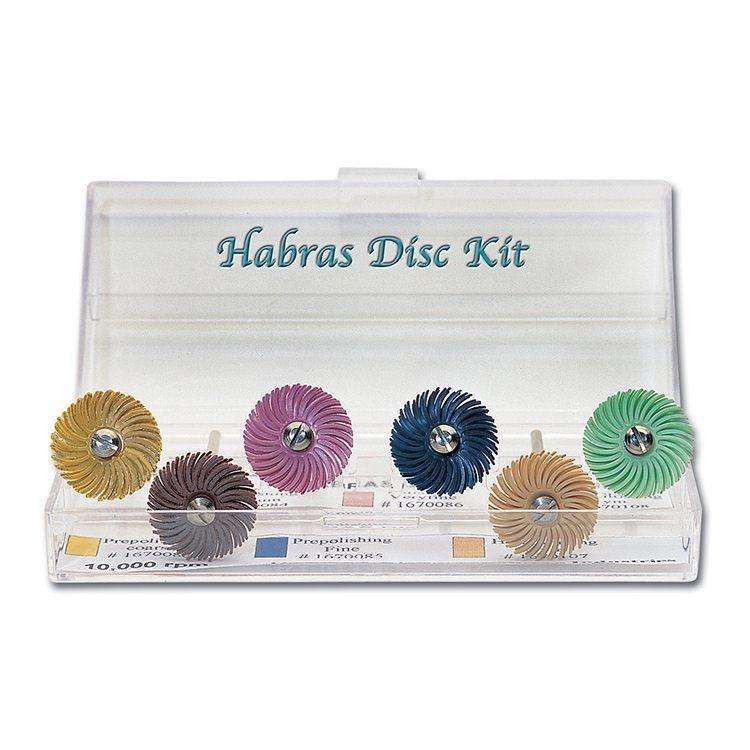
Keystone Hatho Polishing Disc Pk/48 W/O Mandrel
Home
Laboratory
Finishing & Polishing
Discs
Polishing Discs
Keystone Hatho Polishing Disc Pk/48 W/O Mandrel
View all 15




Keystone IndustriesShips from the manufacturer
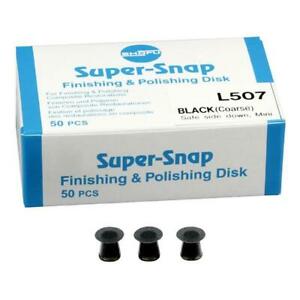
Keystone Hatho Polishing Disc Pk/48 W/O Mandrel
SKU 010-1437MFR# 1670115
The Keystone Hatho Polishing Disc Pk/48 W/O Mandrel is a dental product supplied by Keystone for dental use. Catalog code 1670115.
Keystone Hatho Polishing Disc, Without Mandrel, 48/Pack is a polishing disc from Keystone Industries, part of the Hatho line. Each pack holds 48. Key facts — Shank: Unmounted (goes on a mandrel); Use: Finishing; Abrasive: Disc. Manufacturer part number 1670115.
Find it on our Finishing & Polishing shelf, under Discs.
Orders placed before 3 PM ET ship the same day when the item is on our shelf (otherwise within 3 business days), and ground shipping is free over $49.
| Shank | Unmounted (goes on a mandrel) |
|---|---|
| Use | Finishing |
| Abrasive | Disc |
Product
- Manufacturer
- Keystone Industries
- Manufacturer #
- 1670115
- Item code
- 010-1437
- UPC / Barcode
- 1670115
Catalog path
- Marketplace
- Clinical · Laboratory
- Category
- Finishing & Polishing
- Subcategory
- Discs
Ordering
- Status
- Ships from the manufacturer
More from Discs
Stocked in the same subcategory.


Questions
What is Hatho used for?
The Keystone Hatho Polishing Disc Pk/48 W/O Mandrel is a dental product supplied by Keystone for dental use.
How many come in a pack of Hatho?
48 per pack; the price shown is per pack.
When does it ship?
In-stock orders placed before 3 PM ET ship the same day. An item we don't keep on the shelf shows its own ship-by date on its page, and you can cancel it for a full refund until it ships.Ground shipping is free over $49.
About polishing discs
A polishing disc is a flexible disc coated with a fine abrasive, used in a graded set to take a finished surface to a gloss. A review reports that systems reaching the accepted roughness threshold varied between two and five steps, and that single-step systems are not as effective.
Finishing is the contouring of a restoration to the shape wanted; polishing is the use of instruments to reduce the surface irregularities that finishing leaves behind. A glossary defines an abrasive as a substance used for abrading, smoothing or polishing, and polish as a smooth, glossy surface with lustre. A disc is a flat abrasive sheet on a mandrel; the FDA describes abrasive devices as built of abrasives such as diamond chips glued to shellac-based paper and attached to a shank held by a handpiece. The intended job in the same section is to remove excess restorative material and to smooth rough surfaces on oral restorations such as crowns, and the abrasive disk is named in the device list, Class I (21 CFR 872.6010).
Discs come in grades and are worked from coarse to fine: a review reports multi-step abrasive discs as the system with the highest probability of reaching the lowest surface roughness. One common three-step set is described in published work as medium at 40 microns, fine at 24 microns and superfine at 8 microns. A glossary names the result of that sequence the Beilby layer: a relatively scratch-free microcrystalline surface produced by a series of abrasives of decreasing coarseness.
How the types of disc differ
- Polishing discs — Smooths and glosses what is already shaped, rather than cutting through it.
- Abrasive discs — The coarse grades that remove material; the polishing grades follow them.
- Separating and cut-off discs — Cuts through; it is not a grade in a polishing sequence.
- Flexible Silicone Polishers — Radial bristle discs and wheels and abrasive brushes, filed under the flexible polishers name.
What to look at when choosing a disc
Grit and sequence: a review of the market notes a wide variety of polishing systems, each with different abrasive compounds and number of steps. Published work on abrasive hardness states that the abrasive particles should be harder than the fillers of the composite and smaller than those fillers, so they do not scratch the surface.
Abrasive compound: compounds used in polishing protocols include aluminium oxide, silicon dioxide and diamond.
What counts as smooth enough: a review states that a roughness below 0.2 microns is generally accepted as the threshold, above which bacterial retention can occur, and that a patient can feel roughness above 0.3 microns with the tongue.
Speed: a review reports evidence that 15,000 rpm was the preferred speed for low roughness and high gloss, and that each step held for 60 seconds with water coolant gave the lowest roughness and the highest gloss.
Shape code: ISO 6360-2 codes the shapes of all dental rotary instruments and of several accessories used with them.
Sources: Polishing systems for modern aesthetic dental materials: a narrative review, 2024 (Br Dent J) · The Glossary of Prosthodontic Terms, 9th edition (J Prosthet Dent 2017) · FDA 21 CFR 872.6010, Abrasive device and accessories · Evaluation of Enamel Surface Roughness and Volumetric Change after Resin Remnant Removal following Orthodontic Bracket Debonding, 2025 (PMC12246803) · Büyükpolat et al. 2025, The effect of polishing pastes on the surface roughness, microhardness, gloss, and color change of resin composites (BMC Oral Health) · ISO 7711-2:2011, Dentistry — Rotary diamond instruments — Discs · ISO 6360-2:2004, Number coding system for rotary instruments — Shapes
