

PulpdentSpecial order
Pulpdent GlassLute Glass Ionomer Luting Cement Kit, 30 g Powder
SKU 106-1167MFR# ILU
A self-cure, fluoride-releasing glass ionomer luting cement for crowns, bridges and posts. Universal tooth shade; 30 g powder and 15 mL liquid.
• Ultra-thin film thickness: 15 microns • High adhesion to tooth and restoration • High diametral tensile strength to withstand chewing forces • Strong bond to dentin • Fluoride ion release and a low coefficient of thermal expansion (9 ppm)
For use by a dental professional. Made in USA by Pulpdent Corporation.
Product
- Manufacturer
- Pulpdent
- Manufacturer #
- ILU
- Item code
- 106-1167
- UPC / Barcode
- ILU
Catalog path
- Marketplace
- Clinical
- Category
- Cements & Liners
- Subcategory
- Permanent Cements
Ordering
- Status
- Special order
More from Permanent Cements
Stocked in the same subcategory.


Pulpdent
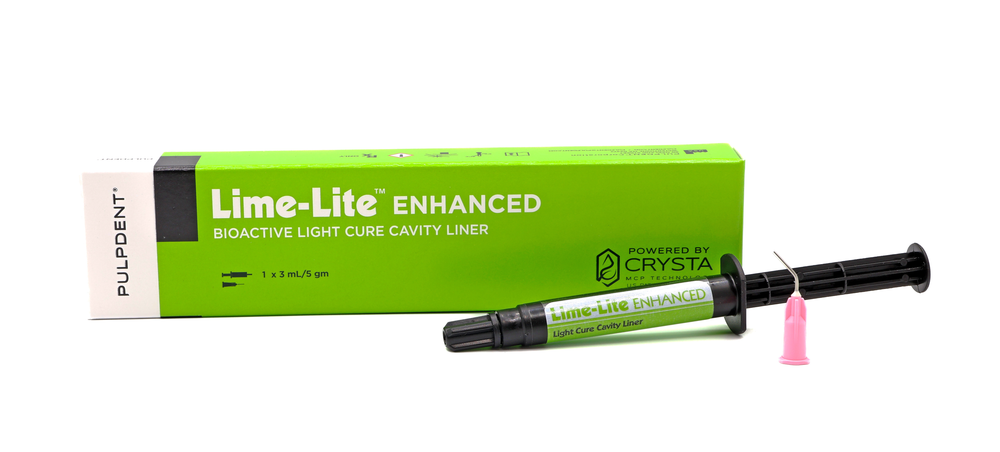
Lime-Lite Enhanced Cavity Liner, 5 g/3 mL Syringe + 20 Tips
In stock
78 sold this monthfrom $44.69



Questions
What is it used for?
A self-cure, fluoride-releasing glass ionomer luting cement for crowns, bridges and posts.
When does it ship?
In-stock orders placed before 3 PM ET ship the same day. An item we don't keep on the shelf shows its own ship-by date on its page, and you can cancel it for a full refund until it ships.Ground shipping is free over $10.
About glass ionomer & RMGI cements
A glass ionomer cement is powder and liquid mixed before use; a resin-modified glass ionomer (RMGI) joins the strength of polymers to its fluoride release. The powder is mostly calcium fluoroaluminosilicate glass, and the liquid is usually an aqueous solution of polyacrylic acid copolymers. It holds to the tooth by ionic bonds between the carboxyl groups of the cement and the calcium and phosphorus of enamel and dentine apatite. A resin-modified glass ionomer joins the strength and insolubility of polymers to the fluoride release and adhesion of a glass ionomer, and bonds more strongly to dentine because of its composite part. The ADA notes that resin-modified glass ionomers set faster than conventional ones and can be light-cured or self-cured.
A luting agent is any material used to attach or cement indirect restorations to prepared teeth. A review lists the long-term cements as zinc phosphate, zinc polycarboxylate, glass ionomer, resin-modified glass ionomer and resin cement. They fall into two families by composition, water-based and resin-based.
How the types of permanent cement differ
- Glass Ionomer & RMGI Cements — Water-based, and it releases fluoride. The resin-modified kind sets by an acid-base reaction and by polymerisation together, and ISO 9917-2 is the standard for those.
- Resin Cements — Resin-based rather than water-based, and chemically similar to composite filling material. A restoration cemented adhesively has to be sectioned to come off.
- Dental Cements — A water-based cement of this kind sets by an acidic reaction and holds the restoration without bonding to it. A crown cemented with zinc phosphate or polycarboxylate can be removed with care instead of being sectioned.
- Cement Application Accessories — Pick-up sticks, an applicator and try-in paste rather than the cement itself.
- Bases & Liners — Zinc phosphate and polycarboxylate cements that are also filed under bases and liners.
What to look at when choosing a permanent cement
Film thickness: the ADA standard for dental cements sets a maximum of 25 microns for a luting cement.
How it is supplied: these cements come hand-mixed or encapsulated for mechanical mixing. A review notes that modifying the powder-to-liquid ratio can increase the solubility of a luting agent threefold, and calls that a frequent cause of clinical failures.
Age and track record: zinc phosphate has been in use since 1878 and has high compressive strength and a reasonable working time, with high solubility in oral fluid, low tensile strength and the potential for hypersensitivity from its initially low pH among its drawbacks.
Light reaching the cement: a review reports light-cured cements being used for restorations under 1.5 mm thick that let enough light through, and the chemical cure of a dual-cure cement being what sets it under zirconia and thick ceramic. Excess cement: a review notes that removing resin cement completely from margins that are hard to reach is a problem for restorations with margins below the gum line.
Standard: ISO 4049 covers polymer-based luting materials for cementing inlays, onlays, veneers, crowns and bridges, but not those with an adhesive component inside the material. FDA class: zinc oxide-eugenol is a Class I device and dental cement other than zinc oxide-eugenol is Class II (21 CFR 872.3275).
Sources: The Glossary of Prosthodontic Terms, 9th edition (J Prosthet Dent 2017) · Heboyan et al. 2023, Dental Luting Cements: An Updated Comprehensive Review (Molecules) · ADA Oral Health Topics: Materials for Direct Restorations · ISO 9917-2:2017, Dentistry — Water-based cements — Part 2: Resin-modified cements · ISO 9917-1:2025, Dentistry — Water-based cements — Part 1: Acid-base cements · ISO 4049:2019, Dentistry — Polymer-based restorative materials · FDA 21 CFR 872.3275, Dental cement
