

Garreco DentalShips in 3 business days
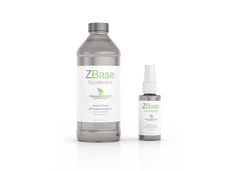
Garreco Debubblizer, Blue · 1 qt · Case of 4
SKU 046-0393MFR# 3551530
Size
1 qt
8 oz spray$60.10
1 qt$125.30
Pack
Case of 4
Case of 4$125.30
Each$31.50
The Garreco DEBUBBLIZER SPRAY BLUE (8 OZ. 4 PER CASE) is a general merchandise product supplied by Garreco for dental laboratory use. Catalog code 3551508.
Garreco Debubblizer, Blue is a debubblizer from Garreco Dental.
This page carries 2 size options: 8 oz spray, 1 qt. This page carries 2 pack options: Case of 4, Each.
Find it on our Chemicals & Solutions shelf, under Casting & Lab Process Chemicals.
Orders placed before 3 PM ET ship the same day when the item is on our shelf (otherwise within 3 business days), and ground shipping is free over $10.
Product
- Manufacturer
- Garreco Dental
- Manufacturer #
- 3551530
- Item code
- 046-0393
Catalog path
- Marketplace
- Laboratory
- Category
- Chemicals & Solutions
- Subcategory
- Casting & Lab Process Chemicals
Ordering
- Status
- Ships in 3 business days
More from Casting & Lab Process Chemicals
Stocked in the same subcategory.


Questions
Which size and pack options are on this page?
This page carries 2 size options: 8 oz spray, 1 qt. This page carries 2 pack options: Case of 4, Each. Pick one to see its price, part number and stock.
When does it ship?
In-stock orders placed before 3 PM ET ship the same day; anything not on our shelf ships within 3 business days.Ground shipping is free over $10.
About debubblizers
A debubblizer is a surfactant: a surface-active substance, such as a detergent, applied to a surface to help another material wet it. In laboratory work it is sprayed on an impression before the stone is poured.
This shelf holds the process liquids of casting and model work: debubblizers, hardeners and accelerators, and electrolytes. Investing is covering an object such as a wax form with investment material before processing, soldering or casting.
How the types differ
- Debubblizers — Used before pouring or investing, so the mix wets the surface.
- Electrolyte and polishing solutions — Used after casting, on the metal.
What to look at when choosing
Hardeners: Type IV dental stone is the usual material for working dies, and a die hardener is applied to it. One laboratory study compared cyanoacrylate, resin-based and colloidal silica-based hardeners and found that both the type of hardener and the drying method changed surface hardness and compressive strength.
Electrolytic polishing: in one study it brought cobalt-chromium surfaces to a roughness in the nanometre range, comparable to conventional mechanical polishing.
Safety data sheet: OSHA requires a safety data sheet in the workplace for each hazardous chemical in use, and the maker or importer has to supply one. Labels on incoming containers of hazardous chemicals are not to be removed or defaced.
Sources: The Glossary of Prosthodontic Terms, 9th edition (J Prosthet Dent 2017) · Marginal and Internal Gap of Metal Copings Fabricated Using Three Types of Resin Patterns with Subtractive and Additive Technology (Materials 2022) · Mechanical and Plasma Electrolytic Polishing of Dental Alloys (Materials 2023) · Effect of Three Commercially Available Die Hardening Agents on the Compressive Strength and Surface Hardness of Type IV Dental Stone (Cureus 2026) · OSHA 29 CFR 1910.1200, Hazard Communication
