

Sold out

Buffalo DentalSold out
Buffalo Primo Adhesive for Molloplast-B, 15 mL + Brush
SKU 055-0431MFR# 73000
$40.25
· Sold out
Primo Acrylic Adhesive - 15 mL Bottle & Brush. Prepares existing acrylic for permanent attachment to Molloplast-B.
Buffalo Primo Adhesive for Molloplast-B, 15 mL + Brush is a tissue conditioner from Buffalo Dental, part of the Molloplast-B line. Manufacturer part number 73000.
Find it on our Dentures & Acrylics shelf, under Reline & Repair.
Orders placed before 3 PM ET ship the same day when the item is on our shelf (otherwise within 3 business days), and ground shipping is free over $49.
Product
- Manufacturer
- Buffalo Dental
- Manufacturer #
- 73000
- Item code
- 055-0431
Catalog path
- Marketplace
- Laboratory
- Category
- Dentures & Acrylics
- Subcategory
- Reline & Repair
Ordering
- Status
- Sold out
More from Reline & Repair
In stock in the same subcategory. Not the same product — check the specs before you swap.


New Stetic
NewCryl Lower Posterior Denture Teeth — Moulds 30–32 (30L/30M/31M/32F/32L/32M), 8/Card
In stock
from $3.75
New Stetic
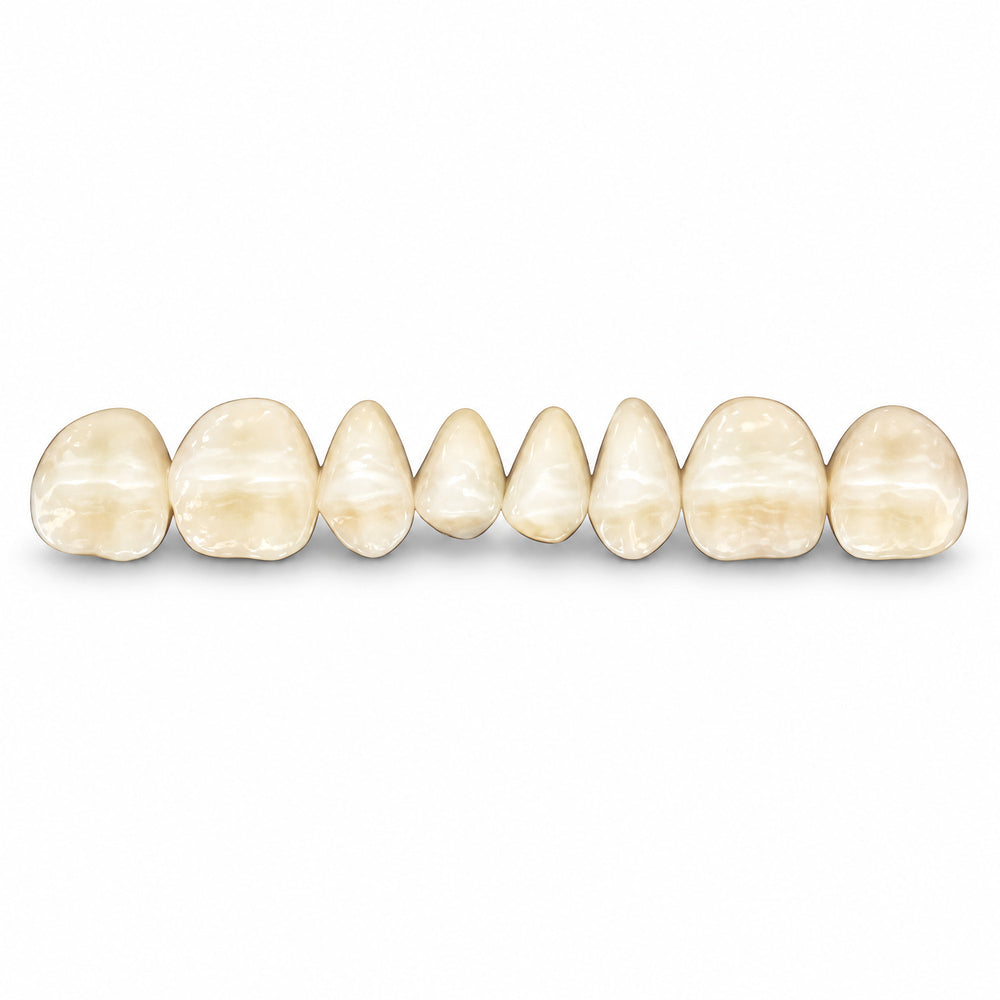
NewCryl Upper Posterior Denture Teeth — Moulds 30–32 (30L/30M/31M/32F/32L/32M), 8/Card
In stock
from $3.75


New Stetic
NewCryl Upper Anterior Denture Teeth — Mould Series 2 (2D/2N/263/264/266), 6/Card
In stock
14 sold this monthfrom $3.75
About tissue conditioners
A tissue conditioner is a resilient liner placed in a removable prosthesis for a short time to allow the tissue to heal. Its plasticizers leach out in saliva or water, so its clinical life is often limited to a few weeks.
Relining resurfaces the tissue side of a removable denture with new base material so that it fits the mouth accurately again. Rebasing is the laboratory process of replacing the entire denture base on an existing prosthesis. A denture is relined in the laboratory or at the chairside, where a self-curing reline resin is used directly in the mouth.
The FDA regulates denture relining, repairing or rebasing resin as a Class II device that is not available over the counter (21 CFR 872.3760).
How reline materials, tissue conditioners and repair acrylics differ
- Repair Acrylics — The acrylic used to mend a cracked or broken denture.
- Hard Reline Materials — A hard acrylic lining for the long term.
- Soft Reline Materials — Stays resilient; silicone liners, which have no plasticizer, keep their cushioning longer than acrylic ones.
- Tissue Conditioners — A soft liner for the short term, while the tissue heals.
- Reline & Repair Accessories — The jigs used for a laboratory reline, not the lining material.
- Heat-Cure Denture Resin — Acrylic powders, liquids and kits filed under the heat-cure name as well.
- Self-Cure Denture Resin — Self-curing acrylic powders, monomer liquids and kits.
What to look at when choosing a reline material
Where it is processed: liners are made as laboratory-processed and as chairside materials, hard and soft.
Bond to the base: adequate bond strength between the reline resin and the denture base is essential to prevent microbial growth at the junction, staining and delamination.
Softness over time: the main issue with acrylic soft liners was the gradual loss of softness caused by plasticizers.
Standard: ISO 10139-2 sets requirements for the softness, adhesion, water sorption and water solubility of soft liners for long-term use.
Sources: The Glossary of Prosthodontic Terms, 9th edition (J Prosthet Dent 2017) · Neppelenbroek et al. 2006, Bond strength of hard chairside reline resins to a rapid polymerizing denture base resin (J Appl Oral Sci) · FDA 21 CFR 872.3760, Denture relining, repairing, or rebasing resin · Ranjan et al. 2021, Joint Surface Preparations and Chemical Surface Treatment on the Transverse Strength of Repaired Denture Base Resin (J Pharm Bioallied Sci) · Kumar et al. 2017, Effect of Reinforced Autopolymerizing Resin on the Flexural Strength of Repaired Heat-polymerized Denture Base Resin (PMC5682712) · Akman Sürücü & Kazazoğlu 2026, Tensile bond strength of soft and hard reline materials to denture base resins (PMC13721237) · Vuksic et al. 2023, Tensile Bond Strength between Different Denture Base Materials and Soft Denture Liners (Materials) · Mutahar et al. 2023, Hardness and Energy Absorption of Chairside Silicone-Based Soft Denture Liners (PMC10560481) · Kurhade et al. 2025, Resiliency of two acrylic based tissue conditioners (Bioinformation) · ISO 10139-2:2016, Soft lining materials for removable dentures, Part 2: Materials for long-term use
