


Buffalo DentalShips in 3 business days
Buffalo No. 31 Ejector-Style Denture Flask
SKU 055-0726MFR# 43900
Item
Flask
Flask$149.81
Replacement knock-out disk$11.69
No description available yet.
Product
- Manufacturer
- Buffalo Dental
- Manufacturer #
- 43900
- Item code
- 055-0726
Catalog path
- Marketplace
- Laboratory
- Category
- Dentures & Acrylics
- Subcategory
- Denture Flasking & Processing
Ordering
- Status
- Ships in 3 business days
More from Denture Flasking & Processing
Stocked in the same subcategory.



New Stetic
NewCryl Lower Posterior Denture Teeth — Moulds 30–32 (30L/30M/31M/32F/32L/32M), 8/Card
In stock
from $3.75


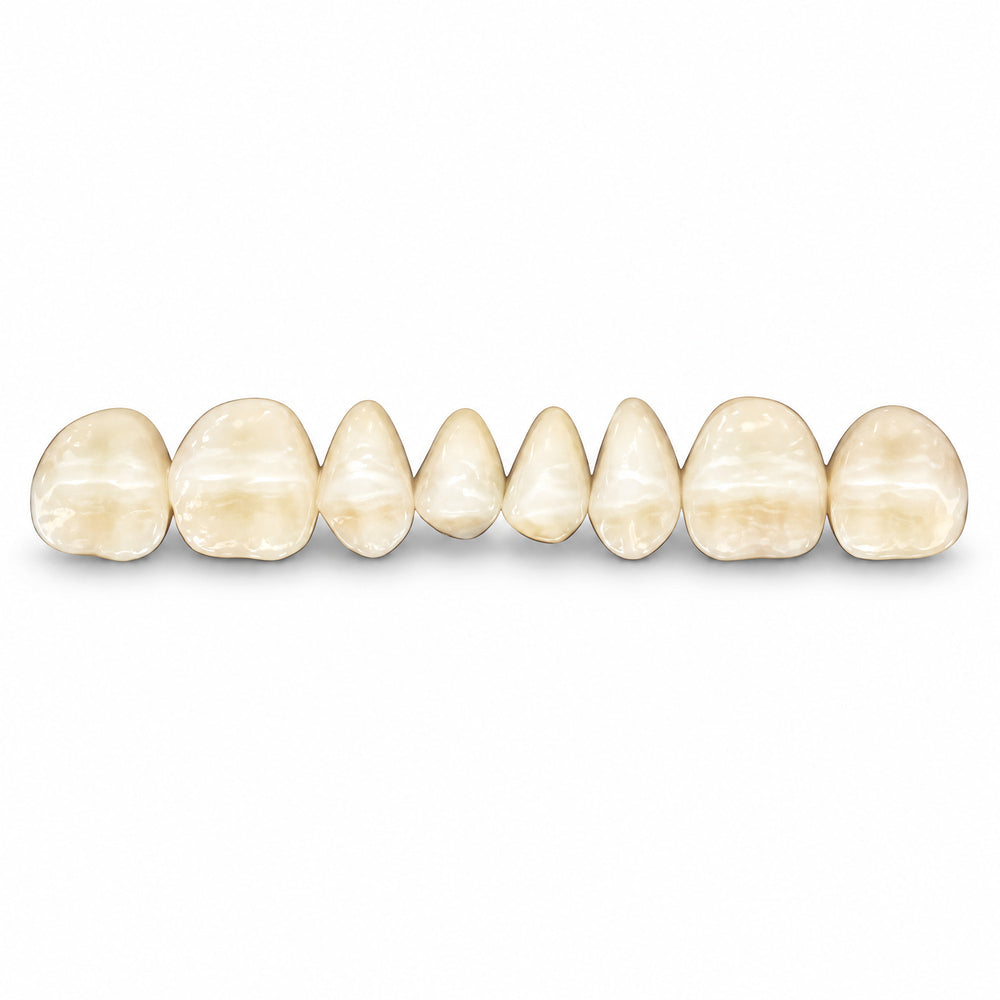
New Stetic
NewCryl Upper Posterior Denture Teeth — Moulds 30–32 (30L/30M/31M/32F/32L/32M), 8/Card
In stock
from $3.75
About denture flasks
The flasks on this shelf are made for compression, injection and pour techniques, for microwave curing and for duplicating.
A denture flask is a metal or fiberglass vessel that supports the gypsum mold in which a denture is polymerized. Denture processing converts the wax pattern of a denture into resin. Packing is the filling and pressing of the denture base material into the mold inside the flask.
For injection molding the waxed denture is flasked and boiled out as for compression molding, and a hollow sprue is attached to the mold cavity.
How flasks and flask accessories differ
- Denture Flasks — The vessel that holds the mold.
- Flask Accessories — The tools and supplies used around the flask, not the flask itself.
What to look at when choosing
Technique: the flask follows the resin. Pour-type resin is poured into molds of agar hydrocolloid or modified plaster. Microwave curing is done in a special fiber-reinforced flask.
Injection: in injection molding, resin keeps entering the flask while polymerization shrinkage occurs.
Distortion: warpage of the base when the cured denture is removed from the cast is considered a major disadvantage of acrylic resin, and it can change the position of the teeth. A classic study gave the flow of the resin into all regions of the mold as a reason for letting the closed flask stand for at least an hour.
Sources: The Glossary of Prosthodontic Terms, 9th edition (J Prosthet Dent 2017) · Alqutaibi et al. 2023, Polymeric Denture Base Materials: A Review (Polymers) · Negreiros et al. 2009, Effect of Flask Closure Method and Post-Pressing Time on the Displacement of Maxillary Denture Teeth (Open Dent J)
