

Buffalo DentalShips in 3 business days
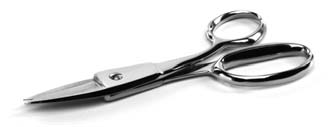
Buffalo Crown & Collar Shears · No. 64, curved
SKU 055-0676MFR# 78300
Blade
No. 64, curved
No. 64, curved$18.37
No. 64A, straight$18.37
No description available yet.
Product
- Manufacturer
- Buffalo Dental
- Manufacturer #
- 78300
- Item code
- 055-0676
Catalog path
- Marketplace
- Clinical
- Category
- Instruments
- Subcategory
- Surgical Instruments
Ordering
- Status
- Ships in 3 business days
More from Surgical Instruments
Stocked in the same subcategory.



About scissors
Surgical scissors come in different shapes and sizes for cutting soft tissue, sutures, oxidised resorbable cellulose and dissected tissue. One widely used pattern is made with curved or straight blades and serves for both tissue and suture.
Oral surgery is carried out with a set of instruments, each one having a specific role. The FDA groups most of them as the dental hand instrument, a Class I device whose named list includes the surgical tooth extractor forceps, the dental surgical elevator, the surgical rongeur forceps, the surgical hemostat, the surgical bone chisel, the surgical tissue scissors and the dental retractor (21 CFR 872.4565). Instruments used across general surgery sit in a second Class I group, the manual surgical instrument for general use, which names the chisel, clamp, elevator, forceps, hammer, hemostat, knife, mallet, osteotome, retractor, saw, scalpel blade, scalpel handle and one-piece scalpel (21 CFR 878.4800).
ISO 4865-1 sets the requirements common to all non-hinged dental hand instruments: materials, hardness, surface finish, resistance to reprocessing and marking. Extraction forceps have a standard of their own, ISO 9173, whose first part covers general performance requirements. Because these instruments penetrate soft tissue or bone, the CDC classes them as critical items that should always be heat sterilized.
How the types of surgical instrument differ
- Extracting forceps — The hinged instrument that grips the tooth and delivers it: it is placed as far down the root as possible and worked with rotational or side-to-side movement.
- Elevators — Loosens the tooth before forceps are used, and works by leverage, so published guidance notes that excessive force risks damage to adjacent structures.
- Forceps — The whole hinged, gripping family, from extraction patterns to the forceps that carry a strip of articulating paper or a dressing.
- Scalpels — Built as a reusable handle plus a replaceable blade, or as one disposable piece.
- Scalpels and blades — Covers the blade as well as the handle, so boxes of blades sit here.
- Hemostats and needle holders — Both clamp and hold rather than cut; published guidance describes gripping a suture needle about one third of the way from the swage to the tip.
- Retractors and mouth props — The retractor is held by the operator against the soft tissue; the prop is bitten on, and it comes in a range of sizes.
- Retraction instruments and accessories — Holds tissue aside and nothing else; the FDA list carries the dental retractor and dental retractor accessories as separate entries.
- Scissors — A two-bladed cutting instrument that is reground rather than re-bladed; the FDA list names collar and crown scissors as well as surgical tissue scissors.
- Mallets and hammers — Supplies the force; the chisel, osteotome or plugger it strikes is the part that does the work.
- Accessories — Tweezers, a saw frame, bumper guards and a bur, filed beside the instruments.
What to look at when choosing a surgical instrument
Material and finish: ISO 4865-1 covers the materials, hardness, surface finish and resistance to reprocessing of non-hinged dental hand instruments, and leaves the shape of the working end out of scope.
Pattern and designation: forceps patterns are designated under ISO 9173-2, so the same number means the same pattern.
Sets rather than singles: elevator families are supplied as a straight-and-two-curves set or as a run of increasing sizes.
Reprocessing: the CDC states that hinged instruments should be sterilized open and unlocked, and that an internal chemical indicator belongs in every package.
Bone work: rongeurs take bone away, and the irregular ridge they leave is smoothed with a bone file.
Sources: Bhatia & Aruede, Oral Surgery, Instruments (StatPearls, NCBI Bookshelf NBK585063) · FDA 21 CFR 872.4565, Dental hand instrument · FDA 21 CFR 878.4800, Manual surgical instrument for general use · ISO 4865-1:2023, Dentistry — General requirements of hand instruments — Part 1: Non-hinged hand instruments · ISO 9173-1:2016, Dentistry — Extraction forceps — Part 1: General requirements · CDC: Best Practices for Sterilization in Dental Settings · The Glossary of Prosthodontic Terms, 9th edition (J Prosthet Dent 2017) · Types of devices used in ridge split procedure for alveolar bone expansion: A systematic review, 2017 (PLoS One) · ISO 9173-2:2010, Dentistry — Extraction forceps — Part 2: Designation · CDC: Guidelines for Infection Control in Dental Health-Care Settings — 2003 (MMWR 52(RR-17))
