


Buffalo DentalShips in 3 business days
Buffalo Blue Abrasive Points & Trimmers, HP Mounted · No. 52 Point
SKU 055-0000MFR# 00200
Shape
No. 52 Point
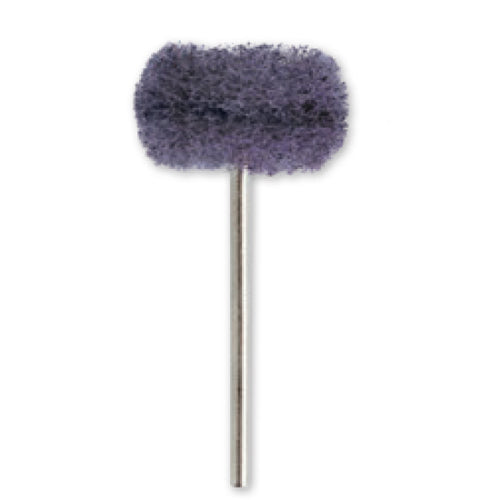
Buffalo Blue Abrasive Points & Trimmers, HP Mounted is a mounted stone from Buffalo Dental.
This page carries 6 shape options: No. 52 Point, No. 53 Point, No. 1 Trimmer, No. 2 Trimmer, No. 3 Trimmer, No. 4 Trimmer.
Find it on our Lab Burs & Rotary shelf, under Mounted Points & Stones.
Orders placed before 3 PM ET ship the same day when the item is on our shelf (otherwise within 3 business days), and ground shipping is free over $10.
Product
- Manufacturer
- Buffalo Dental
- Manufacturer #
- 00200
- Item code
- 055-0000
Catalog path
- Marketplace
- Laboratory
- Category
- Lab Burs & Rotary
- Subcategory
- Mounted Points & Stones
Ordering
- Status
- Ships in 3 business days
More from Mounted Points & Stones
Stocked in the same subcategory.




Questions
Which shape options are on this page?
This page carries 6 shape options: No. 52 Point, No. 53 Point, No. 1 Trimmer, No. 2 Trimmer, No. 3 Trimmer, No. 4 Trimmer. Pick one to see its price, part number and stock.
When does it ship?
In-stock orders placed before 3 PM ET ship the same day; anything not on our shelf ships within 3 business days.Ground shipping is free over $10.
About mounted stones
A bonded abrasive is made of abrasive particles held together by an artificial or natural bond. OSHA's abrasive-wheel rule treats mounted wheels of 2 inches and under as a group of their own.
A mounted point or stone is an abrasive already fixed on its own shank; the FDA names the abrasive point among the abrasive devices of 21 CFR 872.6010, Class I. OSHA groups abrasive wheels by bond: organic, such as resin, rubber or shellac, and inorganic, such as clay, glass or porcelain.
How the types on this shelf differ
- Mounted Stones — A rigid bonded abrasive, for grinding and shaping.
- Mounted Rubber Points — A rubber-bonded point already fixed on its own shank.
- Flexible Silicone Polishers — The abrasive is embedded in a flexible silicone body.
- Polishing Wheels — A wheel for the smoothing steps that follow grinding.
- Grinding Wheels — The coarse step: it shapes the work and removes excess material.
- Ceramic & Porcelain Polishers — Polishes the ceramic itself, in place of a glaze layer.
What to look at when choosing
Sequence: a review describes polishing in three stages, coarse finishing, intermediate polishing and final polishing. Coarse tools shape the work and remove excess material; medium ones smooth out the grooves and scratches the coarse ones leave.
Size: ISO 2157 sets the nominal diameters of the working part of burs, laboratory burs, grinding instruments, diamond instruments and mandrels, and how they are designated.
Shank: the part that fits into the handpiece. ISO 1797 sets shank dimensions and material properties.
Speed: OSHA's abrasive-wheel rule has the spindle speed checked against the maximum operating speed marked on the wheel.
Reuse: the CDC states that burs, polishing points and rag wheels used on contaminated appliances or prostheses should be heat-sterilised, disinfected between patients, or discarded.
Sources: FDA 21 CFR 872.6010, Abrasive device and accessories · OSHA 29 CFR 1910.211, Machinery and machine guarding: definitions · OSHA 29 CFR 1910.94, Ventilation (grinding, polishing and buffing operations) · OSHA 29 CFR 1910.215, Abrasive wheel machinery · ISO 21671:2006, Rotary polishers · Does Sterilization Affect the Performance of Single-Step Resin Composite Polishers? (Dent J 2023) · A Comprehensive Review of the Surface and Chromatic Properties of Monolithic Zirconia: Polishing and Finishing Methods (Cureus 2024) · ISO 2157:2016, Nominal diameters and designation code numbers for rotary instruments · ISO 1797:2017, Shanks for rotary and oscillating instruments · CDC, Guidelines for Infection Control in Dental Health-Care Settings, 2003 (MMWR 52 RR-17)
