


Beyes DentalShips in 3 business days
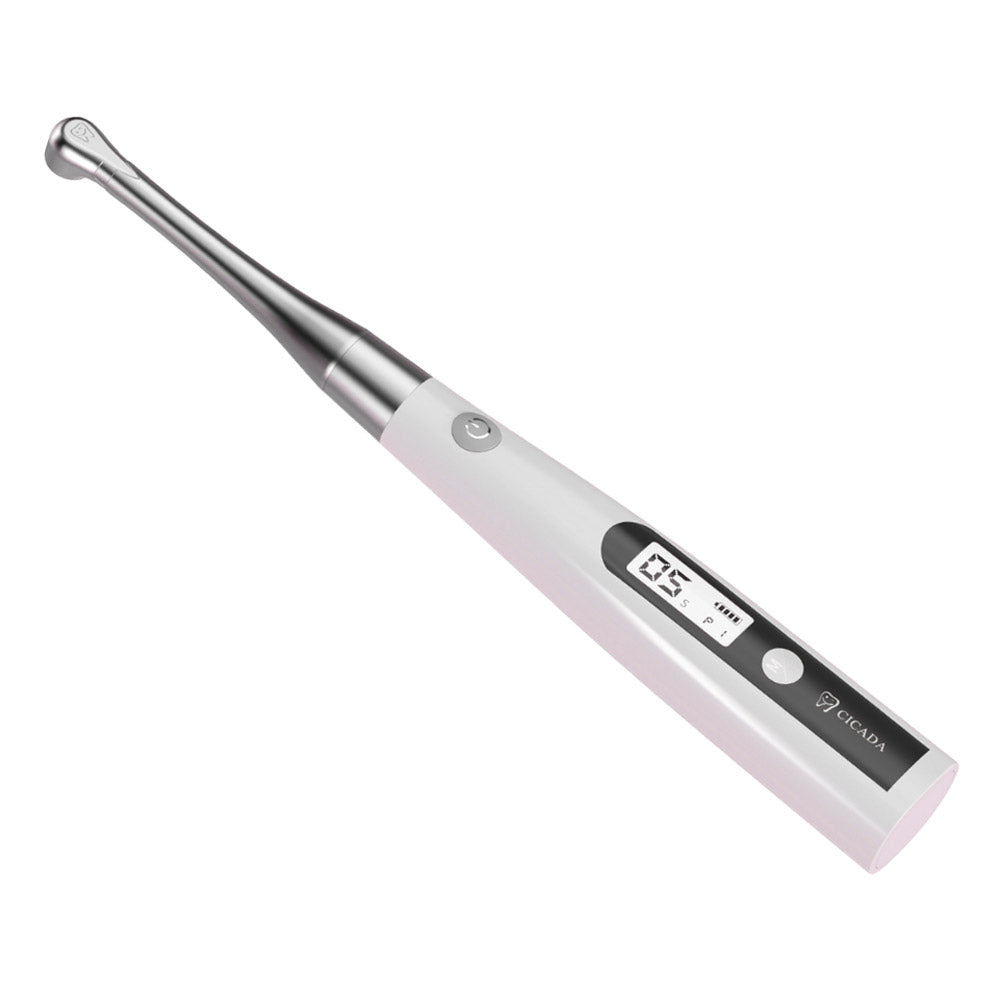
Beyes Dental Slimax-C Plus LED Curing Light with Built-In Radiometer · Blue
SKU 056-0143MFR# SM1003P-B
Color
Blue
Slimax-C Plus Led Curing Light - SILVER. Combines state-of-the art features and performance into a beautiful, sleek package. Simple two-button operation is easy to use. Switch between pulse, ramp and full power modes with output up to 2,000 mW/cm2. Three pre-set exposure settings include 5, 10 and 20 seconds with audible beep every 5 seconds and at end of cycle. Provides 850 10-second cures on a 3-hour charge. Built-in charging base radiometer checks output instantly.
Product
- Manufacturer
- Beyes Dental
- Manufacturer #
- SM1003P-B
- Item code
- 056-0143
Catalog path
- Marketplace
- Clinical
- Category
- Equipment
- Subcategory
- Curing Lights
Ordering
- Status
- Ships in 3 business days
More from Curing Lights
Stocked in the same subcategory.




Questions
Which color options are on this page?
This page carries 3 color options: Blue, Pink, Silver. Pick one to see its price, part number and stock.
When does it ship?
In-stock orders placed before 3 PM ET ship the same day; anything not on our shelf ships within 3 business days.Ground shipping is free over $10.
About curing lights and their parts
This type holds the curing lights themselves and the parts they take: light guides, tips, barriers and batteries. The unit is a hand-held light-emitting device used to cure photoactivated, polymer-based restorative materials, and the parts matter because the light has to reach the material at the right wavelength and in the right amount. Damage to the light guide drastically decreases the irradiance a unit delivers, so routine inspection, cleaning and replacement of damaged guides are described as simple measures that preserve curing effectiveness. A built-in or separate radiometer is used to compare the unit’s output over time, including with and without an infection-control barrier in place.
A dental curing light is a hand-held light-emitting device used to cure photoactivated, polymer-based restorative materials. Photopolymerization is a light-activated reaction: visible light energy activates a photoinitiator system, which absorbs photons and produces free radicals that start the polymerization. One of the most commonly used photoinitiators is camphorquinone, whose peak absorption range runs from 455 to 481 nm with a peak at about 469 nm. The first light-cured resins, in the early 1970s, were cured with ultraviolet units; once the materials were reformulated with visible-light photoinitiators, those units were replaced by ones emitting in the visible spectrum. The FDA still carries a class for an ultraviolet activator for polymerization, a Class II device that sets resinous dental pit and fissure sealants or restorative materials by transmission of light through a rod (21 CFR 872.6070).
LED units have become the clinical standard, moving from monowave to polywave devices so as to match both families of photoinitiator. A polywave unit carries several narrow emission peaks, in the violet at about 395 to 415 nm and in the blue at about 450 to 470 nm. ISO 10650 is the international standard for powered polymerization activators in the 380 nm to 515 nm wavelength region intended for chairside use; it applies to quartz-tungsten-halogen and LED lamps, and lasers and plasma arc devices are not covered.
What to look at when choosing a curing light
Wavelength: lights emitting between 455 and 481 nm span the peak absorption range for camphorquinone, and the term blue LED is not consistent between lights. Polywave lights emit at multiple wavelengths, which is useful for curing composites with more than one photoinitiator.
Energy rather than advertised intensity: what the material receives is radiant exposure, the irradiance multiplied by the curing time. A narrative review reports that the effectiveness of curing depends on the delivered radiant exposure, spectral compatibility, beam homogeneity and effective tip diameter rather than on the irradiance the maker reports. High-irradiance boost modes, at their recommended exposure times, may deliver significantly less radiant exposure than standard modes.
Tip size and beam shape: a large restoration can exceed the effective tip diameter, so several curing positions are needed instead of one. A turbo tip focuses the power over a smaller area, which raises the irradiance but means repeated, overlapping exposures are needed to cure across the surface.
Distance: the delivered irradiance falls as the tip moves away, and even clinically realistic distances of 2 to 4 mm can significantly affect polymerization.
Battery: in battery-operated units the curing time a full charge offers can vary from about 26 minutes to 164 minutes. For a considerable number of devices, a lower battery level is associated with reduced light output.
Infection control: removable light tips that can be autoclaved are the gold standard, while many modern units mount the LED chips directly in the light-emitting tip, which makes autoclaving unfeasible. Barriers over the tip are the alternative, and have been reported to reduce the irradiance delivered by as much as 40 percent.
Upkeep: resin debris on light guides, chipped tips and reused barrier sleeves have all been shown to significantly reduce output. Using the same radiometer repeatedly allows comparisons over time and helps verify that the unit is still working properly, even though its absolute readings may not be entirely reliable.
What the sources say about safety
Blue-light retinal injury takes place primarily between 380 and 550 nm, with the sensitivity of the retina peaking at approximately 440 nm, and dental curing units work in that range. Blue-light filtering eyewear, tip-mounted shields and handheld paddles are the options named for eye protection. Research at the ADA laboratory found that 9 of 22 protective filtering devices allowed blue light through at levels ranging from above 4 percent to above 15 percent under clinically relevant conditions.
Curing raises the temperature of the tooth: in an ADA in-vitro test the rise measured 1 mm into a 3 mm increment of composite ranged from 9.8 to 12.9 degrees Celsius over a 20-second cure with the tip 2 mm above the surface. Deep cavities leave less dentin to dissipate the energy deposited by the light source.
Sources: ADA Oral Health Topics: Dental Curing Lights · FDA 21 CFR 872.6070, Ultraviolet activator for polymerization · Ceinos et al. 2026, Light-curing units in restorative dentistry: a clinically oriented narrative review (BDJ Open) · ISO 10650:2026, Dentistry — Powered polymerization activators · ISO 14457:2017, Dentistry — Handpieces and motors
