


Color
Grey
Grey$76.56
Ivory$76.56
The Bego Occlusal Wax - 2.5oz. Ivory is a dental laboratory occlusal wax from Bego. It is designed for establishing occlusal surfaces on crown and bridge wax-ups. Manufacturer code 40118.
Bego Occlusal Wax, 2.5 oz is an occlusal wax from Bego.
This page carries 2 color options: Grey, Ivory.
Find it on our Wax shelf, under Baseplate & Bite Wax.
Orders placed before 3 PM ET ship the same day when the item is on our shelf (otherwise within 3 business days), and ground shipping is free over $10.
Product
- Manufacturer
- Bego
- Manufacturer #
- 40114
- Item code
- 011-0923
Catalog path
- Marketplace
- Laboratory
- Category
- Wax
- Subcategory
- Baseplate & Bite Wax
Ordering
- Status
- Ships in 3 business days
More from Baseplate & Bite Wax
Stocked in the same subcategory.



Questions
Which color options are on this page?
This page carries 2 color options: Grey, Ivory. Pick one to see its price, part number and stock.
When does it ship?
In-stock orders placed before 3 PM ET ship the same day; anything not on our shelf ships within 3 business days.Ground shipping is free over $10.
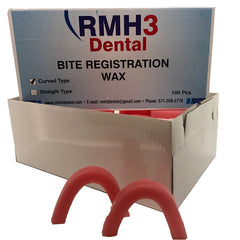
About bite registration wax
Bite registration wax is softened and closed into to make a registration: a record of how the jaws relate, used to relate casts to an articulator. Dental wax is softened before the bite is registered.
Baseplate wax is a hard wax used for making occlusion rims, for waxing dentures and for other dental procedures. Wax is also used to make a pattern of a patient's bite; the FDA lists intraoral dental wax as a Class I device (21 CFR 872.6890).
ISO 15854 is the standard that classifies casting waxes and baseplate waxes and sets their requirements.
How baseplate wax and bite registration wax differ
- Baseplate Wax — The hard sheet wax for occlusion rims and for waxing dentures.
- Bite Registration Wax — Softened and closed into to record how the teeth meet.
What to look at when choosing
Accuracy of a wax record: in a study of four recording materials, dental wax showed the greatest dimensional change over time. A review attributes this to the high thermal expansion of waxes and to stress release as they cool.
Why wax is still used: it remains the most often used recording material in routine practice for its affordability, adaptability and simple handling. The same review found the data consistently support mounting the casts shortly after the record is made.
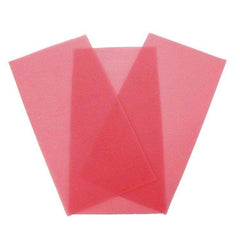
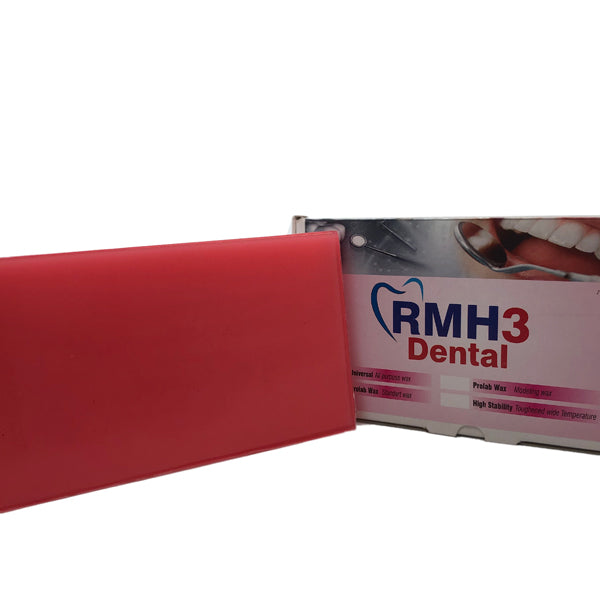
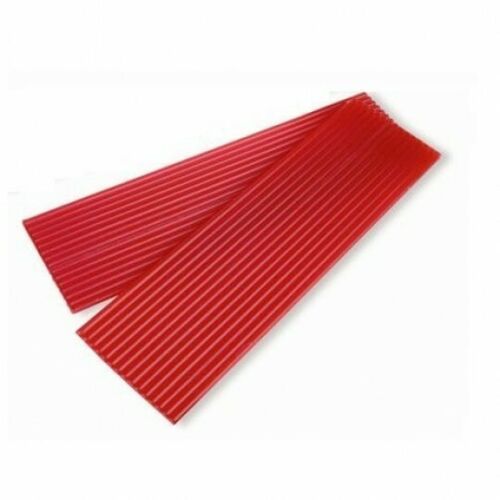
Form: the wax on this shelf comes as sheets, blocks, wafers and sticks.
Sources: The Glossary of Prosthodontic Terms, 9th edition (J Prosthet Dent 2017) · FDA 21 CFR 872.6890, Intraoral dental wax · ISO 15854:2023, Casting and baseplate waxes · Shetty et al. 2024, Dimensional Stability of Four Types of Interocclusal Recording Material (PMC11888651) · Ben El Hammi et al. 2026, Interocclusal Recording for Implant-Supported Fixed Prostheses: Current Materials, Clinical Techniques and Digital Workflows (PMC13716144)
