


Dentonics Autoclave Cleaner in a 1 lb container. A cleaning powder used to remove deposits and descale dental autoclave chambers and reservoirs. Catalog code 41-160.
Dentonics Autoclave Cleaner, 1 lb belongs to our sterilizer & distiller cleaners range, made by Dentonics. Manufacturer part number 41-160.
Find it on our Infection Control shelf, under Sterilizers & Supplies.
Orders placed before 3 PM ET ship the same day when the item is on our shelf (otherwise within 3 business days), and ground shipping is free over $10.
Product
- Manufacturer
- Dentonics
- Manufacturer #
- 41-160
- Item code
- 113-0151
- UPC / Barcode
- 41-160
Catalog path
- Marketplace
- Clinical
- Category
- Infection Control
- Subcategory
- Sterilizers & Supplies
Ordering
- Status
- Ships in 3 business days
More from Sterilizers & Supplies
Stocked in the same subcategory.


RMH3 Dental
RayClean Ultrasonic Bio-Enzymatic Cleaning Tablets, 64/Box
In stock
684 sold this month$18.00

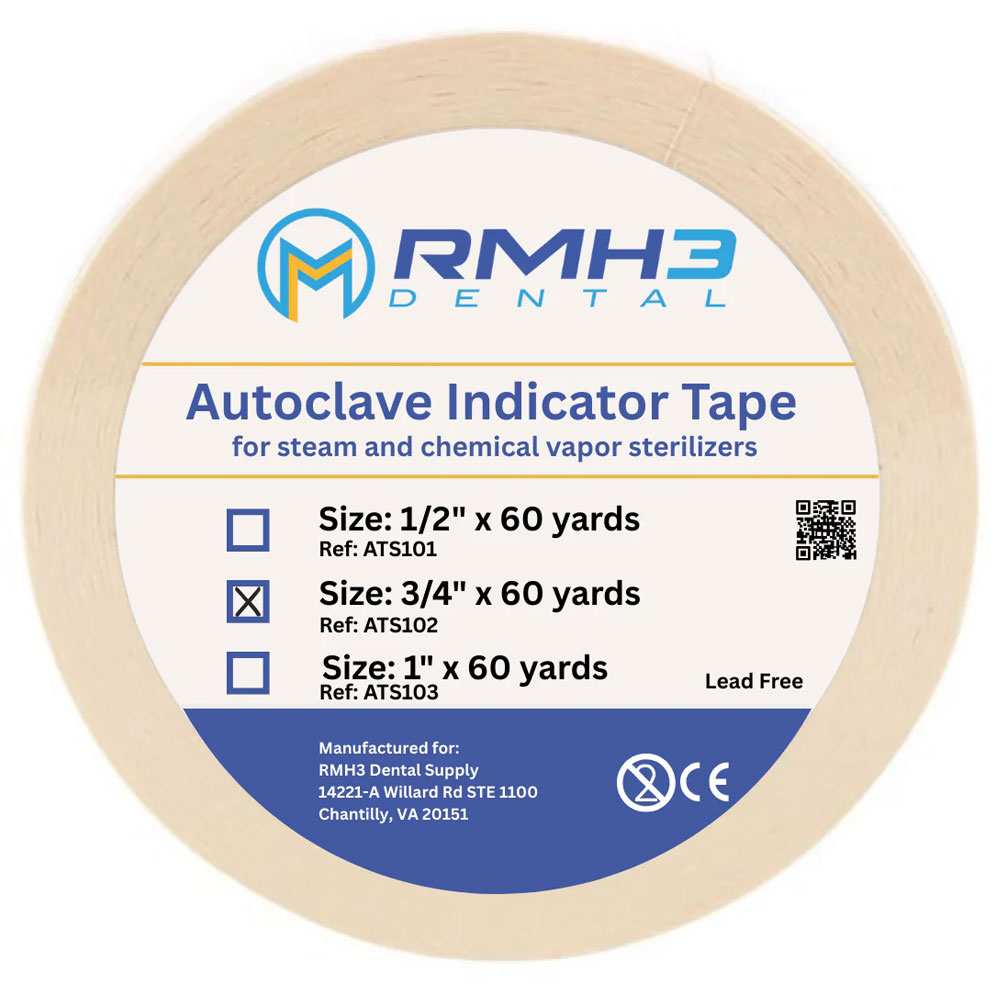
RMH3 Dental
Autoclave Sterilization Indicator Tape, 60-Yard Roll
In stock
473 sold this monthfrom $3.96
About sterilizer and distiller cleaners
A tabletop steam sterilizer is a compact gravity-displacement sterilizer with a chamber of not more than 2 cubic feet that generates its own steam when distilled or deionized water is added. Preventive maintenance on sterilizers is performed by qualified personnel guided by the instruction of the maker. The maker instructions, with their details on operation and user maintenance, are the ones followed.
The majority of patient-care items in dentistry are heat-tolerant and are therefore heat sterilized. Heat-tolerant dental instruments are usually sterilized by steam under pressure, by dry heat or by unsaturated chemical vapour. All sterilization is done with medical sterilization equipment cleared by the FDA, following the times, temperatures and other operating parameters the maker of that equipment recommends. Steam sterilization is the most widely used of these methods for wrapped and unwrapped critical and semicritical items that are not sensitive to heat and moisture.
Most tabletop sterilizers in dental practice are gravity displacement sterilizers, while prevacuum sterilizers use a pump to remove air from the chamber before it is pressurized with steam. Instrument packs are left to dry inside the chamber and are not touched until they are cool and dry, because a hot pack acts as a wick and absorbs moisture and bacteria from hands. Whether a sterilizer reached the conditions needed is monitored with a combination of biological, mechanical and chemical indicators, and a spore test is used at least weekly.
What to look at when choosing a sterilizer or its supplies
Water: a tabletop steam sterilizer generates its own steam when distilled or deionized water is added.
Air removal: trapping of air is a concern with gravity displacement, where packaging errors or an overloaded chamber can result in cool air pockets and items not being sterilized. Prevacuum sterilizers are tested periodically for adequate air removal as the maker recommends, and one that fails that test is not used until it has been inspected and passes.
The material being processed: dry heat is used for materials that moist heat might damage, such as burs, and unsaturated chemical vapour causes less corrosion of carbon steel instruments than steam because little water is present in the cycle.
Loading: items are arranged to permit free circulation of the sterilizing agent, and the maker instructions for loading are followed.
Unwrapped cycles: unwrapped or flash sterilization is not a viable method for routine use and is not consistent with CDC recommendations.
Records: monitoring and equipment maintenance records establish that cycle parameters were met, and they show whether an instrument recall is necessary when something goes wrong with a sterilizer.
Sources: CDC: Best Practices for Sterilization in Dental Settings · CDC: Guidelines for Infection Control in Dental Health-Care Settings — 2003 (MMWR RR-17) · CDC: Sterilization and Disinfection (Summary of Infection Prevention Practices in Dental Settings) · CDC: Guideline for Disinfection and Sterilization in Healthcare Facilities (2008)
