


SS WhiteShips in 3 business days
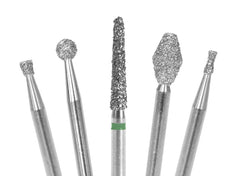
SS White Piranha Single-Use Diamonds, Heads 108–847 · 836-012 · Medium · Sterile roll of 25
SKU 078-1114MFR# 836-012M
Head
836-012
368-016$72.18
368-020368-021$92.60
368-023$92.60
379-018 short shank379-018$72.18
379-023$92.60
390-014392-016$72.18
801-010$72.18
801-012$72.18
801-013$72.18
801-014$72.18
801-015$72.18
801-016$72.18
801-018$72.18
801-021$92.60
801-023$92.60
801L-023$92.60
805-010$72.18
805-012$72.18
805-014$72.18
805-016$72.18
807-016807-018811-033811-037813-014$72.18
828-022$92.60
828-026$92.60
830-008$72.18
830-008 short shank$72.18
830-010$72.18
830-010 short shank$72.18
830-012$72.18
830-012 short shank$72.18
834-016$72.18
834-021$92.60
835-008$72.18
835-009$72.18
835-010$72.18
835-010 short shank$72.18
835-012$72.18
835-012 short shank$72.18
835-014$72.18
835-014 short shank$72.18
836-012$72.18
836-014$72.18
837-012$72.18
837-014$72.18
837-016$72.18
837KR-014838-010838-012845-010845-012845-014845KR-016845KR-018 short shank845KR-018$72.18
845KR-025$92.60
846-014$72.18
846-016$72.18
846-018$72.18
846KR-014$72.18
846KR-016 extra-short shank (SS)$72.18
846KR-016$72.18
846KR-018$72.18
846KR-016 short shank847-012 short shank847-012$72.18
847-014$72.18
847-014 short shank847-014 extra-short shank (SS)847-016$72.18
847-016 short shank847-016 extra-short shank (SS)847-018 short shank847-018$72.18
847-018 extra-short shank (SS)847KR-018$72.18
847KR-016$72.18
847KR-016 extra-short shank (SS)847KR-016 short shank847L-014$72.18
847L-016$72.18
Grit
Medium
Pack
Sterile roll of 25
Sterile roll of 25$72.18
SS White Piranha Diamond Bur 830-012M, a medium grit single use diamond supplied as a sterile roll of 25. Catalog code 830-012M.
SS White Piranha Single-Use Diamonds, Heads 108–847 is a diamond bur from SS White, part of the Piranha line. Each pack holds 25.
This page carries 86 head options: 368-016, 368-020, 368-021, 368-023, 379-018 short shank, 379-018, 379-023, 390-014 and 78 more. This page carries 6 grit options: Coarse, Fine, Medium, Very fine, Super coarse, Ultra fine. This page carries 1 pack option: Sterile roll of 25.
Find it on our Burs & Diamonds shelf, under Diamond Burs.
Orders placed before 3 PM ET ship the same day when the item is on our shelf (otherwise within 3 business days), and ground shipping is free over $10.
Product
- Manufacturer
- SS White
- Manufacturer #
- 836-012M
- Item code
- 078-1114
Catalog path
- Marketplace
- Clinical
- Category
- Burs & Diamonds
- Subcategory
- Diamond Burs
Ordering
- Status
- Ships in 3 business days
More from Diamond Burs
Stocked in the same subcategory.




Questions
What is Piranha used for?
SS White Piranha Diamond Bur 830-012M, a medium grit single use diamond supplied as a sterile roll of 25.
Which head and grit and pack options are on this page?
This page carries 86 head options: 368-016, 368-020, 368-021, 368-023, 379-018 short shank, 379-018, 379-023, 390-014 and 78 more. This page carries 6 grit options: Coarse, Fine, Medium, Very fine, Super coarse, Ultra fine. This page carries 1 pack option: Sterile roll of 25. Pick one to see its price, part number and stock.
How many come in a pack of Piranha?
25 per pack; the price shown is per pack.
When does it ship?
In-stock orders placed before 3 PM ET ship the same day; anything not on our shelf ships within 3 business days.Ground shipping is free over $10.
About diamond burs
A diamond bur is the handpiece-mounted form: a shaft that goes into the handpiece and a head with diamond chips embedded in it, abrading by rotation. ISO 7711-1 applies to all types of diamond rotary instrument whatever the type and shape, with discs the one exception.
A dental diamond instrument is an abrasive device meant to smooth tooth surfaces during the fitting of crowns or bridges. It is built as a shaft that goes into the handpiece and a head with diamond chips embedded in it. Rotation is what gives the abrasive action when the head contacts a tooth. The FDA lists the dental diamond instrument as a Class I device (21 CFR 872.4535).
The diamond is held on by plating: diamond powder is deposited into a nickel matrix, so the cutting particles sit embedded in metal. Wear is the loss of those particles from the matrix, and a study measured cutting efficiency falling with every use, whatever the instrument and whatever the material being cut. The same study reports that cutting efficiency rises with larger diamond particle size. ISO 7711-1 is the standard for diamond rotary instruments, and covers designation, colour code and grit sizes.
How the types of diamond instrument differ
- Diamond burs — The general range, sold by shape and grit; the finer grades and the laboratory shapes are separated out on this shelf.
- Fine diamonds — The fine end of the grit range, where the coarse grades are described as indicated for more aggressive cutting of tooth structure.
- Non-sterile — Supplied unsterilized, so it is processed before first use, where a single-use diamond arrives ready and is discarded after one patient.
- Laboratory diamond burs — Runs on the bench, on the device; the rest of the shelf runs in the mouth.
- Diamond discs — A disc, which is the one form ISO 7711-1 leaves out of the general diamond standard.
What to look at when choosing a diamond bur
Grit: ISO 7711-1 covers designation, colour code and grit sizes for all shapes of diamond rotary instrument except discs. A study describes coarseness as known for high cutting efficiency and used where tooth structure is cut more aggressively.
Shape: ISO 6360-2 codes the shapes of all dental rotary instruments, and ISO 6360-4 codes the characteristics specific to diamond instruments and diamond-coated discs. A glossary defines the head shape as the outline form of the cutting surface edges, described from the shank to the tip end.
Shank: the shaft section that fits the handpiece may be friction gripping or latch-type in form, and ISO 1797 sets its dimensions and material properties. That standard does not cover tips fixed to the handpiece with a screw.
Discs: diamond discs sit under their own standard, ISO 7711-2, which covers discs used in the dental laboratory for cutting materials such as metals, ceramics, plastics or gypsum and selects five shapes with their dimensions.
How long one lasts: a study notes that no specific literature sets a maximum limit for changing diamond burs during or after a procedure. Published guidance says to consider items difficult to clean, carbide and diamond burs among them, as single-use disposables and discard them after one use.
Sterilizing: where diamonds are reprocessed, dry heat is used for materials that might be damaged by moist heat, and a review names unsaturated chemical vapour as effective for steel instruments such as dental burs.
What it leaves behind: a review notes that grinding with diamond burs can significantly increase the surface roughness of a restoration, which is then reduced by polishing.
Testing: ISO 8325 gives the general test methods for rotary instruments, covering dimensional characteristics, neck strength and surface roughness.
Sources: FDA 21 CFR 872.4535, Dental diamond instrument · Borzangy et al. 2024, Cutting efficiency of different dental diamond rotary instruments (BMC Oral Health) · ISO 7711-1:2021, Dentistry — Diamond rotary instruments — General requirements · The Glossary of Prosthodontic Terms, 9th edition (J Prosthet Dent 2017) · CDC, Guidelines for Infection Control in Dental Health-Care Settings — 2003 (MMWR 52(RR-17)) · FDA 21 CFR 872.3240, Dental bur · ISO 7711-2:2011, Dentistry — Rotary diamond instruments — Discs · ISO 6360-4:2004, Number coding system for rotary instruments — Diamond instruments · ISO 1797:2017, Dentistry — Shanks for rotary and oscillating instruments · Salas Orozco et al. 2025, Sterilization and Disinfection: Ensuring Infection Control in Dental Practices (Cureus) · Polishing systems for modern aesthetic dental materials: a narrative review, 2024 (Br Dent J) · ISO 8325:2023, Dentistry — Test methods for rotary instruments
