

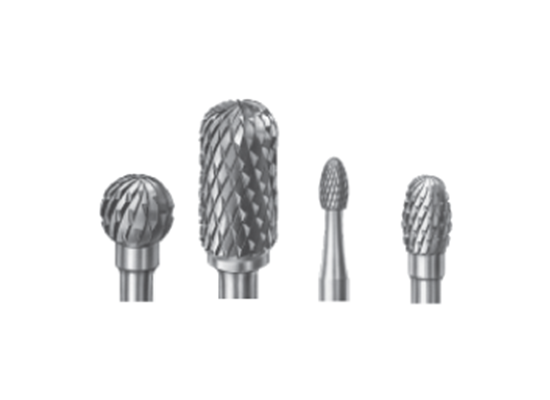
Cutter
SH295E-023
Shofu Robot Carbide HP Cutters are tungsten carbide cutters on an HP handpiece shank for trimming and shaping at the bench, up to 50,000 rpm.
17 cutters, named by Shofu's shape and head-size code (SH71E-023 is a 2.3 mm head). One per pack, except SH33-009, which is 6 per pack.
Product
- Manufacturer
- Shofu
- Manufacturer #
- 0631
- Item code
- 102-0393
Catalog path
- Marketplace
- Laboratory
- Category
- Lab Burs & Rotary
- Subcategory
- Carbide Burs
Ordering
- Status
- Ships in 3 business days
More from Carbide Burs
Stocked in the same subcategory.



Questions
What is Shofu Robot Carbide HP Cutters used for?
Shofu Robot Carbide HP Cutters are tungsten carbide cutters on an HP handpiece shank for trimming and shaping at the bench, up to 50,000 rpm.
Which cutter options are on this page?
This page carries 17 cutter options: SH79E-050, SH73E-060, SH71E-050, SH251E-060, SH71E-023, SH72E-060, SH73E-014, SH77E-023 and 9 more. Pick one to see its price, part number and stock.
When does it ship?
In-stock orders placed before 3 PM ET ship the same day; anything not on our shelf ships within 3 business days.Ground shipping is free over $10.
About laboratory carbides
ISO 7787-2 covers the 11 most commonly used carbide cutters, which are predominantly used in the dental laboratory. In a published denture study acrylic was finished with tungsten carbide burs at 10,000 rpm before it was sanded and polished.
A dental bur is a rotary cutting device made from carbon steel or tungsten carbide. The FDA lists it as a Class I device (21 CFR 872.3240), for cutting teeth and bone and also the hard metals, plastics and porcelains that dental devices are made from. A carbide bur is one made from tungsten carbide.
The head is the cutting portion of a bur, and the shank is the part that fits into the handpiece. ISO 6360 identifies every dental rotary instrument by a 15-digit number.
How the types on this shelf differ
- Finishing Carbides — A bur made to finish a surface.
- Laboratory Carbides — Used at the bench on the metals, plastics and porcelains of dental devices, not in the mouth.
- Cross-Cut Burs — Named for its blade pattern.
- Operative Carbides — Made for cutting tooth structure, where a laboratory carbide is made for the bench.
- Diamond Burs — A shaped diamond head on its own shaft.
- Flexible Silicone Polishers — The abrasive is embedded in a flexible silicone body.
The shelf also files burs as specialty carbides and as kits; no source on our allowed list defines those groups, so this guide does not describe them.
What to look at when choosing a carbide bur
Head shape: the outline of the cutting edges, described from the shank to the tip.
Shank: the shaft of a bur is friction-grip or latch-type. ISO 1797 sets shank dimensions and material properties.
Size: ISO 2157 sets the nominal diameters of the working part of burs, laboratory burs, grinding instruments, diamond instruments and mandrels, and how they are designated.
Reuse: the CDC states that burs, polishing points and rag wheels used on contaminated appliances or prostheses should be heat-sterilised, disinfected between patients, or discarded.
Sources: FDA 21 CFR 872.3240, Dental bur · The Glossary of Prosthodontic Terms, 9th edition (J Prosthet Dent 2017) · ISO 13295:2007, Mandrels for rotary instruments · ISO 3823-2:2003, Rotary bur instruments, Part 2: Finishing burs · Does Sterilization Affect the Performance of Single-Step Resin Composite Polishers? (Dent J 2023) · ISO 7787-2:2020, Laboratory cutters, Part 2: Carbide laboratory cutters · Rao et al. 2015, Surface roughness of three heat-cured acrylic denture base resins with different conventional lathe polishing techniques (J Indian Prosthodont Soc) · ISO 7787-1:2016, Laboratory cutters, Part 1: Steel laboratory cutters · Comparative Analysis of Abrasive Materials and Polishing System on the Surface Roughness of Heat-Polymerized Acrylic Resins (Eur J Dent 2022) · FDA 21 CFR 872.4535, Dental diamond instrument · ISO 7711-1:2021, Diamond rotary instruments, Part 1: General requirements · ISO 1797:2017, Shanks for rotary and oscillating instruments · ISO 2157:2016, Nominal diameters and designation code numbers for rotary instruments · CDC, Guidelines for Infection Control in Dental Health-Care Settings, 2003 (MMWR 52 RR-17)
