
S&S ScheftnerSpecial order
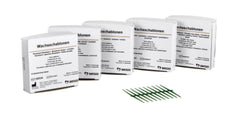
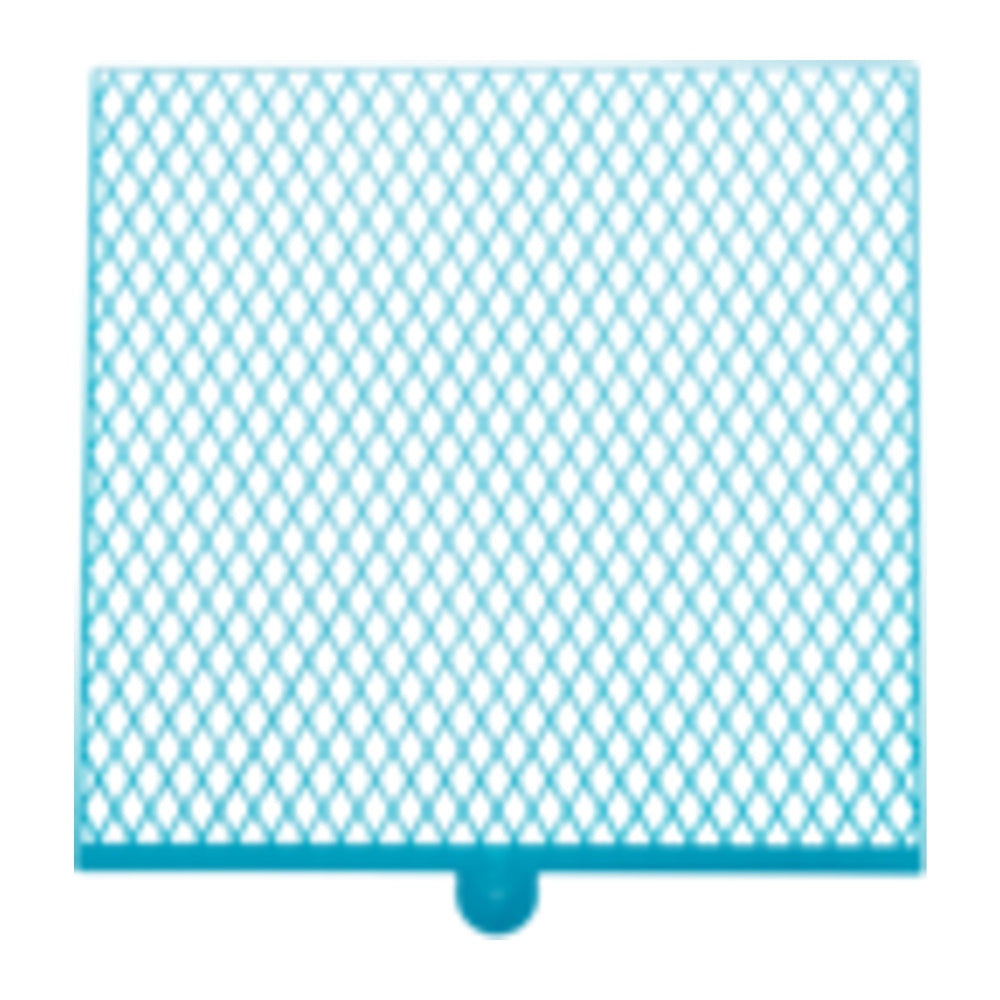
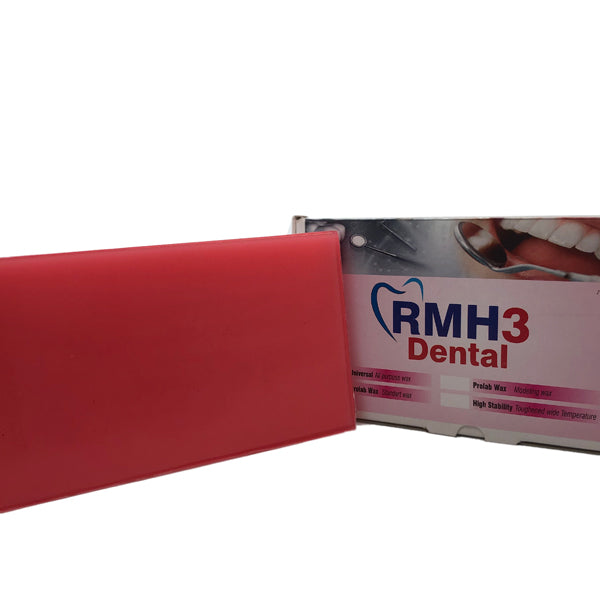
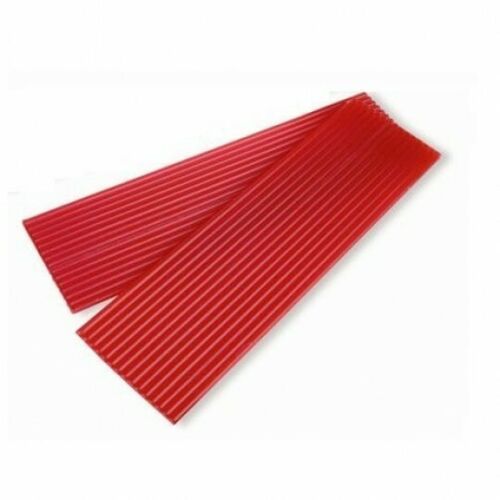
S&S Scheftner Wax Retentions · Retention Grid Fine, Upper Jaw, 20 sheets
SKU 119-0221MFR# 561500
Type
Retention Grid Fine, Upper Jaw, 20 sheets
Retention Grid Fine, Upper Jaw, 20 sheets$43.35
Round Hole Grid, Upper Jaw, 20 sheets$43.35
Hole Retention, Lower Jaw, 40 pcs$43.35
Hole Retention Displaced, Lower Jaw, 40 pcs$43.35
Perforated Retentions Displaced, 40 pcs (Ref. 561630)$23.53
Perforated Retentions Displaced, 40 pcs (Ref. 561800)$18.58
Scheftner wax retentions are preformed retention patterns for partial denture frameworks, also used to strengthen full acrylic dentures. They adapt easily and without tension. Turquoise, in grids and hole retentions for the upper and lower jaw.
What Scheftner says about it
- Tension-free
- Easy to adapt
- In various versions available
On this page
| Retention Grid Fine, Upper Jaw, 20 sheets | Scheftner Ref. 561500 |
|---|---|
| Round Hole Grid, Upper Jaw, 20 sheets | Scheftner Ref. 561520 |
| Hole Retention, Lower Jaw, 40 pcs | Scheftner Ref. 561540 |
| Hole Retention Displaced, Lower Jaw, 40 pcs | Scheftner Ref. 561550 |
| Perforated Retentions Displaced, 40 pcs (Ref. 561630) | Scheftner Ref. 561630 |
| Perforated Retentions Displaced, 40 pcs (Ref. 561800) | Scheftner Ref. 561800 |
Questions about this product
- What is the wax retentions used for?
- Scheftner wax retentions are preformed retention patterns for partial denture frameworks, also used to strengthen full acrylic dentures. They adapt easily and without tension. Turquoise, in grids and hole retentions for the upper and lower jaw.
- Which options are on this page?
- Retention Grid Fine, Upper Jaw, 20 sheets (Ref. 561500); Round Hole Grid, Upper Jaw, 20 sheets (Ref. 561520); Hole Retention, Lower Jaw, 40 pcs (Ref. 561540); Hole Retention Displaced, Lower Jaw, 40 pcs (Ref. 561550); Perforated Retentions Displaced, 40 pcs (Ref. 561630) (Ref. 561630); Perforated Retentions Displaced, 40 pcs (Ref. 561800) (Ref. 561800).
- Who makes the wax retentions?
- S&S Scheftner, a dental alloy and laboratory materials maker in Mainz, Germany.
Product
- Manufacturer
- S&S Scheftner
- Manufacturer #
- 561500
- Item code
- 119-0221
Catalog path
- Marketplace
- Laboratory
- Category
- Wax
- Subcategory
- Pattern & Casting Wax
Ordering
- Status
- Special order
More from Pattern & Casting Wax
Stocked in the same subcategory.



About pattern accessories
Pattern accessories on the pattern and casting wax shelf are sticky wax, adhesive wax, wax retentions, wire wax and measuring discs for casting wax.
Casting wax is a composition of various waxes with the properties needed for making wax patterns that will be formed into metal castings. A wax pattern is a wax form that is the positive likeness of the object to be made. In the lost-wax technique the pattern is surrounded with a refractory slurry that sets, and is then removed by heat, leaving the mold into which metal or ceramic is cast.
The FDA lists intraoral dental wax, used to construct the patterns from which metal prostheses are cast, as a Class I device (21 CFR 872.6890). ISO 15854 is the standard for waxes used for dental casting by the lost-wax technique, including products intended for CAD/CAM milling.
How the waxes on this shelf differ
- Pattern Wire Wax — Ready-made wax shapes that are placed on the cast in place of free-hand waxing.
- Sprue Wire Wax — Wax wire that forms the channel for the molten metal.
- Modeling Wax — The wax that is added and shaped to build the pattern.
- Cervical Wax — Used at the neck of the pattern, at or near the cemento-enamel junction.
- Pattern Accessories — Sticky and adhesive wax, wax retentions, wire wax and measuring discs.
What to look at when choosing a pattern wax
Flow: under ANSI/ADA specification No. 4 a Type 1 wax may flow at most 1 percent at 37 °C, and Type 1 and Type 2 waxes must flow between 70 and 90 percent at 45 °C.
Thermal expansion: a rise of 20 °C expands inlay wax by 0.7 percent in length.
Distortion: a wax pattern can hold internal strains from the way it was worked, and it distorts when the strain relaxes. Time and temperature both make it worse, which is why patterns are generally invested immediately after they leave the die or cast.
Resin patterns: in one study resin pattern materials changed significantly less in dimension than inlay casting wax when stored for 1, 12 and 24 hours.
Sources: The Glossary of Prosthodontic Terms, 9th edition (J Prosthet Dent 2017) · FDA 21 CFR 872.6890, Intraoral dental wax · ISO 15854:2023, Casting and baseplate waxes · Distortion in Wax Patterns Fabricated Using Conventional and Electrical Heat Sources, 2023 (Cureus, PMC10388666) · Gopalan et al. 2018, Marginal adaptation of a thermoplastic resin, a light cured wax and an inlay casting wax (PMC5799966)
