

S&S ScheftnerSpecial order
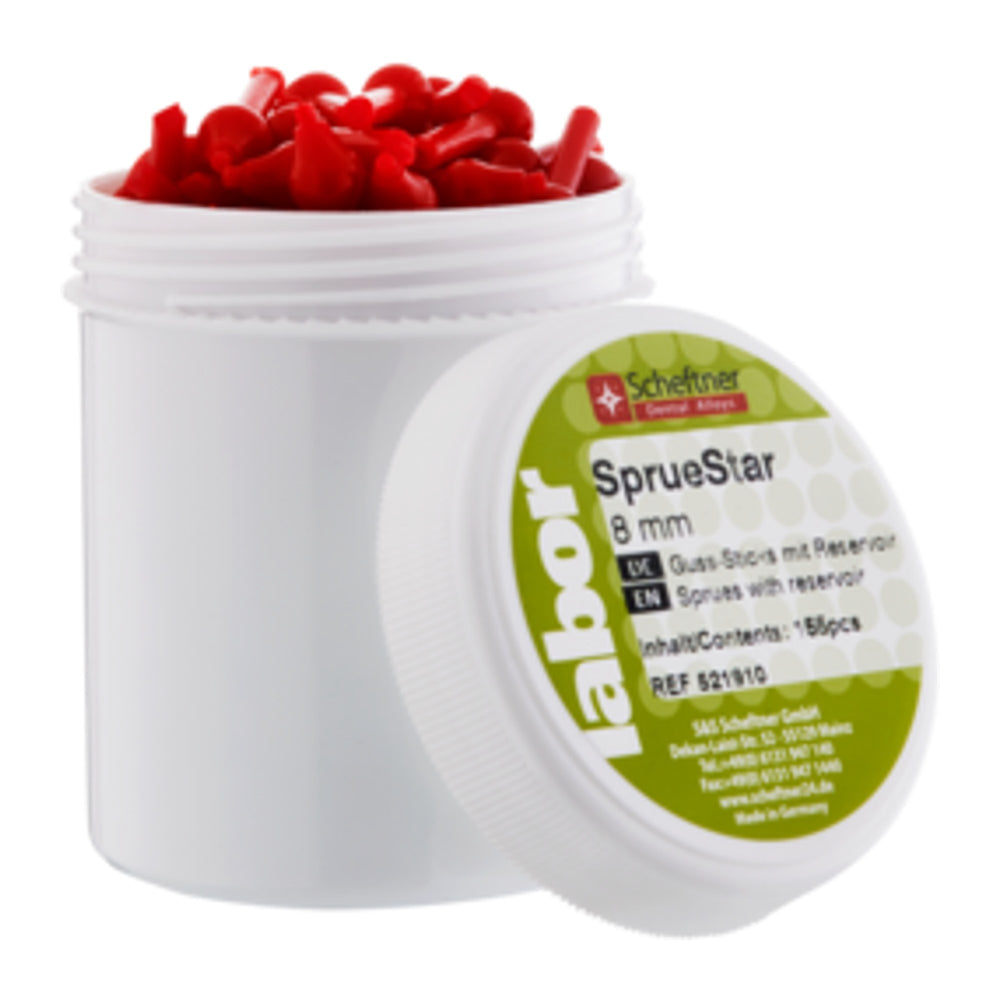
S&S Scheftner SprueStar XL Wax Sprues for Non-Precious Alloys · 8 mm, 200 sticks
SKU 119-0179MFR# 521880
Reservoir
8 mm, 200 sticks
8 mm, 200 sticks$40.87
9 mm, 180 sticks$35.92
SprueStar XL is a ready-made wax sprue with a pear-shaped reservoir, sized for non-precious alloys. It comes with an 8 mm or a 9 mm reservoir.
What Scheftner says about it
- Reservoir sizes: 8mm, 9mm
On this page
| 8 mm, 200 sticks | Scheftner Ref. 521880 |
|---|---|
| 9 mm, 180 sticks | Scheftner Ref. 521890 |
Questions about this product
- What is SprueStar XL used for?
- SprueStar XL is a ready-made wax sprue with a pear-shaped reservoir, sized for non-precious alloys. It comes with an 8 mm or a 9 mm reservoir.
- Which options are on this page?
- 8 mm, 200 sticks (Ref. 521880); 9 mm, 180 sticks (Ref. 521890).
- Who makes SprueStar XL?
- S&S Scheftner, a dental alloy and laboratory materials maker in Mainz, Germany.
Product
- Manufacturer
- S&S Scheftner
- Manufacturer #
- 521880
- Item code
- 119-0179
Catalog path
- Marketplace
- Laboratory
- Category
- Wax
- Subcategory
- Sprue Wax
Ordering
- Status
- Special order
More from Sprue Wax
Stocked in the same subcategory.

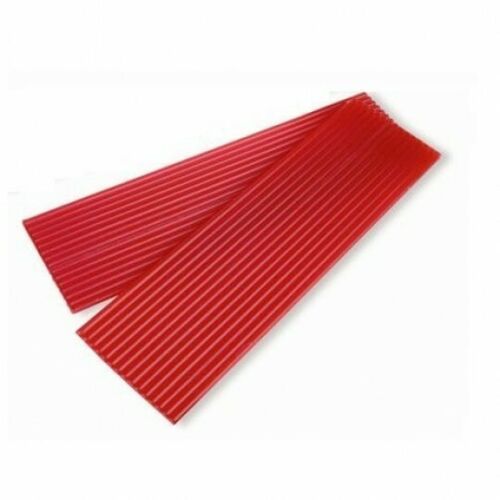


About sprue wire wax
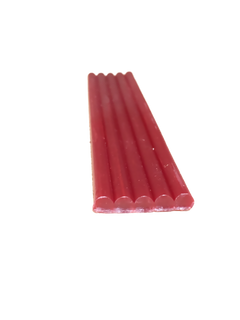
Sprue wire wax is wax in wire, rod and stick form, sold by diameter, that is attached to the wax pattern to form the sprue.
A sprue is the channel through which metal is poured or cast into a mold. A sprue former is the wax, plastic or metal pattern that forms that channel. Sprue design controls the velocity and the supply of metal to the mold.
How sprue wire wax and pattern wire wax differ
- Sprue Wire Wax — Wax wire that forms the channel for the molten metal.
- Pattern Wire Wax — Ready-made wax shapes that are placed on the cast in place of free-hand waxing.
What to look at when choosing sprue wax
Shape: a study of cobalt-chromium partial denture frameworks compared ribbon, square, round and round-with-reservoir sprues. Round sprues with a reservoir gave the most satisfactory fit with the fewest internal and external defects.
Diameter and hardness: the wire on this shelf is listed by diameter in millimetres, and some of it by hardness.
Distortion: a wax pattern can hold internal strains from the way it was worked, and it distorts when the strain relaxes. Time and temperature both make it worse, which is why patterns are generally invested immediately after they leave the die or cast.
Sources: The Glossary of Prosthodontic Terms, 9th edition (J Prosthet Dent 2017) · Viswambaran et al. 2013, The effect of four sprue shapes on the quality of cobalt-chromium cast removable partial denture frameworks (PMC3757871) · Distortion in Wax Patterns Fabricated Using Conventional and Electrical Heat Sources, 2023 (Cureus, PMC10388666)
