


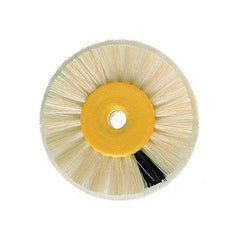
The Keystone Palatinal Brush is a dental product supplied by Keystone for dental use. Catalog code 1670152.
Keystone Palatinal Brush is a polishing brush from Keystone Industries. Manufacturer part number 1670152.
Find it on our Abrasives, Buffs & Brushes shelf, under Brushes.
Orders placed before 3 PM ET ship the same day when the item is on our shelf (otherwise within 3 business days), and ground shipping is free over $10.
Product
- Manufacturer
- Keystone Industries
- Manufacturer #
- 1670152
- Item code
- 010-1450
- UPC / Barcode
- 1670152
Catalog path
- Marketplace
- Laboratory
- Category
- Abrasives, Buffs & Brushes
- Subcategory
- Brushes
Ordering
- Status
- Ships from the manufacturer
More from Brushes
Stocked in the same subcategory.


Keystone Industries
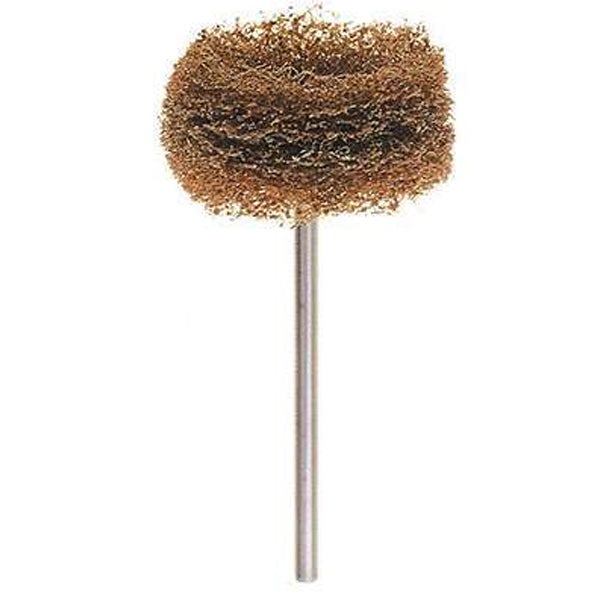
Keystone Scotch-Brite Miniature Brushes — 12/Pack
In stock
341 sold this monthfrom $18.82



Questions
What is Keystone Palatinal Brush used for?
The Keystone Palatinal Brush is a dental product supplied by Keystone for dental use.
When does it ship?
In-stock orders placed before 3 PM ET ship the same day. An item we don't keep on the shelf shows its own ship-by date on its page, and you can cancel it for a full refund until it ships.Ground shipping is free over $10.
About polishing brushes
Lab polishing brushes are bristle wheels and mounted brushes used in polishing, which can be done with discs, rubbers, strips, brushes and pastes. OSHA defines brush wheels as wheels made from wire or bristles and used for cleaning and brushing.
OSHA defines brush wheels as wheels made from wire or bristles and used for cleaning and brushing. Brushes are among the tools used for polishing, with discs, rubbers, strips, wheels and pastes.
How the types on this shelf differ
- Polishing Brushes — A bristle wheel used in polishing.
- Lathe Brushes — A brush wheel for the laboratory lathe.
- Flexible Silicone Polishers — The abrasive is embedded in a flexible silicone body.
- Polishing Wheels — A wheel for the smoothing steps that follow grinding.
- Polishing Discs — The finer steps of the same series.
What to look at when choosing a brush
Material: wire or bristle, the two OSHA names for brush wheels.
Speed: OSHA's abrasive-wheel rule has the spindle speed checked against the maximum operating speed marked on the wheel.
Reuse: the CDC states that burs, polishing points and rag wheels used on contaminated appliances or prostheses should be heat-sterilised, disinfected between patients, or discarded.
Sources: OSHA 29 CFR 1910.94, Ventilation (grinding, polishing and buffing operations) · Does Sterilization Affect the Performance of Single-Step Resin Composite Polishers? (Dent J 2023) · Comparative Analysis of Abrasive Materials and Polishing System on the Surface Roughness of Heat-Polymerized Acrylic Resins (Eur J Dent 2022) · A Comprehensive Review of the Surface and Chromatic Properties of Monolithic Zirconia: Polishing and Finishing Methods (Cureus 2024) · FDA 21 CFR 872.6010, Abrasive device and accessories · The Glossary of Prosthodontic Terms, 9th edition (J Prosthet Dent 2017) · OSHA 29 CFR 1910.215, Abrasive wheel machinery · CDC, Guidelines for Infection Control in Dental Health-Care Settings, 2003 (MMWR 52 RR-17)
