


Keystone IndustriesShips in 3 business days
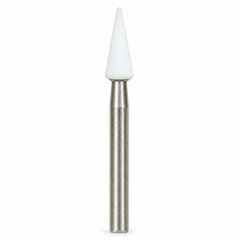
Keystone Wheel Dresser #0 · Refill
SKU 010-1803MFR# 1900617
Item
Refill
Dresser$39.30
Refill$6.55
The Keystone Wheel Dresser Refill is a dental product supplied by Keystone for dental use. Catalog code 1900617.
Keystone Wheel Dresser #0 is a wheel dresser from Keystone Industries.
This page carries 2 item options: Dresser, Refill.
Find it on our Finishing & Polishing shelf, under Stones & Abrasives.
Orders placed before 3 PM ET ship the same day when the item is on our shelf (otherwise within 3 business days), and ground shipping is free over $10.
Product
- Manufacturer
- Keystone Industries
- Manufacturer #
- 1900617
- Item code
- 010-1803
Catalog path
- Marketplace
- Clinical
- Category
- Finishing & Polishing
- Subcategory
- Stones & Abrasives
Ordering
- Status
- Ships in 3 business days
More from Stones & Abrasives
Stocked in the same subcategory.




Questions
What is Keystone Wheel Dresser #0 used for?
The Keystone Wheel Dresser Refill is a dental product supplied by Keystone for dental use.
Which item options are on this page?
This page carries 2 item options: Dresser, Refill. Pick one to see its price, part number and stock.
When does it ship?
In-stock orders placed before 3 PM ET ship the same day; anything not on our shelf ships within 3 business days.Ground shipping is free over $10.
About wheel dressers
A wheel dresser is used on the abrasive itself, to true up a stone or wheel that has worn out of shape. A glossary describes an analogous device for the work surface, a lapping device used to dress smooth or polish by working two surfaces together.
A stone is a bonded abrasive: grit held in a rigid body that grinds rather than flexes, and a glossary defines an abrasive as a substance used for abrading, smoothing or polishing. The same glossary adds abrasivity, the property of one material to wear away another material by means of frictional contact. Published work describes a white stone as a dental rotary instrument of conical or round shape, made of fine-grain aluminium oxide. A review names dental stones among the tools used in finishing and polishing, with rubber cups and points and abrasive discs.
ISO 6360-6 codes rotary abrasive instruments and treats dental polishers as abrasive instruments too, so stones and polishers share one coding scheme. ISO 8325 names grinding instruments alongside burs, cutters and polishers as rotary instruments covered by its test methods for dimensional characteristics, neck strength and surface roughness.
How the types of stone and abrasive differ
- Mounted stones — Already on a shank; a heatless wheel or an abrasive block is not.
- Finishing stones — Fine grade for refining form, where a grinding grade removes material.
- Rubber abrasive points and cones — A rubber binder, so it flexes where a stone of the same shape stays rigid.
- Rubber abrasive wheels — A wheel rather than a point or cone, in the same rubber binder.
- Heatless wheels — Unmounted, so it needs the spindle a glossary calls a mandrel: the shaft and bearings on which a tool is mounted.
- Abrasive blocks and sticks — Held in the hand, not driven by a handpiece.
- Wheel dressers — Works on the instrument rather than on the restoration.
What to look at when choosing a stone
Grit and material: published work on surface finishing names aluminium oxide, zirconium oxide, quartz, carbon steel, diamond and tungsten carbide among the abrasive materials used.
Hardness: published work states that the abrasive particles should be harder than the fillers of the material being worked.
What follows it: published work on proximal adjustment notes that after a stone has been used there is usually a need to polish the area.
Mounted or not: a mounted stone runs on its own shank, and an unmounted wheel needs the spindle a glossary calls a mandrel.
Cleaning: published guidance says to follow the maker instructions for cleaning and sterilizing or disinfecting items that become contaminated but do not normally contact the patient, and names polishing points among them.
Sources: The Glossary of Prosthodontic Terms, 9th edition (J Prosthet Dent 2017) · Thawaba et al. 2023, Evaluation of enamel roughness after orthodontic debonding and clean-up procedures using zirconia, tungsten carbide, and white stone burs (BMC Oral Health) · Polishing systems for modern aesthetic dental materials: a narrative review, 2024 (Br Dent J) · ISO 6360-6:2004, Number coding system for rotary instruments — Abrasive instruments · ISO 8325:2023, Dentistry — Test methods for rotary instruments · Kim et al. 2025, A comparison of stone-based and diamond strip approaches for adjusting proximal contact tightness (BMC Oral Health) · Büyükpolat et al. 2025, The effect of polishing pastes on the surface roughness, microhardness, gloss, and color change of resin composites (BMC Oral Health) · Németh et al. 2022, Effect of Air-Polishing and Different Post-Polishing Methods on Surface Roughness of Nanofill and Microhybrid Resin Composites (Polymers) · FDA 21 CFR 872.6010, Abrasive device and accessories · Evaluation of Enamel Surface Roughness and Volumetric Change after Resin Remnant Removal following Orthodontic Bracket Debonding, 2025 (PMC12246803) · CDC, Guidelines for Infection Control in Dental Health-Care Settings — 2003 (MMWR 52(RR-17))
