

Pack Size
1 Piece
1 Piece$73.87
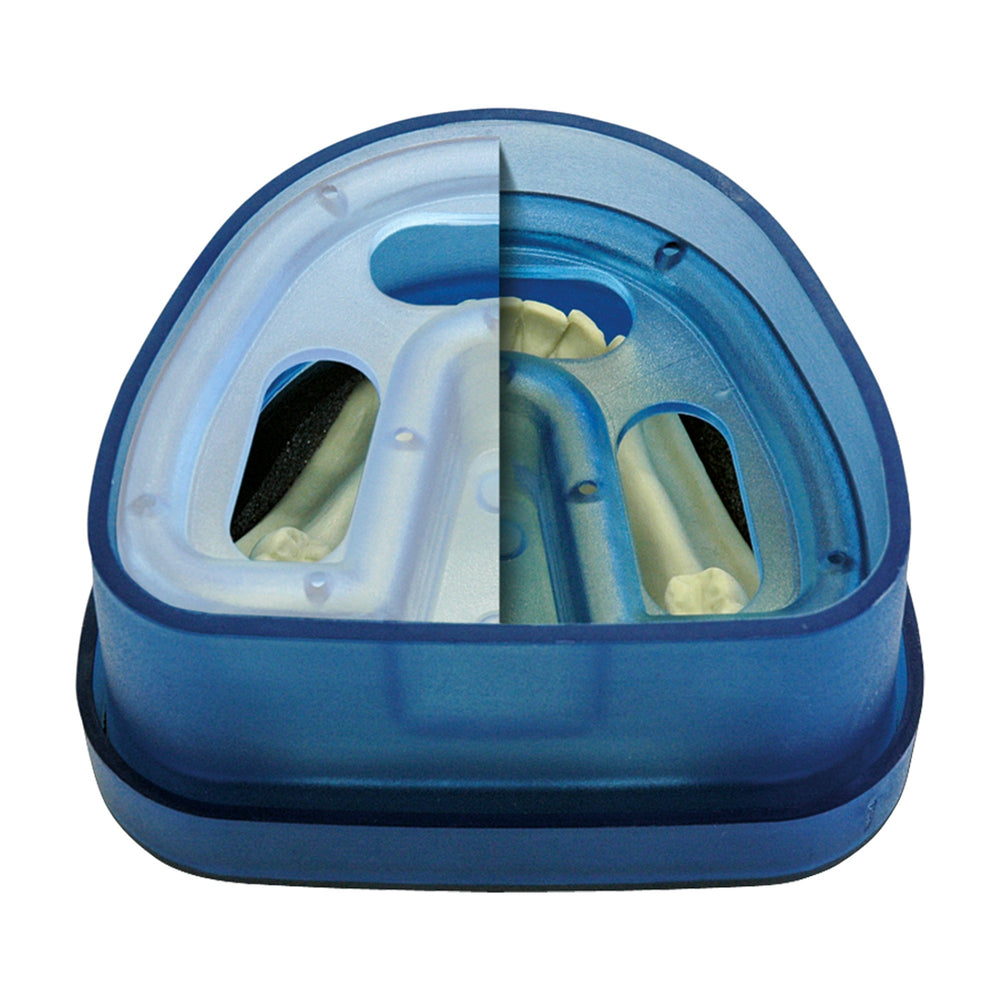
Height-adjustable flask for duplicating models in silicone, with or without a base. The inner part adjusts to the model, which saves silicone. Top, cuff and base are made of Makrolon resin. Supplied with accessories.
For use by a dental professional.
Product
- Manufacturer
- Dreve
- Manufacturer #
- D3805
- Item code
- 120-0056
Catalog path
- Marketplace
- Laboratory
- Category
- Investment & Casting
- Subcategory
- Investments
Ordering
- Status
- Special order
More from Investments
Stocked in the same subcategory.
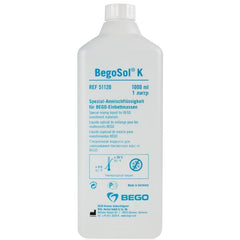
Bego
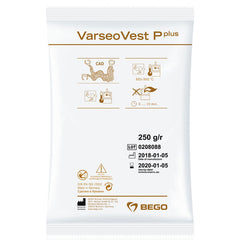
Bego VarseoVest P Plus Phosphate-Bonded Precision Investment, 72 x 250g (18kg)
011-1083
$175.54


About duplicating materials and flasks
Duplicating materials form the flexible mould in which a refractory investment copy of a blocked-out master model is made. Under this name the shelf holds duplicating gels, silicones and the flasks they are poured in.
A dental casting investment is a material consisting principally of an allotrope of silica and a bonding agent. The bonding substance may be gypsum, for lower casting temperatures, or phosphates and silica, for higher casting temperatures. In the lost-wax technique a wax pattern is surrounded with a refractory slurry that sets, the pattern is removed by heat, and metal or ceramic is cast into the mold that is left.
ISO 15912 covers casting investment, brazing investment, pressable-ceramic investment and refractory die materials, and classifies them by intended use and by the burn-out procedure the manufacturer recommends.
How the investments and duplicating materials on this shelf differ
- Universal Investment — Phosphate-bonded powder and its mixing liquid, sold for more than one kind of casting.
- Chrome Investment — For partial denture frameworks cast in a higher melting alloy.
- Pressable Ceramic Investment — The mold material for pressed ceramics, not for cast metal.
- Refractory Investment — Material for casts, dies and pegs that must go through the furnace.
- Duplicating Materials & Flasks — Gels, silicones and flasks for copying the master model in investment.
- Duplicating & Die Silicone — A silicone that makes the flexible mould of the master model.
What to look at when choosing an investment
Binder and temperature: gypsum is not chemically stable above 650 °C, so gypsum-bonded investments are typically restricted to castings of conventional gold alloys.
Expansion: high setting expansion has been reported for phosphate-bonded materials, more when they are mixed with a silica sol, the special liquid, than with water. Setting expansion was found to be sensitive to mixing speed and to the liquid to powder ratio.
Strength: investments are brittle and may fracture at clamping points.
Burn-out: ISO 15912 classifies investments by intended use and by the burn-out procedure the manufacturer recommends.
Sources: The Glossary of Prosthodontic Terms, 9th edition (J Prosthet Dent 2017) · ISO 15912:2016, Dentistry — Casting investments and refractory die materials · Diametral tensile strength of phosphate-bonded investment material under four drying methods, 2019 (PMC6685339) · ISO 14356:2024, Dentistry — Duplicating material · Fit of cast removable partial denture frameworks and the storage of wax patterns, 2015 (PMC4678543)
