
DedecoShips in 3 business days
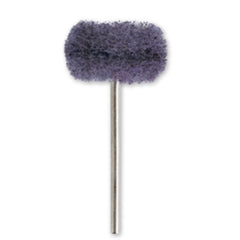
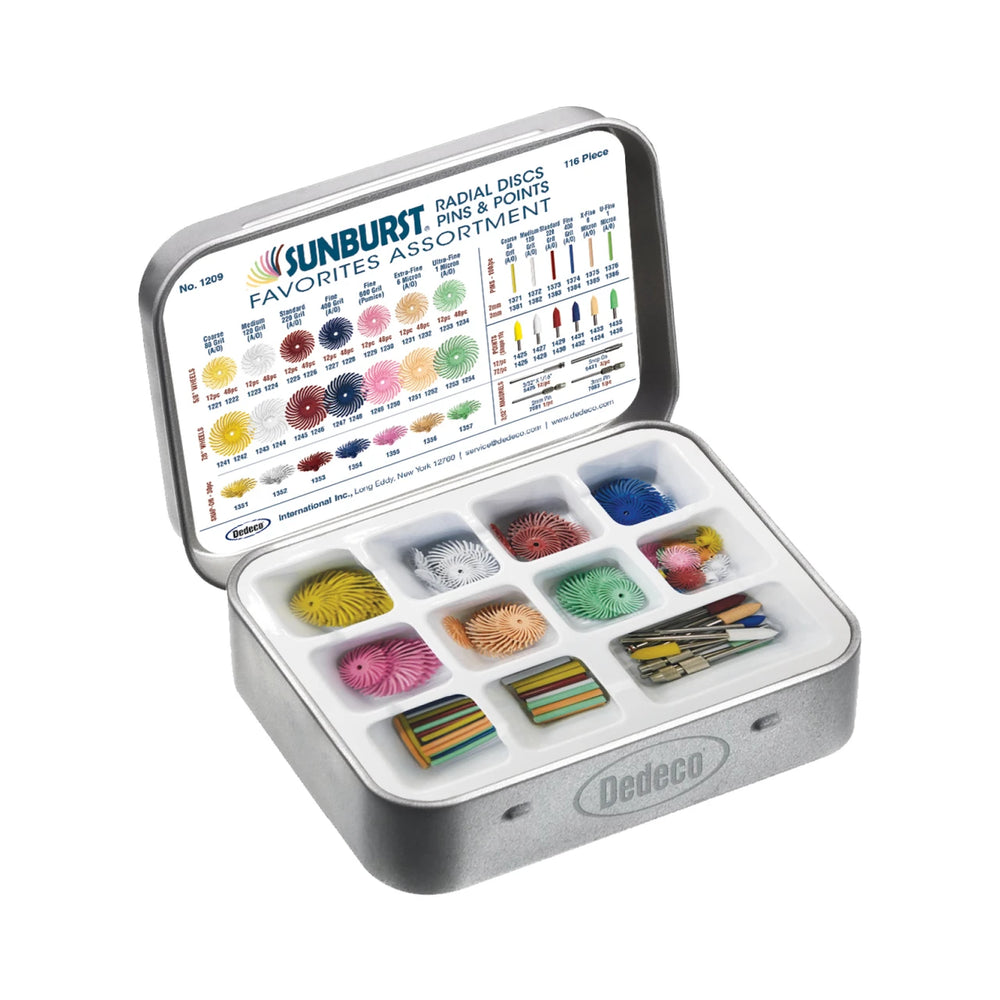
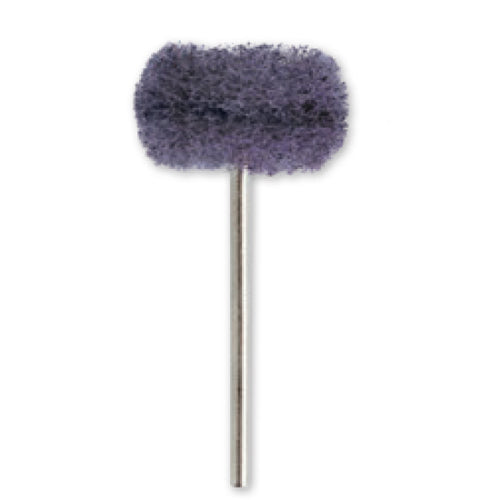
Dedeco Diamond Silicone Finish & Polish Kits · 11/16" x 1/8" · Kit of 3
SKU 050-0467MFR# 1176
Size
11/16" x 1/8"
Pack
Kit of 3
Kit of 3$164.95
The Diamond Silicone Finish and Polish 1" Knife - 1/8" 3/KIT is a rotary instrument supplied by Dedeco for cutting, trimming, and shaping in the dental laboratory. Catalog code 1100.
Dedeco Diamond Silicone Finish & Polish Kits is a flexible silicone polisher from Dedeco.
This page carries 6 size options: 1" wheel - 1/8", 1" knife-edge - 1/8", 11/16" x 1/8" - 1/8", 11/16" x 1/8", 1" knife-edge, 1" square-edge. This page carries 1 pack option: Kit of 3.
Find it on our Lab Burs & Rotary shelf, under Finishing & Polishing Wheels & Points.
Orders placed before 3 PM ET ship the same day when the item is on our shelf (otherwise within 3 business days), and ground shipping is free over $10.
Product
- Manufacturer
- Dedeco
- Manufacturer #
- 1176
- Item code
- 050-0467
Catalog path
- Marketplace
- Laboratory
- Category
- Lab Burs & Rotary
- Subcategory
- Finishing & Polishing Wheels & Points
Ordering
- Status
- Ships in 3 business days
More from Finishing & Polishing Wheels & Points
Stocked in the same subcategory.


Questions
What is it used for?
The Diamond Silicone Finish and Polish 1" Knife - 1/8" 3/KIT is a rotary instrument supplied by Dedeco for cutting, trimming, and shaping in the dental laboratory.
Which size and pack options are on this page?
This page carries 6 size options: 1" wheel - 1/8", 1" knife-edge - 1/8", 11/16" x 1/8" - 1/8", 11/16" x 1/8", 1" knife-edge, 1" square-edge. This page carries 1 pack option: Kit of 3. Pick one to see its price, part number and stock.
When does it ship?
In-stock orders placed before 3 PM ET ship the same day; anything not on our shelf ships within 3 business days.Ground shipping is free over $10.
About flexible silicone polishers
A silicone polisher carries its abrasive inside it: one kind is described as silicone highly filled with micro-fine diamond. A study of reused polishers gave the loss of diamond particles through use as one reason their abrasive capability fell.
The FDA groups abrasive discs, abrasive points, polishing strips and polishing wheels as abrasive devices, Class I (21 CFR 872.6010): they remove excess restorative material and smooth rough surfaces, on a shank held by a handpiece.
ISO 21671 covers the most commonly used rotary polishers, mounted and unmounted, used by the dentist and in the dental laboratory.
How the types on this shelf differ
- Flexible Silicone Polishers — The abrasive is embedded in a flexible silicone body.
- Polishing Wheels — A wheel for the smoothing steps that follow grinding.
- Grinding Wheels — The coarse step: it shapes the work and removes excess material.
- Mounted Rubber Points — A rubber-bonded point already fixed on its own shank.
- Ceramic & Porcelain Polishers — Polishes the ceramic itself, in place of a glaze layer.
- Polishing Discs — The finer steps of the same series.
- Buffing Wheels — Carries the polishing agent to the work.
- Mounted Stones — A rigid bonded abrasive, for grinding and shaping.
- Separating & Cut-Off Discs — A thin wheel for cutting, where an abrasive disc works on its side.
- Composite Polishers — Made for resin composite.
- Acrylic Polishers & Trimmers — Made for denture acrylic, which is finished with burs, sandpaper and rubber wheels before it is polished.
- Abrasive Discs — Grinds and smooths with its face.
- Finishing Carbides — A bur made to finish a surface.
What to look at when choosing
Sequence: a review describes polishing in three stages, coarse finishing, intermediate polishing and final polishing. Coarse tools shape the work and remove excess material; medium ones smooth out the grooves and scratches the coarse ones leave.
Surface: 0.2 micrometres of roughness is considered the threshold for a clinically acceptable restoration.
Speed: OSHA's abrasive-wheel rule has the spindle speed checked against the maximum operating speed marked on the wheel.
Reuse: the CDC states that burs, polishing points and rag wheels used on contaminated appliances or prostheses should be heat-sterilised, disinfected between patients, or discarded.
Sources: FDA 21 CFR 872.6010, Abrasive device and accessories · ISO 21671:2006, Rotary polishers · Does Sterilization Affect the Performance of Single-Step Resin Composite Polishers? (Dent J 2023) · A Comprehensive Review of the Surface and Chromatic Properties of Monolithic Zirconia: Polishing and Finishing Methods (Cureus 2024) · OSHA 29 CFR 1910.94, Ventilation (grinding, polishing and buffing operations) · OSHA 29 CFR 1910.211, Machinery and machine guarding: definitions · The Glossary of Prosthodontic Terms, 9th edition (J Prosthet Dent 2017) · Rao et al. 2015, Surface roughness of three heat-cured acrylic denture base resins with different conventional lathe polishing techniques (J Indian Prosthodont Soc) · OSHA 29 CFR 1910.215, Abrasive wheel machinery · ISO 3823-2:2003, Rotary bur instruments, Part 2: Finishing burs · CDC, Guidelines for Infection Control in Dental Health-Care Settings, 2003 (MMWR 52 RR-17)
