


DedecoShips in 3 business days
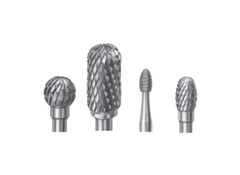
Dedeco Carbide Burs, Cylinder, End Cut (SB) · Single cut · SB-42 – 1/8" x 3/32" x 7/16" · Each
SKU 050-2373MFR# 12203
Cut
Single cut
Single cut$5.63
Double cut$5.63
Size
SB-42 – 1/8" x 3/32" x 7/16"
SB-1L – 1/4" x 1/4" x 1"$13.75
SB-2 – 1/4" x 5/16" x 3/4"$11.75
SB-3 – 1/4" x 3/8" x 3/4"$11.75
SB-5 – 1/4" x 1/2" x 1"$19.75
SB-6 – 1/4" x 5/8" x 1"$30.25
SB-7 – 1/4" x 3/4" x 1"$38.75
SB-9 – 1/4" x 1" x 1"$68.55
SB-12 – 1/4" x 1/8" x 5/8"$12.25
SB-13 – 1/4" x 5/32" x 5/8"$12.25
SB-14 – 1/4" x 3/16" x 5/8"$12.25
SB-15 – 1/4" x 3/4" x 1/2"$37.31
SB-16 – 1/4" x 3/4" x 3/4"$37.31
SB-41 – 1/8" x 1/16" x 1/4"$5.63
SB-42 – 1/8" x 3/32" x 7/16"$5.63
SB-43 – 1/8" x 1/8" x 9/16"$5.63
SB-43L3 – 1/8" x 1/8" x 9/16"$7.29
SB-51 – 1/8" x 1/4" x 3/16"$8.95
SB-1 – 1/4" x 1/4" x 5/8"SB-4 – 1/4" x 7/16" x 1"
Pack
Each
Each$5.63
The Dedeco Carbide Bur Double Cut Cylinder Fine/End Cut 1/8" X 3/32" X 7/16" (SB-42) 1/Unit is a dental laboratory product supplied by Dedeco for cutting, finishing, and general lab use. Catalog code 12204.
Product
- Manufacturer
- Dedeco
- Manufacturer #
- 12203
- Item code
- 050-2373
Catalog path
- Marketplace
- Laboratory
- Category
- Lab Burs & Rotary
- Subcategory
- Carbide Burs
Ordering
- Status
- Ships in 3 business days
More from Carbide Burs
Stocked in the same subcategory.




Questions
What is it used for?
The Dedeco Carbide Bur Double Cut Cylinder Fine/End Cut 1/8" X 3/32" X 7/16" (SB-42) 1/Unit is a dental laboratory product supplied by Dedeco for cutting, finishing, and general lab use.
Which cut and size and pack options are on this page?
This page carries 2 cut options: Single cut, Double cut. This page carries 19 size options: SB-1L – 1/4" x 1/4" x 1", SB-2 – 1/4" x 5/16" x 3/4", SB-3 – 1/4" x 3/8" x 3/4", SB-5 – 1/4" x 1/2" x 1", SB-6 – 1/4" x 5/8" x 1", SB-7 – 1/4" x 3/4" x 1", SB-9 – 1/4" x 1" x 1", SB-12 – 1/4" x 1/8" x 5/8" and 11 more. This page carries 1 pack option: Each. Pick one to see its price, part number and stock.
When does it ship?
In-stock orders placed before 3 PM ET ship the same day; anything not on our shelf ships within 3 business days.Ground shipping is free over $10.
About specialty carbides
Specialty carbides are the lab carbide burs for the handpiece and the lathe: dual cut, diamond cut and jewelers burs, and burs for thermoplastics and VPS.
A dental bur is a rotary cutting device made from carbon steel or tungsten carbide. The FDA lists it as a Class I device (21 CFR 872.3240), for cutting teeth and bone and also the hard metals, plastics and porcelains that dental devices are made from. A carbide bur is one made from tungsten carbide.
The head is the cutting portion of a bur, and the shank is the part that fits into the handpiece. ISO 6360 identifies every dental rotary instrument by a 15-digit number.
How the types on this shelf differ
- Finishing Carbides — A bur made to finish a surface.
- Laboratory Carbides — Used at the bench on the metals, plastics and porcelains of dental devices, not in the mouth.
- Cross-Cut Burs — Named for its blade pattern.
- Operative Carbides — Made for cutting tooth structure, where a laboratory carbide is made for the bench.
- Diamond Burs — A shaped diamond head on its own shaft.
- Flexible Silicone Polishers — The abrasive is embedded in a flexible silicone body.
- Carbide Bur Kits — Four pages of carbide burs filed under the kits name as well.
- Specialty Carbides — Dual cut, diamond cut, jewelers and lathe carbide burs, and burs named for one material.
The shelf also files burs as specialty carbides and as kits; no source on our allowed list defines those groups, so this guide does not describe them.
What to look at when choosing a carbide bur
Head shape: the outline of the cutting edges, described from the shank to the tip.
Shank: the shaft of a bur is friction-grip or latch-type. ISO 1797 sets shank dimensions and material properties.
Size: ISO 2157 sets the nominal diameters of the working part of burs, laboratory burs, grinding instruments, diamond instruments and mandrels, and how they are designated.
Reuse: the CDC states that burs, polishing points and rag wheels used on contaminated appliances or prostheses should be heat-sterilised, disinfected between patients, or discarded.
Sources: FDA 21 CFR 872.3240, Dental bur · The Glossary of Prosthodontic Terms, 9th edition (J Prosthet Dent 2017) · ISO 13295:2007, Mandrels for rotary instruments · ISO 3823-2:2003, Rotary bur instruments, Part 2: Finishing burs · Does Sterilization Affect the Performance of Single-Step Resin Composite Polishers? (Dent J 2023) · ISO 7787-2:2020, Laboratory cutters, Part 2: Carbide laboratory cutters · Rao et al. 2015, Surface roughness of three heat-cured acrylic denture base resins with different conventional lathe polishing techniques (J Indian Prosthodont Soc) · ISO 7787-1:2016, Laboratory cutters, Part 1: Steel laboratory cutters · Comparative Analysis of Abrasive Materials and Polishing System on the Surface Roughness of Heat-Polymerized Acrylic Resins (Eur J Dent 2022) · FDA 21 CFR 872.4535, Dental diamond instrument · ISO 7711-1:2021, Diamond rotary instruments, Part 1: General requirements · ISO 1797:2017, Shanks for rotary and oscillating instruments · ISO 2157:2016, Nominal diameters and designation code numbers for rotary instruments · CDC, Guidelines for Infection Control in Dental Health-Care Settings, 2003 (MMWR 52 RR-17)
