

Ceragroup IndustriesShips in 3 business days
Ceragroup Industries Universal Glaze Powder · 1000 g
SKU 099-2414MFR# COGLFX
Glaze
Universal
Universal$825.00
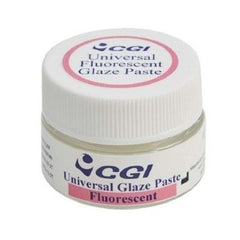
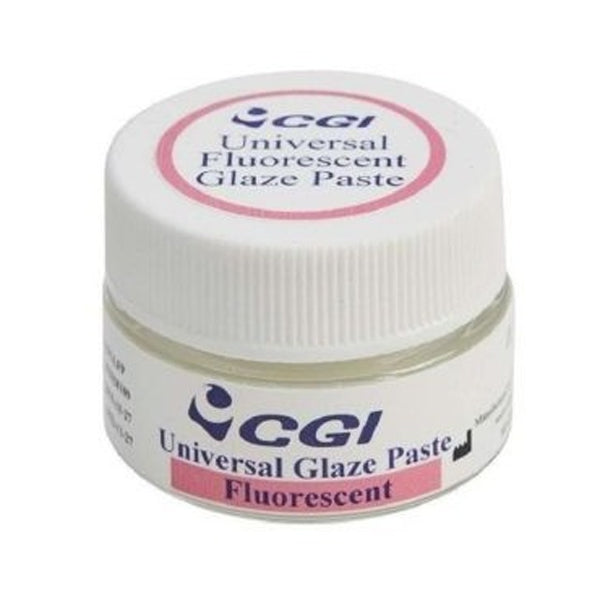
Universal Fluorescent$1,135.00
Size
1000 g
Universal Glaze Powder glazes all types of dental ceramic restorative materials; its wide range of firing temperatures lets the technician adjust to the ceramic being glazed.
Universal Fluorescent Glaze Powder glazes all types of dental ceramic restorative materials, especially zirconia and lithium silicate, with fluorescence that mimics natural teeth.
From a 5 g jar to a 1000 g production container.
Product
- Manufacturer
- Ceragroup Industries
- Manufacturer #
- COGLFX
- Item code
- 099-2414
Catalog path
- Marketplace
- Laboratory
- Category
- Porcelain & Ceramics
- Subcategory
- Stains & Glazes
Ordering
- Status
- Ships in 3 business days
More from Stains & Glazes
Stocked in the same subcategory.




About glazes
The glaze under this name on the shelf is a low-fusing spray glaze. Spray is one of the newer glazing techniques, beside paste.
A glaze is a ceramic veneer on a dental porcelain restoration that produces a nonporous, glossy or semi-glossy surface. Glazing is a laboratory technique that seals the pores on the surface of the fired ceramic. It is intended to provide a natural gloss and colour stability and to reduce plaque retention and wear on the opposing tooth.
ISO 6872 sets the requirements and test methods for dental ceramic materials for fixed all-ceramic and metal-ceramic restorations.
How glaze paste, spray glaze and stain kits differ
- Glaze Paste — Ready-mixed glaze that is brushed on.
- Glazes — Glaze that is sprayed on.
- Stain Kits — A set of colours for characterizing the surface before the glaze firing.
What to look at when choosing a glaze
Method: in a study on translucent zirconia, the glazing method (powder and liquid, paste or spray) did not significantly affect hardness. The powder and liquid method gave a smoother surface, particularly after corrosion.
Natural glaze: a glazed surface can also be produced by the vitrification of the ceramic itself, without added glass.
Fusing range and fluorescence: glazes are listed by the ceramic they are made for, and some as fluorescent.
Sources: The Glossary of Prosthodontic Terms, 9th edition (J Prosthet Dent 2017) · Effect of glazing methods on the surface roughness and hardness of translucent zirconia, 2025 (PMC12490138) · ISO 6872:2024, Dentistry — Ceramic materials · Glazing and polishing of a ceramic and its colour stability, 2021 (PMC8262439)
