
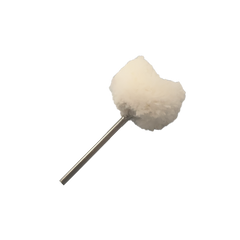

Shape
Pointed
Pointed$6.01
Blunt$6.45
Size
1" x 2"
No description available yet.
Product
- Manufacturer
- Buffalo Dental
- Manufacturer #
- 40020
- Item code
- 055-0110
Catalog path
- Marketplace
- Laboratory
- Category
- Abrasives, Buffs & Brushes
- Subcategory
- Buffs
Ordering
- Status
- Ships in 3 business days
More from Buffs
Stocked in the same subcategory.


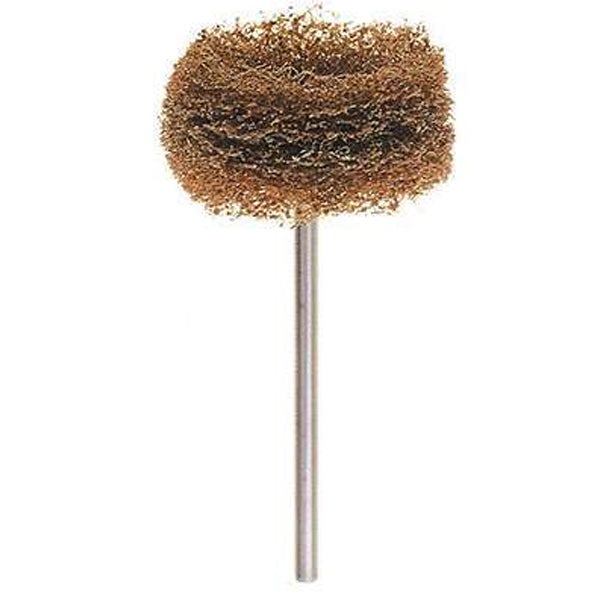
Keystone Industries
Keystone Scotch-Brite Miniature Brushes — 12/Pack
In stock
314 sold this monthfrom $18.82



About felt buffs
Felt buffs are felt cones, wheels and cylinders; in one published sequence denture acrylic was first polished with pumice on a wet felt cone. OSHA defines polishing and buffing wheels as wheels made wholly or partly of textile fabric, wood, felt, leather or paper, which may carry abrasive on the rim.
OSHA defines polishing and buffing wheels as wheels made wholly or partly of textile fabric, wood, felt, leather or paper, which may carry abrasive on the rim. A polishing agent is any material used to give lustre to a surface.
One published sequence for denture acrylic polishes first with pumice on a wet felt cone and then with rouge on a soft cloth wheel.
How the types of buff differ
- Muslin Buffs — A cloth buff.
- Cotton Buffs — A cloth buff.
- Felt Buffs — Felt, used with pumice for the first shine.
- Buffing Wheels — Carries the polishing agent to the work.
Chamois and flannel buffs are also filed here; no source on our allowed list describes them, so this guide does not.
What to look at when choosing a buff
Material: fabric, felt or leather, the materials OSHA names for buffing wheels.
The polishing agent it will carry: pumice for the first shine and rouge for the final one, in one published sequence.
Speed: OSHA's abrasive-wheel rule has the spindle speed checked against the maximum operating speed marked on the wheel.
Reuse: the CDC states that burs, polishing points and rag wheels used on contaminated appliances or prostheses should be heat-sterilised, disinfected between patients, or discarded.
Sources: OSHA 29 CFR 1910.94, Ventilation (grinding, polishing and buffing operations) · The Glossary of Prosthodontic Terms, 9th edition (J Prosthet Dent 2017) · Rao et al. 2015, Surface roughness of three heat-cured acrylic denture base resins with different conventional lathe polishing techniques (J Indian Prosthodont Soc) · OSHA 29 CFR 1910.215, Abrasive wheel machinery · CDC, Guidelines for Infection Control in Dental Health-Care Settings, 2003 (MMWR 52 RR-17)
