

Jinme Apple Dental
Jinme Jinme A1-M4 Single Water, No Light, Big Head, and Push Button
065-0000
$51.54

Beyes Canada S20A-IS/E6 1:1 straight nose cone with internal spray and fiber optic illumination, for use with straight handpiece attachments. Catalog code ST2009.
Beyes Dental S20A Straight Nose Cones — 1:1 belongs to our handpiece parts & accessories range, made by Beyes Dental.
This page carries 3 model options: S20A-NS · Non-Spray, Non-Optic, S20A-IS · Internal Spray, Non-Optic, S20A-IS/E6 · Internal Spray, Fiber Optic.
Find it on our Handpieces shelf.
Orders placed before 3 PM ET ship the same day when the item is on our shelf (otherwise within 3 business days), and ground shipping is free over $10.
Stocked in the same subcategory.


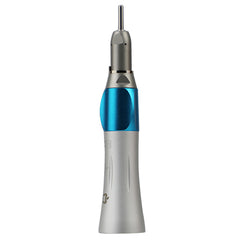

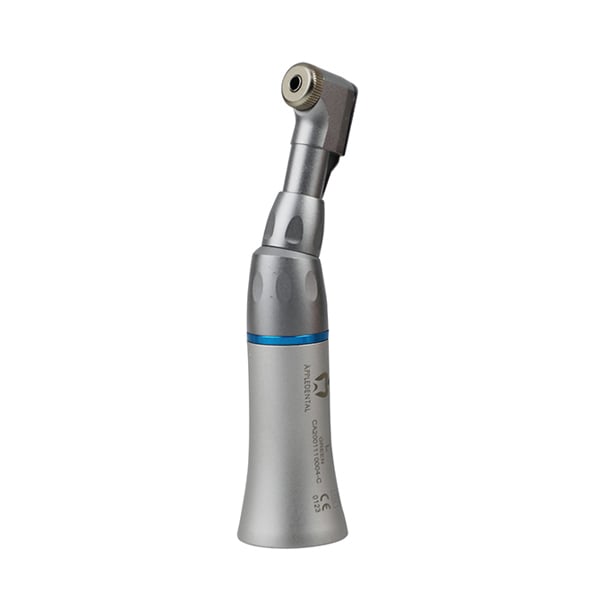


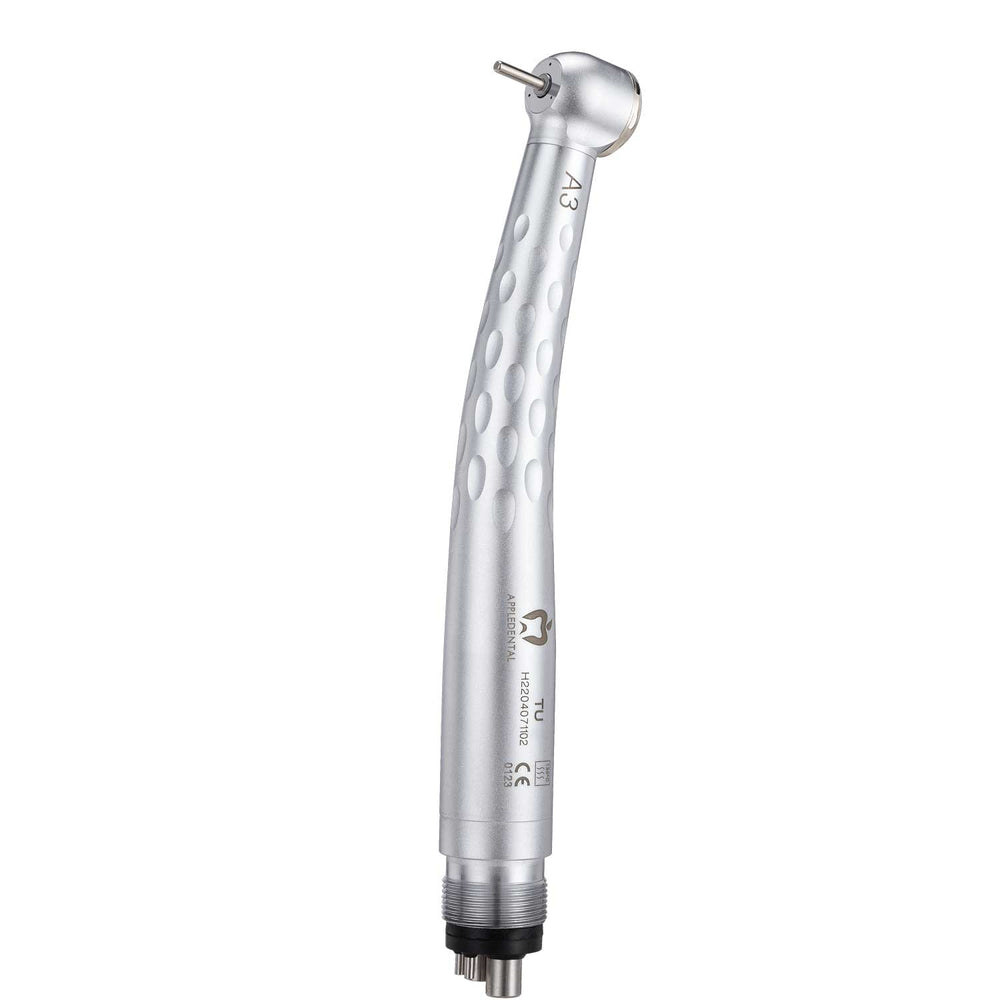
Beyes Canada S20A-IS/E6 1:1 straight nose cone with internal spray and fiber optic illumination, for use with straight handpiece attachments.
This page carries 3 model options: S20A-NS · Non-Spray, Non-Optic, S20A-IS · Internal Spray, Non-Optic, S20A-IS/E6 · Internal Spray, Fiber Optic. Pick one to see its price, part number and stock.
In-stock orders placed before 3 PM ET ship the same day; anything not on our shelf ships within 3 business days.Ground shipping is free over $10.
The attachment on the end of a handpiece or motor is counted as part of the device: one FDA section covers the dental handpiece and accessories together, including the contra-angle attachment for areas that are hard to reach. The CDC includes all attachments, such as prophy angles and nose cones, among the devices heat sterilized between patients, and says the maker's instructions for cleaning, lubrication and sterilization are what make the process effective and keep a handpiece working.
A dental handpiece is a hand-held device — air-powered, water-powered, AC-powered or belt-driven — that holds a rotating instrument to prepare cavities for restorations and to clean teeth. The FDA lists the dental handpiece and its accessories as a Class I device (21 CFR 872.4200), and notes that it may include a foot controller for speed and direction of rotation, or a contra-angle attachment for areas that are hard to reach. The CDC describes the family more widely: high-speed, low-speed, electric, endodontic and surgical handpieces, and all of their attachments, such as prophy angles and nose cones.
ISO 14457 is the international standard for handpieces and motors used in dentistry on patients, whatever their construction, and it also sets requirements for the maker's information, marking and packaging. The chairside unit a handpiece plugs into is a separate device: the FDA calls it a dental operative unit, intended to supply power to and serve as a base for other dental devices.
Drive: air-driven handpieces, both low-speed and high-speed, have internal components that can be contaminated with patient material during use.
Connection: a handpiece that can be removed from the air and waterlines of the unit is cleaned and heat sterilized between patients. A cordless handpiece is independent of those lines, and for those the CDC points to current FDA regulations and the maker's validated reprocessing instructions.
Reprocessing: if a handpiece cannot be heat sterilized and has no FDA clearance with validated reprocessing instructions, the CDC says it should not be used. Neither surface disinfection nor immersion in germicides counts as reprocessing.
Coolant: the heat reaching the pulp depends on load, bur wear, the dentine left under the cavity and coolant flow, and reported rises without adequate coolant run from 3 °C to more than 15 °C.
Waterline: the tubes that feed high-speed handpieces can grow biofilm, and microorganisms can also enter the line from the mouth during treatment. The measures named against that are anti-retraction valves and flushing each device that enters the mouth for at least 20 seconds between patients.
Sources: FDA 21 CFR 872.4200, Dental handpiece and accessories · CDC: Best Practices for Dental Handpieces (Dental Infection Prevention and Control) · ISO 14457:2017, Dentistry — Handpieces and motors · FDA 21 CFR 872.6640, Dental operative unit and accessories · Thermal micro-insults during routine dental procedures: a scoping review, 2026 (PMC13692639) · Yousry et al. 2024, Enamel surface roughness following debonding resin clean up using high speed air-turbine and electric handpieces (BMC Oral Health) · FDA 21 CFR 872.6290, Prophylaxis cup · FDA 21 CFR 872.6030, Oral cavity abrasive polishing agent · NiTi instruments in endodontics: contemporary concepts, principles, and practical guidance, 2026 (PMC13170116) · Schnieder & Seekamp-Schnieder 2024, Cleaning of dental handpieces: MAUDE database analysis and evaluation of manual and automated cleaning (JADA Found Sci) · FDA 21 CFR 872.4120, Bone cutting instrument and accessories · CDC Statement on Reprocessing Dental Handpieces (2018) · ADA Oral Health Topics: Dental Unit Waterlines
